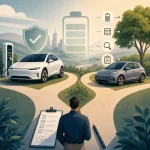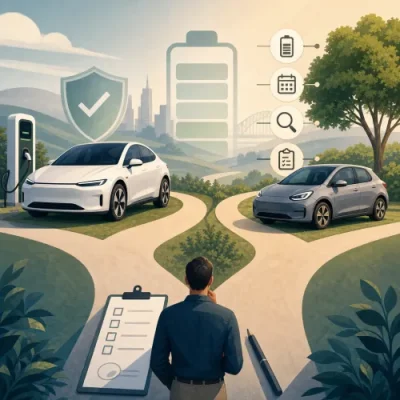
Financing a new or used electric car in Australia involves more than comparing the purchase price. A new EV may offer the comfort of a full manufacturer warranty and easier valuation, while a used EV may reduce the upfront loan amount but introduce extra questions about battery health, remaining warranty, age, condition and resale value.
This guide explains the main finance considerations for Australian buyers comparing a new electric car with a used electric car. It is general information only and does not take into account your objectives, financial situation or needs. Loan availability, interest rates, fees, terms and approval criteria depend on the lender and your individual circumstances.
New vs used EV finance: the key difference
The main difference between financing a new EV and financing a used EV is the type of risk being assessed. With a new electric car, the lender can usually rely on a clear purchase price, new-vehicle warranty and a known specification. With a used electric car, the lender may look more closely at the vehicle's age, kilometres, service history, valuation, battery condition and whether the car will still meet its criteria by the end of the loan term.
If you are still comparing broad electric car loan options, it can help to separate the vehicle decision from the finance decision. A cheaper used EV is not automatically easier to finance, and a more expensive new EV is not automatically less suitable. The right comparison depends on the total borrowing amount, repayment capacity, deposit, loan term, vehicle condition and lender criteria.
Financing a new electric car
A new electric car may be simpler to assess because the purchase details are usually clear. The invoice, build date, compliance details and warranty information are generally easier to verify. Many lenders are comfortable assessing new vehicles because there is less uncertainty about prior use, battery degradation and accident history.
Potential benefits of financing a new EV may include:
- Full manufacturer warranty: New EVs generally come with a new-vehicle warranty and a separate battery warranty, although terms, coverage and exclusions vary by manufacturer.
- Known vehicle history: There should be no prior private use, unknown charging habits or unverified repair history.
- Current technology: New models may offer newer battery management systems, driving range, charging capability and safety features.
- Clearer valuation: A new sale price can be easier for a lender to verify than the value of a used EV with limited comparable sales.
However, financing a new EV can also mean borrowing more. Higher purchase prices may increase repayments, total interest over the loan term and the amount you need to contribute as a deposit. A new car can also depreciate, especially in the early years. That matters if you plan to sell, refinance or upgrade before the loan is repaid.
Financing a used electric car
Financing a used electric car can appeal to buyers who want a lower purchase price or are looking at a model that has already absorbed some early depreciation. A lower loan amount may improve affordability, but used EV finance can require more careful due diligence.
When assessing financing a used electric car, lenders may consider whether the vehicle is acceptable security for the loan. Factors can include the car's age, kilometres travelled, condition, valuation, registration status and whether it has existing finance recorded against it. Some lenders may also have maximum age limits at the start or end of the loan term, although these rules vary.
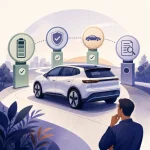
Used EV buyers should be especially careful to confirm:
- Battery health and remaining range: The advertised range may not reflect real-world performance after years of use.
- Remaining battery warranty: Warranty transfer rules, time limits, kilometre limits and exclusions differ between manufacturers.
- Service and repair history: Check whether scheduled servicing, software updates and any recall work have been completed.
- Charging equipment compatibility: Confirm what charging cables or accessories are included and whether replacements will add cost.
- Vehicle title and encumbrances: A PPSR check can help identify whether the vehicle has money owing, has been written off or has other recorded interests.
Battery condition and warranty can affect finance risk
The battery is one of the most important EV-specific considerations. While lenders may not perform a technical battery assessment themselves, battery condition can still affect finance risk because it influences vehicle value, future saleability and potential repair exposure.
For a new EV, the battery warranty usually begins from first registration or delivery, depending on the manufacturer's terms. For a used EV, part of that warranty may already have been used. A vehicle with a shorter remaining battery warranty may still be financeable, but borrowers should understand what happens if battery performance declines after purchase.
Before applying for used electric car finance, consider asking the seller or dealer for evidence of:
- battery health or diagnostic information, where available;
- remaining battery warranty and whether it transfers to the new owner;
- service records and software update history;
- any previous battery repairs or replacements;
- charging history or usage information, if reasonably available.
Not every seller will have all of this information, especially in a private sale. If the information is limited, consider whether the price, loan amount and repayment risk still make sense.
Depreciation and resale value matter for both choices
EV depreciation can be influenced by model updates, battery technology, charging standards, warranty confidence, buyer demand and the price of competing new vehicles. This affects both new and used EV loans.
With a new EV, early depreciation may be more noticeable if newer models become cheaper or offer better range soon after purchase. With a used EV, some depreciation may already be reflected in the price, but the vehicle may face further value pressure as it ages or as battery warranty reduces.
Depreciation matters because it can affect your position if you want to sell the car before the loan is repaid. If the car's market value is less than the outstanding loan balance, you may need to contribute extra funds to clear the loan. For a broader ownership-cost perspective, see Electric Cars vs. Fossil Fuels: The True Cost of Ownership.
How lenders may view new and used EVs
Each lender has its own credit and security assessment process. The table below shows common finance considerations that may differ between a new and used electric car.
| Finance factor | New electric car | Used electric car |
|---|---|---|
| Vehicle age | Usually straightforward because the car is new. | May be assessed against lender vehicle-age limits. |
| Battery warranty | Usually starts with the first owner, subject to manufacturer terms. | May have reduced remaining coverage or transfer conditions. |
| Valuation | Often based on invoice or dealer contract. | May require closer comparison with market value. |
| Loan amount | Often higher, depending on model and deposit. | May be lower, but condition and age can affect terms. |
| History checks | Generally limited prior-use risk. | PPSR, service history and accident history checks are more important. |
| Depreciation risk | May be higher in the early ownership period. | Some depreciation may already be priced in, but ageing risk remains. |
Loan term, deposit and repayments
The purchase price is only one part of the finance decision. Loan term, deposit size, fees, interest rate type and repayment frequency can all affect affordability. A longer loan term may reduce regular repayments but can increase total interest paid over time. A shorter term may reduce total interest but create higher regular repayments.
For used EVs, borrowers should be cautious about choosing a loan term that extends well beyond the period they expect to keep the car, or beyond a meaningful portion of the remaining battery warranty. This does not mean a used EV cannot be financed over a longer term, but it does mean the borrower should understand the trade-off between repayment comfort and vehicle-age risk.
You can use an electric vehicle loan calculator to compare repayment scenarios across different new and used EV prices, deposits and loan terms. Calculator results are estimates only and may not include all fees, lender criteria or final loan conditions.
Dealer sale, private sale or novated lease?
The way you buy the EV can also affect the finance process. Dealer purchases may provide clearer documentation and statutory protections, but the price may differ from private-sale listings. Private sales can require extra checks and may involve more lender scrutiny because documentation and vehicle history can be less standardised.
Some buyers may also consider a novated lease through an employer, particularly for eligible electric vehicles. This is different from a standard car loan and can have tax, employment and cash-flow implications. Whether it suits you depends on your employer, income, usage, vehicle choice and personal circumstances. For a broader overview of EV finance structures, see Financing Your Electric Car: What Every Australian Needs to Know.
Questions to ask before financing a used EV
Before committing to a used EV loan, it is worth asking practical questions about the vehicle and the finance contract.
- How old will the vehicle be at the end of the loan term?
- How much battery warranty remains, and does it transfer to the new owner?
- Is there evidence of battery condition, servicing and software updates?
- Has a PPSR check been completed?
- Does the sale price appear reasonable compared with similar EVs?
- Will the lender accept the vehicle as security?
- Are there establishment fees, monthly fees, early repayment fees or balloon payments?
- Could charging equipment, tyres, insurance or repairs change the overall affordability?
If you are unsure how different lenders assess vehicle age, private sales or EV security, speaking with a finance professional may help you understand the types of documents and checks that may be required. You can also review available broker support if you want assistance comparing lender requirements.
When a new EV may be the stronger finance option
A new electric car may be worth considering if you want clearer warranty coverage, current technology, predictable vehicle history and simpler purchase documentation. It may also suit buyers who plan to keep the vehicle for several years and are comfortable with the higher purchase price and repayment commitment.
However, a new EV is not automatically the better finance choice. If the higher loan amount stretches your budget, the extra warranty comfort may not offset the repayment pressure. Borrowers should also consider insurance costs, charging arrangements, servicing, registration and potential resale value.
When a used EV may be the stronger finance option
A used electric car may suit borrowers who want to reduce the purchase price and are willing to do more due diligence. It may be especially attractive where the vehicle has a clear service history, reasonable kilometres, useful remaining battery warranty and a price that reflects its age and condition.
The main risk is uncertainty. If battery health, warranty transfer, accident history or valuation are unclear, a cheaper used EV can become more difficult to assess. The finance contract may still be manageable, but the borrower needs to be comfortable with the vehicle risk as well as the repayment risk.
Final checklist before you apply
Whether you choose a new or used electric car, aim to compare the finance and the vehicle together. A suitable EV loan should fit the car, your repayment capacity and the length of time you expect to own the vehicle.
- Set a realistic budget including loan repayments and running costs.
- Compare new and used EV prices for the models you are considering.
- Check battery warranty, service history and vehicle condition.
- Consider depreciation and possible resale value if you may sell early.
- Review lender requirements for vehicle age, private sales and security.
- Compare loan term, fees, repayment structure and any balloon payment.
- Read the credit contract and seek professional guidance if unsure.
New and used electric cars can both be valid finance choices. The better option depends on the vehicle, the loan structure and your circumstances rather than the label of "new" or "used". Take time to compare the total picture before applying.