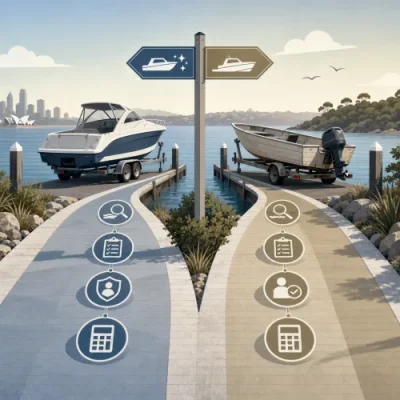
Arranging finance for a boat is not always the same process for every purchase. A new boat from a dealer, a used boat from a yard and a private sale can each involve different checks, documents and risks. Understanding those differences can help you prepare a clearer boat loan application and reduce surprises before settlement.
This article explains how new boat finance and used boat finance may differ in Australia, including valuation, condition, PPSR checks, trailers, outboard motors, private sale paperwork and lender security requirements. It is general information only and does not take your objectives, financial situation or needs into account.
Why the type of boat purchase can affect finance
When a lender considers marine finance in Australia, it may look at both the borrower and the asset. Your income, expenses, credit history and existing commitments are important, but the boat itself can also affect the assessment if the loan is secured against the vessel.
Key asset-related factors may include:
- Age and condition: a newer boat may have clearer specifications and warranty information, while an older vessel may need more evidence of condition.
- Valuation: the lender may need to be satisfied that the purchase price is reasonable for the boat, motor, trailer and included equipment.
- Security value: some lenders have criteria about what assets they will accept as security, including age, type and documentation.
- Ownership and encumbrances: a used boat may need checks to identify whether there are existing finance interests registered over the vessel or related assets.
- Seller type: buying through a dealer can involve different paperwork and settlement processes compared with a private sale.
For a broader overview of boat loan options and general finance information, you can visit Boat Loan Australia.
Financing a new boat
New boat finance often involves a dealer invoice, a clearly specified make and model, and a more predictable settlement pathway. However, it still requires careful review because boats can include multiple components and optional extras.
Dealer quotes and purchase contracts
A lender or broker may ask for a formal dealer quote or contract showing the vessel details, purchase price, deposit paid and any included accessories. If the boat is being built or fitted out, the finance process may also need to account for delivery timing, staged payments or changes to specifications.
Check whether the quoted price includes items such as:
- outboard or inboard motor;
- trailer;
- electronics and navigation equipment;
- safety equipment;
- canopies, covers or fishing accessories;
- registration, delivery or dealer charges.
These details matter because the lender may assess what is being financed and whether each component forms part of the secured asset.
Warranty and condition are helpful, but not a finance guarantee
A new boat may come with manufacturer or dealer warranty arrangements, depending on the product and seller. This can give buyers more confidence about initial condition, but it does not mean finance will be approved or that every cost is covered. Approval, interest rates, fees and loan terms depend on lender criteria and your individual circumstances.
New does not always mean simple
New boats can still involve finance complications. For example, custom builds, imported vessels, long delivery times or significant aftermarket modifications may require additional documentation. If the boat will be used commercially, the lender may also ask different questions from a purely recreational purchase.
Financing a used boat
Used boat finance can be straightforward when the vessel is well documented and fairly priced, but it often requires more due diligence. A used boat may have a longer ownership history, previous finance, repairs, modifications or wear that affects value and suitability as loan security.
Boat valuation and market price
A lender may compare the purchase price with the boat's age, condition, brand, motor hours, trailer condition and included equipment. If the price appears high compared with similar vessels, the lender may ask for more information or may limit how much it is willing to lend against the asset.
As a buyer, it can be useful to compare similar boats for sale and understand what is included in the advertised price. A low advertised price is not always a better purchase if the vessel needs significant repairs, an engine replacement or trailer work.
Hull, engine and trailer condition
Used boats involve more than one asset. The hull, motor and trailer can each affect the overall value and finance assessment.
- Hull: check for signs of damage, corrosion, delamination, osmosis, poor repairs or water ingress.
- Engine: consider service records, engine hours, age, compression results and whether the motor has been regularly maintained.
- Trailer: review registration, VIN, tyres, brakes, bearings, lights, structural condition and whether it is suitable for the boat's weight.
- Electronics and accessories: included equipment can add value, but old or non-functioning electronics may not contribute much to finance value.
A marine survey, mechanical inspection or sea trial may be worthwhile for some used purchases. Whether a lender requires a report will depend on the lender, boat and loan circumstances, but buyers should not rely only on the seller's description.
PPSR boat checks and existing finance
For a used boat, it is important to consider whether there may be a registered security interest over the vessel, motor or trailer. A PPSR check can help identify certain registered interests, but it is not a complete guarantee of ownership, condition or legal suitability. It should be treated as one part of a broader due diligence process.
Depending on the asset, relevant identifiers may include the hull identification number, registration details, engine serial number or trailer VIN. If existing finance is found, the buyer and lender may need evidence that the secured party will be paid out and the interest released at settlement.
Dealer purchase vs private sale boat loan considerations
The seller can make a practical difference to the finance process. Dealer purchases often provide more formal documentation, while private sales may require the buyer to gather and verify more information.
| Purchase type | Common finance considerations | Buyer checks to consider |
|---|---|---|
| New boat from dealer | Dealer invoice, clear specifications, possible warranty information, delivery or fit-out timing. | Confirm inclusions, deposits, delivery charges, registration responsibilities and any changes to the quoted package. |
| Used boat from dealer | Formal sale contract, clearer settlement pathway, but condition and valuation still matter. | Review service records, inspection reports, warranty terms if offered and what is included in the sale. |
| Used boat by private sale | More documentation may be needed, including proof of ownership, payout details if financed and identity or bank details for settlement. | Conduct PPSR checks where relevant, verify serial numbers, inspect the boat, confirm registration transfer requirements and avoid paying before settlement arrangements are clear. |
Private sale documentation
With a boat loan private sale, the lender or broker may ask for details that a dealer would usually provide as part of the sale process. This may include a signed sale agreement, seller identification details, registration documents, photos, serial numbers, payout letter if the boat is under finance and bank account details for settlement.
Private sale processes can also take longer if information is missing or inconsistent. For example, if the trailer VIN on the paperwork does not match the trailer, or the engine serial number is unclear, the lender may require clarification before settlement.
What lenders may assess before approving boat finance
Each lender has its own criteria, but a secured boat finance assessment may consider both the applicant and the marine asset. Factors can include:
- your income, employment or business position;
- living expenses and existing debts;
- credit history and repayment conduct;
- deposit or equity contribution;
- boat age, condition and type;
- purchase price compared with estimated value;
- loan amount, term and repayment structure;
- whether the boat is for recreational or commercial use;
- insurance arrangements where required by the lender;
- quality and completeness of the supporting documents.
If you are preparing an application, the guide to financing your first boat covers broader loan preparation steps, including comparing options and organising paperwork.
Estimating repayments for new and used boat prices
Before applying, it can be useful to test different price points, loan terms and repayment amounts. A new boat may have a higher purchase price but fewer immediate repair costs, while a used boat may cost less upfront but require money set aside for maintenance, upgrades, inspections or trailer work.
You can use a boat loan calculator to estimate repayments under different scenarios. Calculator results are estimates only and do not confirm loan approval, rates, fees or suitability.
When comparing repayments, remember to budget for costs beyond the loan, such as insurance, registration, storage or marina fees, fuel, servicing, safety equipment, repairs and towing vehicle requirements.
Questions to ask before choosing new or used
The right choice depends on your budget, intended use, risk tolerance and the finance options available to you. Before deciding, consider these questions:
- Is the purchase price supported by comparable listings or a professional valuation?
- Does the finance amount include only the boat, or also the motor, trailer and accessories?
- Will the lender accept this age and type of boat as security?
- Are inspection, survey or mechanical reports needed?
- Has a PPSR check been completed for relevant assets?
- If there is existing finance, how will it be paid out and released?
- Are registration and transfer requirements clear for your state or territory?
- Can you comfortably afford repayments plus ongoing ownership costs?
- Are there any modifications or commercial-use factors that may affect finance or insurance?
For general buying considerations beyond finance, including inspections and choosing the right boat type, see the first-time boat buyer guide.
How a broker may help with a new or used boat purchase
A broker may be able to help you understand what documents different lenders commonly request and whether the purchase structure is likely to raise extra questions. This can be particularly useful for private sales, older vessels, unusual boats or purchases involving separate hull, motor and trailer details.
Broker involvement does not guarantee approval or a particular rate. The outcome will depend on your circumstances, the lender's criteria, the boat and the documents supplied. If you want to understand how broker connections may work through this site, you can view the brokers page.
Key takeaway
New boat finance may offer clearer documentation and a more predictable dealer process, while used boat finance can require more attention to valuation, condition, ownership history and PPSR checks. Dealer sales and private sales can both be financed in some circumstances, but the paperwork and risk profile may differ.
Before committing, review the whole purchase: the hull, engine, trailer, seller, security interests, inspection results, ongoing costs and loan structure. Preparing early can help you make a more informed decision and give a lender or broker the information needed to assess your application.