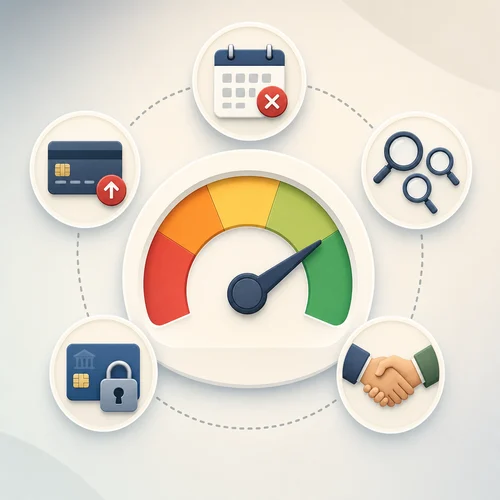
Boat finance rates can have a major impact on your repayments, but they are only one part of the total cost of a boat loan. The amount you borrow, loan term, fees, deposit, security, repayment frequency and any balloon payment can all change what you pay each month and over the life of the loan.
This guide explains the main factors that affect boat loan repayments and total borrowing costs in Australia, so you can compare finance options more confidently before applying. It is general information only and does not take your personal objectives, financial situation or needs into account.
What makes up the cost of a boat loan?
A boat loan cost is usually made up of several components. Some are obvious, such as the interest rate. Others may be less visible until you review the loan contract or quote.
| Cost factor | How it can affect your loan |
|---|---|
| Interest rate | A higher rate generally increases your repayments and total interest cost, while a lower rate may reduce them if all other factors are the same. |
| Loan amount | Borrowing more increases the balance on which interest is charged. |
| Loan term | A longer term may lower regular repayments but can increase the total interest paid over time. |
| Fees and charges | Application, establishment, monthly, annual, early repayment or payout fees may add to the overall cost. |
| Deposit or trade-in | A larger deposit or trade-in may reduce the amount borrowed, subject to lender criteria. |
| Balloon payment | A final lump sum can reduce regular repayments but may increase the amount due at the end of the loan. |
| Repayment frequency | Weekly, fortnightly or monthly repayments can affect budgeting and, depending on how interest is calculated, may influence total interest. |
If you are still deciding which type of finance might suit your purchase, you can review general boat finance options before comparing specific repayments and loan features.
How boat finance rates are usually assessed
Boat finance interest rates are generally influenced by both market conditions and your individual application. Lenders and finance providers set their own pricing criteria, so two borrowers applying for similar boats may receive different rate offers.
Factors that may influence your rate include:
- Your credit history: Lenders commonly consider your credit report, repayment history and existing credit commitments.
- Your income and expenses: The lender will usually assess whether the proposed repayments appear affordable based on the information you provide and their lending criteria.
- The boat being financed: The boat's age, condition, type and value may affect the lender's view of risk, especially for secured marine finance.
- Whether the loan is secured: A secured boat loan uses the vessel as security. This may affect pricing, but it also means the lender may have rights over the boat if repayments are not met.
- The loan term and amount: Different loan sizes and terms may attract different rates or fees.
- Deposit size: A larger contribution from your own funds may reduce the lender's exposure, although it does not automatically mean a lower rate.
- New versus used boat: Newer boats may be treated differently from older or highly specialised vessels, depending on lender policy.
Advertised rates are often starting points or examples. The rate you are offered, if any, will depend on your circumstances, the lender's assessment and the loan product available at the time.
Interest rate versus comparison rate
When comparing boat finance rates, it helps to understand the difference between an interest rate and a comparison rate where one is provided.
The interest rate is the percentage used to calculate interest on the loan balance. It is important, but it does not include every cost of the loan.
A comparison rate is designed to show the annual cost of a loan by combining the interest rate with certain standard fees and charges. It can be useful for comparing similar loans, but it may not include every possible cost, such as optional features, government charges, late payment fees, early payout fees or costs that depend on how you use the loan.
Comparison rates also rely on assumptions, such as a particular loan amount and term. A comparison rate shown for one example may not reflect the actual cost of your specific boat loan.
Fixed and variable boat finance interest rates
Boat finance may be offered with fixed or variable interest rates, depending on the lender and product.
Fixed interest rates
A fixed rate generally keeps the interest rate the same for an agreed period or for the full loan term. This can make repayments easier to plan because they are usually predictable, provided you meet the loan conditions.
However, fixed rate loans may include limits on extra repayments or fees for early payout. You should check the loan terms before assuming you can repay the loan faster without additional costs.
Variable interest rates
A variable rate can move up or down over time. This means repayments may change if the lender changes the rate. Variable loans may offer more flexibility in some cases, but they can also make budgeting less certain.
The right structure depends on the loan available to you and how you prefer to manage repayment certainty, flexibility and risk. Consider reading the loan contract carefully and asking questions before proceeding.
How loan terms affect boat loan repayments
The loan term is the length of time you have to repay the debt. It has a direct effect on both your regular repayments and your total interest cost.
A shorter term usually means higher regular repayments, because you are paying the debt down faster. However, it may reduce the total interest paid, assuming the same interest rate and fees.
A longer term may make regular repayments more manageable, but interest is generally charged over a longer period. This can increase the total cost of the loan even if the monthly repayment looks more comfortable.
When comparing loan terms, look beyond the regular repayment amount. Ask how much interest and fees you may pay across the full loan term, and whether you can make additional repayments without penalty.
Deposits, trade-ins and the amount borrowed
The amount you borrow is one of the clearest drivers of boat loan costs. A deposit, trade-in or cash contribution may reduce the loan amount and therefore reduce the balance on which interest is charged.
For example, if two borrowers choose similar loans but one contributes a larger deposit, that borrower may have lower repayments because they are financing a smaller amount. The exact difference will depend on the rate, term, fees and lender criteria.
It is also worth remembering that the purchase price is not always the full cost of getting on the water. Registration, safety equipment, storage, insurance, maintenance, fuel and accessories can all affect your overall budget. For a wider ownership view, see Smart Budgeting for First-Time Boat Buyers.
Balloon payments and residual values
Some boat finance arrangements may include a balloon payment, also called a residual payment. This is a lump sum due at the end of the loan term.
A balloon payment may reduce regular repayments during the loan because part of the debt is deferred until the end. However, it does not make that debt disappear. You will usually need to pay the final amount, refinance it if available, or sell or trade the boat and use proceeds to help cover the balance.
Before choosing a balloon payment, consider:
- whether you are comfortable with a larger final payment;
- whether the boat's future value could be lower than expected;
- what happens if you want to sell the boat before the loan ends;
- whether refinancing the balloon would depend on future lender approval; and
- how the structure affects the total interest paid.
A lower regular repayment is not always the same as a lower total cost. Always compare the full repayment schedule, not just the monthly amount.
Boat loan fees and other charges to check
Fees can vary significantly between providers and loan products. Some may be charged upfront, while others apply during the loan or when you repay it early.
Common fees to look for may include:
- Application or establishment fees: charged to set up the loan.
- Monthly or annual account fees: ongoing administration charges.
- Broker fees: if you use a broker, ask how they are paid and whether any direct fee applies.
- Early repayment or break costs: possible charges if you pay out the loan ahead of schedule.
- Late payment fees: charges that may apply if repayments are missed.
- Security registration or documentation fees: possible costs connected with secured finance.
Not every loan has every fee, and fee names can differ. The important step is to ask for a clear breakdown of all charges and read the credit contract before signing.
Using a boat finance calculator wisely
A boat finance calculator can help you estimate repayments before you apply. This can be useful when comparing loan amounts, terms, repayment frequencies and possible balloon payments.
You can use Calculator #17 to test repayment scenarios, then compare another structure with Calculator #29 if you want to model different assumptions. For example, you might compare a shorter term with higher repayments against a longer term with lower repayments, or test the effect of a larger deposit.
Calculator outputs should be treated as estimates only. They are not loan offers, approvals or quotes. Actual repayments may differ once a lender assesses your application, confirms the rate, applies fees and reviews the boat being financed.
When using a calculator, try changing one variable at a time. This makes it easier to understand what is driving the result. You could test:
- a higher or lower purchase price;
- different deposit amounts;
- shorter and longer loan terms;
- fixed versus variable rate assumptions, where relevant;
- weekly, fortnightly and monthly repayment frequencies; and
- with and without a balloon payment.
How to compare the total cost of boat finance
When comparing marine finance repayments, it can be tempting to focus on the lowest regular repayment. That can be misleading if the loan has a longer term, higher fees or a balloon payment at the end.
A more complete comparison looks at:
- the interest rate and, where available, the comparison rate;
- the total amount repayable over the full term;
- all upfront and ongoing fees;
- the repayment frequency and whether it suits your cash flow;
- any restrictions on extra repayments;
- early payout costs;
- whether the loan is secured or unsecured;
- the final balloon amount, if any; and
- what happens if you sell or upgrade the boat before the loan ends.
If the quotes you receive use different loan terms, fees or balloon structures, ask for comparable scenarios. Comparing one five-year loan with no balloon against another seven-year loan with a balloon may not give you a like-for-like view.
Questions to ask before accepting a boat loan
Before proceeding with boat finance, consider asking the lender, broker or finance provider:
- What interest rate applies to my application, and is it fixed or variable?
- What fees apply upfront, during the loan and at payout?
- What is the total amount repayable if I make all repayments as scheduled?
- Can I make extra repayments, and are there limits or charges?
- Is there a balloon payment, and what are my options at the end of the term?
- What happens if I want to sell the boat before the loan is repaid?
- Is the loan secured against the boat?
- Are there insurance, registration or documentation requirements?
- How will missed or late repayments be handled?
A finance broker may also help you compare loan features and lender requirements, although any loan offer will still depend on lender criteria and your individual circumstances. For more detail, read Using a Broker for Competitive Boat Finance Options.
Key takeaways
Boat loan costs are shaped by more than the advertised interest rate. Your repayments and total cost can be affected by the loan amount, term, fees, deposit, security, repayment frequency, rate type and any balloon payment.
Before applying, compare the full cost of the loan rather than focusing only on the lowest regular repayment. Use calculators as planning tools, ask for clear fee information and consider whether the repayment structure remains affordable alongside the ongoing costs of boat ownership.
Because lender pricing and approval decisions depend on individual circumstances and provider criteria, it is worth reviewing your options carefully before committing to a boat loan.