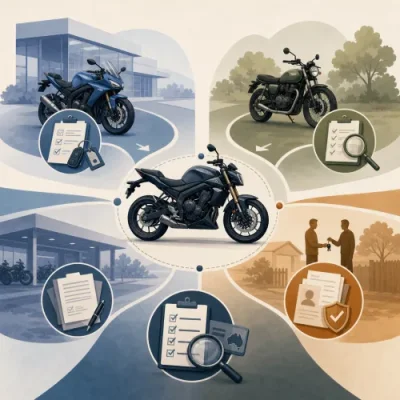
Financing a motorcycle is not only about the loan amount and repayment. The type of bike you buy, its age and condition, and whether you purchase through a dealer or private seller can all affect the finance process.
For Australian buyers, the main differences usually come down to documentation, vehicle checks, settlement steps, insurance, registration status and how a lender assesses the motorcycle as security. This guide explains the practical considerations for new motorcycle finance, used motorcycle finance Australia, dealer motorcycle finance and private sale motorbike finance.
If you are comparing motorcycle financing options, you can also review general loan pathways through Bike Loan Finance Online.
Why the purchase type matters when financing a motorcycle
Many motorcycle loans are structured as secured finance, where the bike is used as security for the loan. If a lender is relying on the motorcycle as security, they will usually want to understand what the bike is, what it is worth, who owns it, whether there is money owing on it, and whether it can be properly registered and insured.
That means a new motorcycle from a dealer may involve a different process from financing a used motorbike through a private seller. Neither option is automatically better. The right approach depends on your budget, the motorcycle, your borrowing profile, the seller, and lender criteria.
If you are unsure whether secured finance is appropriate for your situation, the guide to secured vs unsecured motorcycle loans explains the broad differences.
Financing a new motorcycle
New motorcycles can be relatively straightforward to finance because the bike is usually being sold by a licensed dealer, has clear purchase documentation and has not had previous private ownership. However, there are still important details to check before you commit.
What to consider with new motorcycle finance
- Drive-away price: Check whether the quoted price includes on-road costs such as registration, compulsory third party insurance, dealer delivery and relevant government charges.
- Accessories and modifications: Lenders may treat factory options, dealer-fitted accessories and aftermarket modifications differently. Confirm what can be included in the financed amount.
- Delivery timing: If the motorcycle is on order, settlement may depend on when the bike is available and when final invoices are issued.
- Depreciation: A new motorcycle can lose value after purchase. Consider how this may affect your position if you sell or refinance before the loan is repaid.
- Insurance before settlement: If the loan is secured, the lender may require appropriate insurance to be in place before funds are released.
New motorcycle finance can feel simple because much of the paperwork is handled by the dealer, but you should still read the loan contract, confirm the total amount financed and understand the repayment schedule, fees and early repayment conditions.
Financing a used motorcycle
Used motorcycle finance can be a practical option for buyers who want a lower purchase price or a specific model that is no longer available new. The trade-off is that lenders may look more closely at the bike's age, kilometres, condition, value and ownership history.
Age, condition and valuation
When financing a used motorbike, lenders may consider whether the motorcycle is within their acceptable age and condition criteria. Some providers may be more cautious with older bikes, high-kilometre motorcycles, repairable write-offs, heavily modified bikes or motorcycles with unclear service history.
A lender may also compare the purchase price against the motorcycle's market value. If the price appears higher than expected, you may need to contribute a larger deposit or provide more information. Lender requirements vary, and approval, loan amount and pricing depend on individual circumstances and provider criteria.
Vehicle checks matter more with used bikes
Before applying for used motorcycle finance Australia, it is sensible to check:
- the VIN or chassis number matches the registration and seller documents;
- the engine number, where relevant, is consistent with the records provided;
- the registration status and expiry date;
- whether the motorcycle has been written off or stolen;
- whether there is finance owing or another registered security interest;
- the service history, odometer reading and general condition;
- whether the bike needs a roadworthy or safety certificate under the relevant state or territory rules.
A pre-purchase inspection by a qualified mechanic or motorcycle specialist can be useful, especially for higher-value used bikes, older motorcycles or models with known maintenance issues.
Dealer motorcycle finance considerations
Buying through a dealer can simplify some parts of the finance process because dealers are used to providing tax invoices, vehicle details and settlement information. A dealer may also arrange registration, transfer documents and delivery steps.
However, dealer convenience does not remove the need to compare finance options and check the contract carefully. Finance arranged at the point of sale may be convenient, but you should still understand the rate type, fees, loan term, repayment amount, balloon or residual payment if applicable, and the total amount payable over the loan.
Dealer purchase advantages
- Clearer documentation: Dealers can usually provide a formal invoice with the motorcycle details, purchase price and on-road charges.
- Settlement coordination: The dealer often provides settlement instructions directly to the lender or broker.
- Registration support: Dealers may assist with registration or transfer steps, depending on the purchase and location.
- Consumer protections: Dealer sales may include statutory obligations or warranties depending on the state or territory, motorcycle age, kilometres and sale terms. The details vary, so check what applies before relying on it.
Dealer purchase risks to check
- Add-on products: Extended warranties, roadside assistance, protection products and accessories may increase the amount financed. Consider whether they are necessary and affordable.
- Pressure to decide quickly: Avoid signing finance documents before you have reviewed repayments, fees and conditions.
- Trade-in assumptions: If you are trading in another motorcycle, confirm the changeover price and whether any existing finance will be paid out.
Private sale motorbike finance considerations
Private sale motorbike finance can require more coordination because the seller is not a dealer and may not be familiar with lender settlement requirements. The lender or broker may need to verify the seller, confirm ownership, check the bike's details and make sure any existing finance is dealt with correctly.
Private sale documentation
For a private sale, finance providers may ask for information such as:
- a signed sale agreement or invoice showing the buyer, seller, motorcycle details and agreed price;
- the seller's identification or bank account details for settlement purposes;
- registration documents or proof of ownership;
- VIN, chassis number, engine number and odometer reading;
- clear photos or inspection evidence, depending on provider requirements;
- details of any finance owing on the motorcycle.
Do not assume a handwritten receipt will be enough for every lender. Requirements vary, so it can help to confirm documentation before paying a deposit.
PPSR and money owing
The Personal Property Securities Register, commonly known as PPSR, can help identify whether a motorcycle has a registered security interest, and whether it has been reported stolen or written off. A PPSR check should be based on the correct VIN or chassis number.
If money is owing on the bike, the lender may require settlement funds to be paid directly to the existing financier first, with any balance paid to the seller. This helps reduce the risk of buying a motorcycle that remains encumbered. The exact process depends on the financier, lender and sale arrangement.
Registration, roadworthiness and transfer
Registration transfer and roadworthy or safety certificate requirements vary between Australian states and territories. Before settlement, check what must be completed by the seller, what must be completed by you, and whether the motorcycle can be legally ridden away.
If the bike is unregistered, damaged, interstate or modified, the finance process may involve extra questions. There may also be additional transport, inspection or compliance costs.
New vs used and dealer vs private sale: key differences
| Purchase option | Potential finance advantages | Points to check carefully |
|---|---|---|
| New motorcycle from a dealer | Clear invoice, known vehicle history, dealer assistance with settlement and registration | On-road costs, accessories, insurance, delivery timing, total amount financed |
| Used motorcycle from a dealer | Dealer documentation and possible statutory protections depending on the sale | Age, kilometres, condition, warranty terms, PPSR status and market value |
| Used motorcycle from a private seller | May provide more price flexibility and access to more models | Ownership proof, PPSR check, money owing, roadworthy rules, seller details and settlement coordination |
| Unregistered or modified motorcycle | May suit specialist buyers or project plans | Lender eligibility, insurance availability, registration compliance, inspection and repair costs |
Budgeting before you choose the motorcycle
It is easy to focus on the purchase price, but the real cost of ownership includes more than the loan repayment. Before applying, estimate the combined cost of:
- loan repayments and fees;
- registration and compulsory third party insurance;
- comprehensive insurance, if required or appropriate;
- stamp duty or transfer costs where applicable;
- riding gear and security equipment;
- servicing, tyres and repairs;
- fuel, parking and storage;
- any accessories or modifications.
A motorcycle loan calculator can help you test different loan amounts, terms and repayment assumptions before you start negotiating with a dealer or private seller. Calculator results are estimates only and do not confirm eligibility, rates or approval.
For broader first-purchase planning, the article on common first-time motorcycle buyer mistakes covers budgeting and ownership considerations that sit alongside finance.
Insurance and finance should be considered together
Insurance can affect the finance process, especially for secured motorcycle loans. A lender may require comprehensive insurance before settlement, and your premium may depend on the rider, motorcycle type, storage location, claims history, modifications and insurer criteria.
Some motorcycles are more expensive to insure than buyers expect, particularly high-performance bikes, rare models or heavily modified motorcycles. Before signing a purchase contract, consider getting insurance estimates and checking whether the bike can be insured on terms you are comfortable with.
The guide to motorbike insurance considerations explains common cover types and factors that may affect premiums.
When a broker may help with dealer or private sale finance
A broker may be useful if you are comparing multiple lenders, buying privately, financing an older motorcycle, dealing with a trade-in payout, or trying to understand what documents are likely to be required. A broker can also help coordinate settlement steps, although outcomes still depend on lender criteria and your circumstances.
If you need support with purchase documentation or settlement requirements, you can review the available broker information before proceeding.
Questions to ask before applying
Before you apply for dealer motorcycle finance or private sale motorbike finance, ask practical questions such as:
- Is the motorcycle new, used, registered, unregistered, modified or imported?
- Does the seller have clear proof of ownership?
- Is there any finance owing or registered security interest?
- Will the lender accept the bike's age, kilometres and condition?
- What documents are required before settlement?
- Who receives the loan funds: the dealer, the seller or an existing financier?
- What insurance must be in place before settlement?
- Are on-road costs included in the loan amount?
- What happens if the inspection, PPSR check or finance assessment raises a concern?
Final thoughts
Financing a new or used motorcycle is easier when you understand how the purchase channel affects the process. Dealer purchases may provide clearer documentation and settlement support, while private sales may require more checks around ownership, PPSR status, registration and roadworthiness.
For any motorcycle purchase, take time to confirm the bike's details, compare finance structures, estimate total ownership costs and read the loan contract before signing. Finance approval, rates, loan amounts and settlement requirements vary between providers and depend on your individual circumstances.