Why regular motorbike maintenance matters
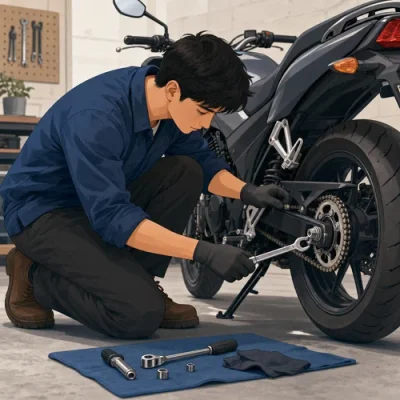
A motorbike is made up of many components that need to work together: tyres, brakes, engine oil, filters, chain, controls, cables, lights, fasteners and electrical systems. Regular maintenance helps you spot wear, damage or poor adjustment before it affects safety or reliability.
For beginners, maintenance does not mean rebuilding an engine or replacing major parts straight away. It starts with simple inspections, cleaning and routine checks. Over time, as your confidence and mechanical knowledge grow, you may choose to learn more involved tasks. For advanced work, it is generally best to use a qualified mechanic.
Neglecting maintenance can increase the risk of avoidable problems such as worn brake pads, low fluid levels, poor chain condition, loose fasteners, starting issues, overheating or reduced control response. Small issues can also become more expensive repairs if they are not found early.
Build a basic maintenance habit
The simplest way to keep maintenance manageable is to create a routine. Check your owner's manual for the correct service intervals, oil type, fluid specifications, tyre pressure and adjustment procedures for your specific motorbike. Different bikes have different requirements, so model-specific information matters.
A practical routine for beginners usually includes quick pre-ride checks, regular cleaning and more detailed inspections at intervals recommended by the manufacturer. You can also adapt your routine to suit weather and riding conditions. For more context on riding conditions, see these seasonal motorcycle maintenance tips.
| Maintenance area | What to check | Why it matters |
|---|---|---|
| Tyres | Pressure, tread depth, damage and punctures | Tyres affect grip, stability and braking control |
| Brakes | Pads, rotors, brake fluid level and brake feel | Brake condition is critical for safe stopping |
| Engine oil | Oil level, oil condition and service interval | Oil lubricates the engine and helps reduce wear |
| Chain | Cleanliness, lubrication, wear and tension | The drive chain transfers power to the rear wheel |
| Controls and cables | Throttle, clutch, lever movement and cable condition | Smooth controls help you operate the bike predictably |
| Lights and electrics | Headlight, indicators, brake light, battery and wiring | Lights support visibility and communication on the road |
| Fasteners | Bolts, screws and fittings | Vibration can loosen components over time |
Tools and materials for beginner maintenance
Your exact toolkit should match your motorbike's make and model, but a basic set can help with cleaning, inspection, minor adjustments and simple servicing. Do not force tools that do not fit correctly, as this can damage fasteners or components.
Useful basic tools
- Screwdrivers
- Socket set
- Open-end and box-end wrench sets
- Pliers
- Adjustable wrench
- Hex keys
- Multimeter
- Spark plug remover or spark plug socket
- Tyre pressure gauge
Useful materials and consumables
- Motorcycle oil suitable for your bike
- Oil filter
- Air filter
- Chain lubricant
- Cleaner and polish
- Battery charger
- Tyre puncture kit
Before using any product, check that it suits your motorbike. Oil, filters, spark plugs and fluids are not universal, and using the wrong part or specification can cause problems.
Basic maintenance tasks beginners should understand
Check tyre pressure and tread
Tyres affect how the bike grips, turns and stops. Check tyre pressure with a pressure gauge and compare it with the recommendation in your owner's manual. Also look for low tread, embedded objects, cracking, bulges or uneven wear. If you find visible damage or are unsure whether a tyre is safe, have it inspected by a professional.
Change engine oil and filter at the correct interval
Engine oil lubricates moving parts and helps reduce wear. Changing the oil and oil filter is one of the most important routine service tasks. Follow the owner's manual for the recommended oil type, quantity and service frequency. If you are new to oil changes, take care with draining, filter removal, refilling and checking for leaks after the job.
Check and clean the air filter
The air filter helps stop dirt and debris entering the engine. A dirty or clogged filter can affect performance. Inspect and clean or replace the air filter according to the manufacturer's guidance and the conditions you ride in.
Inspect brakes and brake fluid
Brakes should be checked regularly because they are essential for control and stopping. Inspect the brake pads and rotors for wear or damage, and check the brake fluid level where applicable. If brake pads are worn, rotors are damaged, brake fluid is low or the brakes feel spongy, do not ignore it. Brake problems should be fixed promptly.
Clean and lubricate the chain
The drive chain connects engine power to the rear wheel. It can stretch, wear and collect dirt over time. Regular cleaning and lubrication help reduce wear. Check chain tension against the manufacturer's specification and adjust it only if you are confident with the procedure. A chain that is too loose, too tight or badly worn can affect performance and reliability.
Check clutch and throttle cables
Clutch and throttle cables can become loose, stretched or sticky with use. Check that the throttle returns smoothly and that the clutch operates cleanly. Adjust cables to the manufacturer's specification where required. If a cable is frayed, stiff or not operating properly, it may need replacement.
Check lights and battery connections
Make sure the headlight, indicators, tail light and brake light are working. If lights flicker or the bike struggles to start, inspect the battery charge and connections. Loose or corroded connections can cause electrical issues. Frayed wiring or faults that are not obvious should be checked by a mechanic.
Check and tighten fasteners
Motorbike vibration can loosen bolts and fasteners. Inspect visible fasteners and tighten them where needed, taking care not to over-tighten. Over-tightening can damage threads or components, so use the correct technique and manufacturer guidance where available.
Intermediate tasks once you have more experience
Intermediate maintenance tasks require more mechanical understanding than basic checks. If you are not confident, it is safer to get professional help or learn under supervision.
Replacing spark plugs
Spark plugs are part of the ignition system and can wear over time. Replacing them usually involves removing the old plug with a spark plug socket and fitting the correct replacement. Use the right plug type for your motorbike and check that it is properly gapped if required.
Adjusting valves
Valves allow fuel and air into the engine and exhaust gases out. As a motorbike ages, valve clearances can change. Valve adjustment is important for smooth running but can be tricky, so it is generally a task for riders with good mechanical knowledge or for a mechanic.
Changing a drive chain
A drive chain can stretch or wear out. Replacing it may require tools such as a chain breaker and correct fitting technique. Because chain condition affects how power is delivered to the rear wheel, the job should be done carefully and checked before riding.
Replacing brake pads and rotors
Brake pads wear with use, and rotors can become worn or warped. Replacing brake parts is directly related to rider safety. If you do not have the correct tools, knowledge or confidence, have the work completed by a mechanic.
Advanced maintenance tasks to approach with caution
Some work is best left to experienced mechanics because errors can affect safety, performance or engine reliability. Advanced work can also require specialised tools, parts and alignment procedures.
- Replacing the clutch: The clutch is a vital component. Replacement can be time-consuming and requires the right tools and knowledge.
- Replacing the timing chain or belt: Timing components synchronise engine operation. Incorrect work can cause serious mechanical problems.
- Rebuilding the engine: Engine overhauls require advanced mechanical knowledge. Grinding noises, surging or oil leaks may indicate problems that need expert diagnosis.
- Upgrading suspension: Suspension affects road performance and control. Parts selection, installation and alignment may require specialist assistance.
If you are inspecting a second-hand bike or trying to understand future ownership costs, maintenance history can be one useful area to review alongside broader used motorcycle checks.
Troubleshooting common motorbike issues
The bike will not start
Start with the battery. Check that it is charged and that the connections are secure. If the battery appears fine, other possible areas include the starter motor, spark plug or fuel system. A clogged fuel line or carburettor issue may require cleaning or mechanical diagnosis.
The engine is overheating
Overheating can be linked to low coolant levels, a malfunctioning thermostat or a leak in the cooling system. Check coolant levels and look for signs of leaks. If coolant levels are correct but the problem continues, the thermostat or another cooling component may need attention.
Electrical issues
Flickering lights, intermittent starting or dead electrical components can point to battery, connection or wiring problems. Check for loose battery terminals and visible damaged wires. If the cause is not obvious, have the electrical system checked professionally.
Brake noise or poor brake feel
Squeaking, grinding, weak braking or a spongy lever can all indicate brake problems. Inspect brake pads and rotors for wear or damage. A spongy brake feel may indicate air in the brake lines, which may require bleeding. Because brakes are safety-critical, do not delay repairs.
Beginner maintenance checklist
Use this checklist as a general guide, then adjust it to suit your motorbike's owner's manual and your riding conditions.
- Check tyre pressure and inspect tread condition.
- Confirm lights, indicators and brake lights are working.
- Check engine oil level and follow the correct oil change interval.
- Inspect brake pads, rotors and brake fluid level.
- Clean and lubricate the chain, and check chain tension.
- Check clutch and throttle operation.
- Inspect battery charge, terminals and visible wiring.
- Look for loose fasteners, leaks or unusual noises.
- Keep the bike clean so wear, leaks and damage are easier to spot.
- Seek professional help for advanced repairs or anything safety-critical you are unsure about.
Final thoughts
Regular maintenance is one of the most useful habits a new rider can build. Basic checks such as tyre pressure, oil condition, brake inspection, chain care, lights and cable operation can help you understand how your motorbike is performing and when something needs attention.
As your skills develop, you may learn intermediate tasks such as spark plug replacement, chain replacement or brake pad changes. For advanced engine, clutch, timing, electrical or suspension work, professional assistance is usually the safer option. A well-planned maintenance routine helps you catch issues early and keep your motorbike in better condition over time.