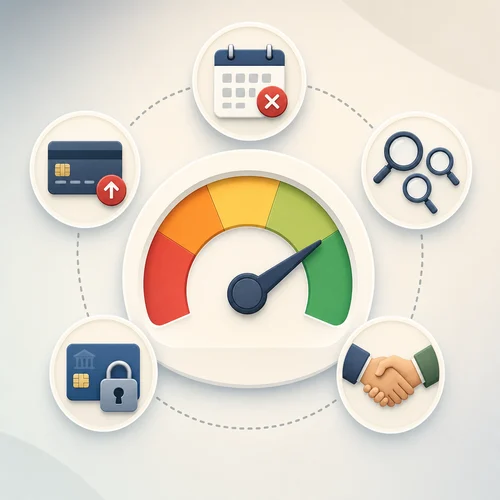
Business loan eligibility in Australia is not based on one single factor. Lenders generally assess the overall risk of lending to your business, including whether the business can afford repayments, how reliable its financial history appears, and whether the requested loan suits the stated purpose.
Different banks, non-bank lenders and finance providers apply their own criteria, so meeting one lender's requirements does not guarantee approval with another. However, most lenders commonly look at a similar set of business loan approval factors. Understanding these criteria can help you prepare a stronger application and identify areas that may need attention before you apply.
This article provides general educational information only. It does not take into account your business objectives, financial situation or needs.
What does business loan eligibility mean?
Business loan eligibility refers to the criteria a lender uses to decide whether it is willing to offer finance, how much it may be willing to lend, and what terms may apply. Eligibility is different from suitability. A business might meet a lender's minimum requirements, but the loan may still not be the right structure, cost or risk profile for that business.
Eligibility also varies by product. For example, an unsecured business loan may place more weight on cash flow, credit history and trading performance, while a secured business loan may also consider the type and value of assets offered as security.
If you are still comparing finance types, the Business Loans Australia overview can help you understand the broader range of business loan options available before you focus on lender requirements.
Key business loan eligibility criteria lenders commonly assess
While every lender has its own policies, the following areas are commonly reviewed when assessing business finance eligibility.
1. Business trading history
Lenders often consider how long the business has been operating. A longer trading history can give a lender more financial data to review, including revenue patterns, expenses, profit margins and repayment behaviour.
Newer businesses and start-ups may still be able to seek finance, but they may face different requirements. A lender may ask for more detail about the business plan, director experience, projected cash flow, available security or other sources of support. Some products are designed for established businesses, while others may be more flexible for newer operators.
2. Business structure and registration
Lenders usually need to confirm who is applying and how the business is structured. This may include whether the applicant is a sole trader, partnership, company or trust. They may also check details such as ABN, ACN where relevant, business name registration, ownership structure and the identity of directors, partners, trustees or beneficial owners.
The structure can affect who is liable for the debt, whether personal guarantees are required, and what supporting documents are needed. Company directors should pay close attention to whether the loan is being taken out by the company, by individuals, or with personal guarantees attached.
3. Revenue and cash flow
Cash flow is one of the most important SME loan criteria because it helps lenders assess whether the business can meet repayments. Lenders may review bank statements, sales revenue, recurring income, seasonal fluctuations, debtor collection patterns and regular expenses.
They are generally looking for evidence that the business has enough cash available after operating costs to service the proposed loan. Strong revenue alone may not be enough if expenses are high, cash flow is volatile or the business regularly runs close to its limits.
4. Profitability and financial performance
Some lenders assess profitability using financial statements, tax returns, profit and loss reports and balance sheets. They may consider whether the business is profitable, whether margins are improving or declining, and whether the business has retained earnings or accumulated losses.
Not all businesses have consistent profits every year, especially if they are investing in growth. If recent results are unusual, it can help to prepare a clear explanation. For example, a temporary decline caused by one-off equipment purchases, expansion costs or a lost contract may be viewed differently from an ongoing decline in trading performance.
5. Existing debts and repayment commitments
Lenders commonly review existing business loans, credit cards, asset finance, overdrafts, tax payment arrangements, leases and other liabilities. They may also consider personal debts of directors or guarantors if those individuals are relevant to the application.
The purpose is to assess total repayment commitments, not just the new loan. A business with multiple existing facilities may still be eligible, but the lender will want to understand whether the combined debt load is manageable.
6. Credit history of the business and directors
Credit history can influence business loan eligibility, pricing and terms. Lenders may review the business credit file and, depending on the application, the personal credit files of directors, partners or guarantors.
They may consider repayment history, defaults, court judgments, insolvency events, credit enquiries and current credit limits. A weaker credit profile does not always mean finance is unavailable, but it may reduce lender options or affect the conditions offered.
If credit history is a concern, you may find it useful to review practical steps in How to Improve Your Credit Score Before Applying for a Business Loan before submitting an application.
7. Loan purpose
Lenders usually want to know why the business needs finance. Common purposes include working capital, stock purchases, equipment, vehicles, expansion, fit-outs, refinancing, tax obligations or commercial property needs.
A clear loan purpose helps the lender assess whether the amount requested is reasonable and whether the loan term matches the useful life of what is being funded. For example, short-term cash flow support may suit a different structure from a longer-term asset purchase.
8. Loan amount and affordability
The amount requested must generally be supported by the business's financial position and repayment capacity. Asking for more than the business can reasonably service may weaken the application, even if the business has a valid need for the funds.
Before applying, it can help to calculate how different repayment amounts could affect your cash flow under normal and slower trading conditions. Lenders may also test affordability using their own assumptions, buffers or internal assessment methods.
9. Security, collateral and personal guarantees
For secured business loans, lenders assess the assets offered as security. These may include commercial property, residential property, vehicles, equipment, invoices or other business assets, depending on the lender and product. The lender will consider whether the asset is acceptable, its estimated value, ownership, existing encumbrances and how easily it could be realised if the loan is not repaid.
For unsecured business loans, the lender does not usually take specific asset security, but may still require personal guarantees from directors or business owners. A personal guarantee can create significant personal financial risk if the business cannot repay the debt. Business owners should read the loan documents carefully and consider professional advice before agreeing to any guarantee or security arrangement.
10. Industry, customer base and business risk
Some industries are considered higher risk by particular lenders due to volatility, regulatory exposure, seasonality, concentration of customers or economic sensitivity. This does not mean businesses in those industries cannot obtain finance, but lenders may apply additional scrutiny.
Lenders may also consider whether the business relies heavily on one customer, supplier, contract or location. A diversified customer base and evidence of stable demand may support the application.
11. Tax position and statutory obligations
Lenders may ask about the business's tax position, including whether tax lodgements are up to date and whether there are outstanding payment arrangements. Being behind on tax obligations does not automatically determine the outcome, but it can affect how a lender views cash flow management and repayment risk.
If there are outstanding obligations, it is usually better to be transparent and provide context rather than wait for the lender to discover inconsistencies during assessment.
12. Quality and consistency of documents
Documentation helps lenders verify the information in an application. Missing, outdated or inconsistent records can delay assessment or create concerns about reliability.
Commonly requested documents may include bank statements, financial statements, tax returns, business activity statements, identification, business registration details, loan statements, contracts, leases and details of assets or liabilities. The exact requirements depend on the lender, product and business type.
For a more detailed document checklist, see What Documents Do Lenders Commonly Request for a Business Loan Application?.
How eligibility criteria differ between secured and unsecured loans
Secured and unsecured business loans often involve different assessment priorities. The table below summarises common differences, noting that lender policies vary.
| Assessment area | Secured business loans | Unsecured business loans |
|---|---|---|
| Security | Lender assesses the asset offered as collateral, including ownership and value. | No specific asset security is usually taken, but personal guarantees may still be required. |
| Cash flow | Still important, as the business must be able to repay the loan. | Often a central focus because the lender relies heavily on repayment capacity. |
| Loan amount | May be influenced by the type and value of security as well as affordability. | May be more limited and closely tied to revenue, cash flow and credit profile. |
| Documentation | May include asset details, valuations or ownership records in addition to financial documents. | May rely more heavily on bank statements, trading history and credit assessment. |
| Risk to owners | Assets offered as security may be at risk if the loan is not repaid. | Personal guarantees can still create personal liability if the business defaults. |
What lenders may look for in newer businesses and start-ups
Start-ups and newer businesses may not have the trading history that established lenders prefer. In these cases, assessment may place more emphasis on the people behind the business and the strength of the plan.
Lenders may consider:
- the experience of directors or owners in the industry;
- the clarity and realism of the business plan;
- cash flow forecasts and assumptions;
- personal credit history and financial position;
- available savings, equity or security;
- signed contracts, purchase orders or customer commitments where available;
- whether the requested funding amount is proportionate to the stage of the business.
Forecasts should be realistic and supported by clear assumptions. Overly optimistic projections can weaken credibility if they are not backed by evidence.
Common eligibility red flags
Some issues can make a business loan application more difficult. They do not always prevent finance, but they may lead to further questions, reduced lender options or different loan terms.
- Irregular cash flow: frequent overdrawing, dishonoured payments or limited cash reserves may concern lenders.
- Incomplete records: missing financial statements, unclear ownership details or inconsistent bank statement information can delay assessment.
- High existing debt: lenders may question whether the business can manage additional repayments.
- Unclear loan purpose: vague explanations can make it harder to assess whether the loan is appropriate.
- Recent defaults or serious credit issues: these may reduce options or require more explanation.
- Unresolved tax or supplier arrears: lenders may ask whether these indicate broader cash flow pressure.
- Over-reliance on one customer or contract: concentration risk may affect confidence in future revenue.
How to prepare before applying
Preparation does not guarantee approval, but it can make the application clearer and easier for a lender to assess. Before applying, consider the following steps.
- Define the purpose of the loan. Be specific about what the funds will be used for and how the loan supports the business.
- Check your financial position. Review revenue, expenses, cash flow, debts and expected repayment capacity.
- Review credit reports. Identify any errors or issues that may need to be addressed before submitting an application.
- Organise documents early. Gather financial statements, tax information, bank statements, identification and business registration details.
- Consider security and guarantees. Understand what assets or personal commitments may be involved.
- Compare lender criteria. Different lenders may suit different business stages, industries and funding purposes.
- Prepare explanations for unusual items. If there are one-off expenses, seasonal dips or recent credit issues, provide clear context.
Questions to ask before you apply
Asking practical questions can help you understand whether a loan application is likely to be assessed on terms your business can manage. Useful questions include:
- What minimum trading history does the lender usually require for this product?
- Will the lender assess personal credit files of directors or guarantors?
- What documents are required upfront, and what may be requested later?
- Is security required, and what types of assets may be acceptable?
- Are personal guarantees required?
- How does the lender assess repayment capacity?
- What happens if revenue is seasonal or irregular?
- Will applying affect my credit file?
- What fees, repayment terms and conditions apply if the loan is approved?
Can a broker help with eligibility?
A finance broker may help identify lenders and products that appear more aligned with your business profile, funding purpose and available documentation. Brokers can also help explain lender requirements and prepare an application. However, using a broker does not guarantee approval, pricing or suitability. Outcomes depend on your circumstances and the lender's criteria.
If your business has unusual circumstances, such as limited trading history, complex ownership, existing debts or seasonal income, getting guidance before applying may help you avoid submitting applications that are unlikely to fit a lender's requirements.
Final thoughts
Business loan requirements in Australia commonly centre on repayment capacity, trading history, credit profile, financial performance, loan purpose, security and documentation. Lenders want to understand not only whether your business needs funding, but whether it can manage the proposed debt under realistic conditions.
Before applying, take time to review your cash flow, organise documents, check your credit position and match the loan purpose to the right type of finance. A well-prepared application will not guarantee approval, but it can make it easier for lenders to assess your business and may help you compare options more confidently.