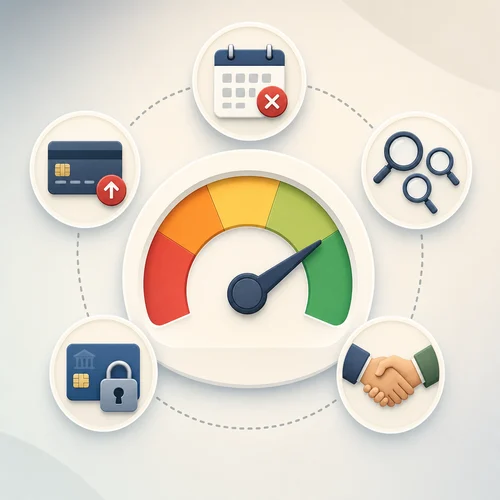
Why planning matters before using a business loan
Business finance can be useful when it is connected to a clear purpose, realistic projections and a repayment plan that fits the business's cash flow. Without that structure, borrowed funds can create pressure through interest costs, fees, repayment commitments and potential security obligations.
Effective loan utilisation starts before funds are drawn down. It involves understanding why the loan is needed, how the money will be allocated, what returns or efficiencies are expected, and how repayments will be managed if trading conditions change.
This article is educational only and does not replace financial, legal or tax advice. Business owners should consider their own circumstances and, where needed, seek professional guidance before committing to finance.
Understand the main types of business finance
Different loan structures suit different funding purposes. Before deciding how borrowed funds will be used, it is important to understand the broad categories commonly considered by Australian businesses.
Secured and unsecured business loans
A secured business loan is supported by collateral, such as property, equipment or other business assets. Security can reduce the lender's risk and may affect the terms offered, but it also means the secured asset may be at risk if the business cannot meet its repayment obligations.
An unsecured business loan does not require specific collateral in the same way. Because the lender has less asset security, the loan may have different pricing, eligibility or repayment requirements. The suitability of either structure depends on the business's assets, cash flow, risk tolerance and borrowing purpose.
For more detail on how security and guarantees can affect a finance arrangement, see this guide to personal guarantees and security for business loans in Australia.
Short-term and long-term loans
Short-term loans are generally used for immediate or temporary funding needs, such as working capital gaps or short-term operating requirements. Long-term loans are more commonly associated with larger investments that may produce benefits over a longer period, such as expansion, equipment purchases or major operational upgrades.
The term should reflect the useful life of what the loan is funding. Using long-term debt for short-lived expenses, or short-term debt for a project that takes years to generate returns, can place unnecessary pressure on cash flow.
Lines of credit, equipment finance and invoice finance
A business line of credit provides access to funds up to an approved limit and may be used to manage cash flow or unexpected expenses. Equipment finance is designed to help fund business equipment, with the equipment often forming part of the security arrangement. Invoice finance allows a business to access funds against the value of outstanding invoices, which may assist with liquidity while waiting for customers to pay.
The right structure depends on the funding need. A one-off asset purchase may require a different approach from recurring working capital support.
Assess your business's financial needs
A borrowing decision should begin with a clear view of the business's current financial position. This includes reviewing cash inflows and outflows, existing debts, expenses, margins and revenue trends. The goal is to identify whether the business needs external funding and, if so, how much funding is reasonable.
Clarify the purpose of the loan
Loan funds should be tied to a specific purpose. Common reasons include managing temporary cash flow pressure, purchasing equipment, expanding into a new location, increasing production capacity, hiring staff or investing in operational improvements.
A clear purpose helps determine the loan amount, loan type, term and repayment structure. It also helps the business avoid borrowing more than it can use productively.
Test the borrowing amount against projections
Forecasts should show how the loan will affect both the business's costs and expected outcomes. This includes the cost of the loan, the timing of repayments, likely revenue benefits, expected efficiency gains or any other measurable business impact.
Projections should be realistic rather than optimistic. A useful plan considers what happens if revenue is delayed, expenses are higher than expected or the funded project takes longer to produce results.
Build a business plan around loan utilisation
A business plan is more than an application document. It can also act as the operating roadmap for how funds will be used after approval.
A practical business plan may include:
- an executive summary explaining the business and its funding objective;
- a description of the business, products or services;
- market analysis and the opportunity being pursued;
- the business structure and key personnel;
- marketing and sales strategies;
- a budget for how the loan funds will be spent;
- financial projections, including the loan cost and repayment assumptions; and
- supporting documents, where relevant.
If funds are intended for expansion, the plan should explain the expansion process, expected costs and how the business expects to support repayments. If funds are intended to stabilise cash flow, the plan should identify the cause of the cash flow gap and how the loan fits into a broader cash management approach.
Businesses seeking professional input can also learn more about the role of brokers and advisers when considering finance options.
Plan collateral and security carefully
Where a loan involves collateral, the business needs to understand both the potential benefits and the risks. Collateral can include assets such as property, equipment, inventory or other business assets, depending on the lender and loan structure.
Asset selection should be considered carefully. An asset that is essential to daily operations may create greater business disruption if it is put at risk. Some assets may also be easier to value or sell than others, which can influence how a lender views the security.
Before offering collateral, consider:
- whether the asset is critical to normal business operations;
- how losing access to the asset would affect revenue or production;
- whether the asset may depreciate or become obsolete;
- how the security arrangement affects other borrowing options; and
- whether personal guarantees or related obligations may apply.
A conservative approach can help the business avoid pledging assets that would place future operations under unnecessary pressure.
Create a repayment strategy before drawing funds
Repayment planning should happen before the loan is taken out, not after the first repayment falls due. Start by calculating how much the business can afford to repay from regular cash flow after allowing for operating expenses, supplier payments, wages, tax obligations and other commitments.
Match repayments to cash flow patterns
Some businesses have steady revenue across the year, while others experience seasonal peaks and slower periods. Repayment structures should be assessed against those patterns so that repayments do not create avoidable cash flow pressure during quieter periods.
When estimating repayment capacity, a calculator can help model different loan amounts, terms and repayment assumptions. The business loan repayment calculator may be useful for comparing repayment scenarios as part of planning.
Consider the effect of early repayment
Paying down debt early may reduce interest costs over time, but some loan agreements include early repayment fees or conditions. Before making extra repayments or refinancing, review the loan terms and compare the potential savings with any costs involved.
For a deeper explanation of repayment calculations and structures, read this guide to how business loan repayments are calculated.
Use loan funds for defined business outcomes
Loan funds should be allocated to activities that have been planned and costed. Common uses include growth initiatives, operational improvements and cash reserves for unexpected costs.
Investing in growth opportunities
A business loan may be used to support expansion into new markets, development of new products, higher production capacity or additional staff. Each opportunity should be assessed against its expected return and the cost of borrowing.
The business should identify how the funded activity may increase revenue, reduce costs or support long-term capacity. The expected benefit should be measured against interest, fees and repayment obligations.
Improving operations and efficiency
Loan funds may also be used to improve efficiency. Examples include technology upgrades, staff training, new equipment or process improvements. These investments can help the business produce more efficiently, improve service quality or reduce operating costs, provided the expected benefits are realistic and measurable.
Maintaining a reserve for unexpected expenses
Some businesses use finance to create a buffer for unforeseen expenses such as urgent repairs, revenue interruptions or other short-term pressures. This should be approached carefully because borrowed reserves still need to be repaid. The reserve should form part of a broader cash flow plan rather than a substitute for disciplined budgeting.
Monitor performance after the loan is in place
Loan utilisation should be reviewed regularly. Monitoring helps the business confirm whether funds are being used as intended and whether the expected outcomes are being achieved.
Set measurable benchmarks
Benchmarks provide a way to assess progress. Depending on the purpose of the loan, benchmarks may relate to revenue, margins, customer numbers, production capacity, expense reductions, cash reserves or project milestones.
These measures should be set before funds are spent. That makes it easier to identify whether the loan-funded activity is supporting the business objective.
Review financial performance regularly
Regular reviews can identify spending variations, repayment pressure, changing cash flow conditions and unexpected risks. Monthly or quarterly reviews may be appropriate depending on the size of the loan, the type of project and the volatility of the business's revenue.
Reviews should consider both the loan account and the broader business position. A project may be on budget but still place pressure on cash flow if revenue is delayed or operating costs rise.
Adjust the strategy when conditions change
Business conditions can shift. Markets change, customer demand moves, expenses rise and opportunities can appear after a loan has been established. A useful loan plan is structured but not rigid.
If reviews show that the original plan is not producing the expected result, the business may need to adjust spending priorities, revise budgets, reconsider repayment timing or seek professional advice. Any changes should remain consistent with the loan agreement and the business's ability to meet repayments.
Common pitfalls to avoid
Planning also means identifying risks before they become problems. The following issues are common when loan funds are not managed carefully.
Over-leveraging
Borrowing more than the business can reasonably service can reduce flexibility and increase financial stress. Before taking on debt, consider existing obligations and whether the loan-funded activity is likely to strengthen the business rather than simply increase liabilities.
Mixing personal and business finances
Keeping personal and business finances separate makes it easier to track spending, income and repayments. Clear separation also supports better record keeping and may simplify tax preparation and financial reporting.
Ignoring compliance and tax considerations
Business finance can have accounting, tax and compliance implications. The specific treatment depends on the business, the loan purpose and the way funds are used. Seeking appropriate legal, accounting or financial advice can help avoid mistakes and support better decision-making.
Not comparing terms before committing
Costs, repayment structures, security requirements and loan features can vary. When a business is ready to compare available options or make an enquiry, it can start with the business loan quote start page and then review the details carefully before making a decision.
Summary: a practical roadmap for business loan utilisation
Effective business loan utilisation is a structured process. It begins with a clear assessment of the business's financial position and a defined purpose for borrowing. It then requires a business plan, realistic projections, careful consideration of security, and a repayment strategy that reflects cash flow.
After the loan is in place, the work continues. Monitoring benchmarks, reviewing financial performance and adjusting the strategy when circumstances change can help the business keep the loan aligned with its objectives.
A business loan should be treated as a financial tool with costs, obligations and risks. With careful planning, disciplined use of funds and regular review, businesses can make more informed decisions about how borrowed capital fits into their broader financial strategy.