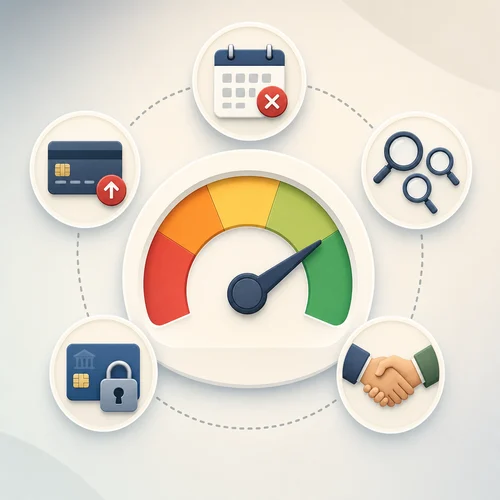
What lenders look for in a caravan loan application
Caravan loan criteria can vary between lenders, brokers and finance providers. However, many lenders will look at similar fundamentals when deciding whether to approve an application and what interest rate to offer. These commonly include your credit history, income, employment stability, existing debts, deposit and the overall loan amount.
A lower interest rate is not guaranteed simply because a borrower applies for one. The rate offered usually depends on the lender's assessment of risk, the loan terms and the borrower's financial position. Understanding the main assessment areas can help you prepare a clearer application and compare loan offers more effectively.
Some lenders may ask for supporting documents such as proof of income, tax returns, bank statements and other evidence of financial stability. In some cases, lenders may also use electronic credit reporting to review past credit behaviour, including previous loans, credit card activity, repayments and any defaults.
Step 1: Review your credit history before applying
Your credit history is one of the key factors lenders may consider when assessing a caravan loan. A stronger credit profile may support an application for a more competitive rate, while missed repayments, defaults or high existing credit commitments may affect how a lender views the application.
Before applying, it can be useful to consider whether your current debts and credit card balances are manageable. Paying existing debts on time and keeping credit card balances lower may help demonstrate responsible financial behaviour. This does not guarantee a lower rate, but it can form part of a stronger overall application.
Credit behaviour that may be reviewed
- Repayment history on previous loans and credit cards.
- Existing debts and ongoing financial commitments.
- Credit card balances and credit usage.
- Defaults or other negative credit events, where applicable.
- Recent credit applications and general borrowing behaviour.
If you are not sure how caravan loan terms are structured, it may help to read more about understanding caravan loan terms before comparing offers.
Step 2: Prepare evidence of stable income and financial position
Lenders generally need to be satisfied that a borrower has the capacity to repay the loan. This is why income, employment history and overall financial stability are important parts of the application process.
The exact documentation required will depend on the lender and the type of application. Common examples include recent payslips, bank statements, tax returns or other documents that show income and regular expenses. The purpose of these documents is to help the lender assess whether the proposed repayments appear affordable based on the information provided.
Documents you may need to provide
| Information area | Examples lenders may request |
|---|---|
| Income | Payslips, tax returns or other proof of earnings. |
| Banking activity | Bank statements showing income, spending and regular commitments. |
| Credit commitments | Details of current loans, credit cards or other repayments. |
| Financial stability | Information that supports consistent income and capacity to repay. |
A larger deposit may also reduce the amount you need to borrow. A smaller loan amount can reduce the total interest payable over the life of the loan, although the actual interest rate and total cost will still depend on the lender's terms, fees and assessment.
Step 3: Compare caravan loan offers carefully
Interest rates on caravan loans can vary significantly depending on the lender, loan type and contract terms. Comparing only the headline interest rate may not give a full picture of the total cost. Fees, charges, loan term and repayment structure can all affect what you pay overall.
Before applying, compare offers from several lenders or finance brokers. You can also learn more about how to choose and compare caravan loans in Australia if you want a broader overview of the comparison process.
Loan features and costs to compare
- The advertised interest rate and how it applies to the loan.
- Loan establishment or origination fees.
- Closing costs or other applicable fees.
- The loan term and repayment frequency.
- The total cost of the loan, not just the monthly repayment.
- Any conditions included in the loan contract.
A finance broker may be able to help compare loan options from different lenders. If you want to understand the role brokers can play, see this overview of caravan finance brokers.
Ways to finance a caravan purchase
A dedicated caravan loan is one way to finance a caravan purchase. Some buyers may also consider other forms of credit, such as a personal loan, home loan redraw or credit card. These options are not always the most suitable way to finance a caravan, and the interest rates may not be as low as a specific caravan finance product.
The right comparison depends on the full loan cost, repayment structure and contract terms. Before signing, read the loan contract carefully and make sure you understand the fees, repayment obligations and any conditions attached to the finance.
Estimating repayments before you apply
Repayment estimates can help you understand how loan amount, term and interest rate may affect your budget. A calculator is not a loan approval or quote, but it can be a useful starting point when planning how much to borrow and comparing possible repayment scenarios.
You can use the Caravan Loan Repayment Calculator to estimate repayments and review how different assumptions may affect the overall cost.
Before signing a caravan loan contract
Once you have compared loan offers, take time to review the contract before signing. The lowest advertised rate may not always produce the lowest total cost once fees and conditions are included. Make sure you understand the interest rate, fees, repayment schedule and all terms and conditions.
If you decide to request pricing from the website, you can start with a neutral caravan finance quote. Treat any quote as part of your comparison process rather than a guarantee of approval or a particular interest rate.
Key takeaways
- Credit history, income stability and existing debts can influence lender assessment.
- Documents such as proof of income, tax returns and bank statements may be required.
- A larger deposit may reduce the amount borrowed and total interest payable.
- Compare rates, fees, terms and total loan cost before applying.
- Read the contract carefully so you understand the loan conditions before signing.