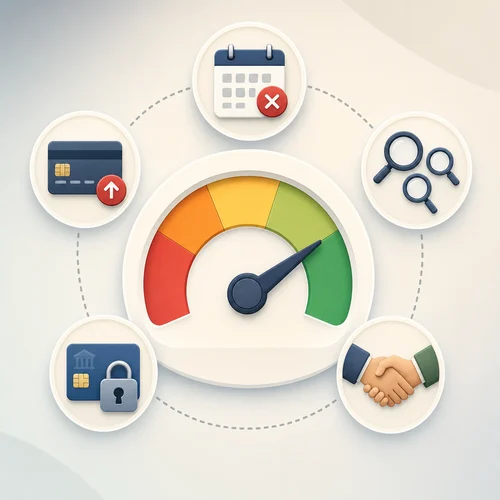
If you are considering a personal or business loan under $10,000, it can help to know what usually happens after you submit an enquiry or application. The small loan application process in Australia is not just a formality. Lenders and brokers may need to check your identity, income, expenses, existing debts, credit history and the purpose of the loan before deciding whether finance is available.
This guide explains the typical steps, documents and assessment points involved when you apply for a small loan in Australia. It is general information only, not personal financial advice. Approval, loan amounts, rates, fees and repayment terms depend on your circumstances and the criteria of the lender or credit provider.
Small loan application process: the typical steps
The process can vary between lenders, brokers and loan types, but many small loan applications follow a similar pathway:
- You submit an enquiry or application with basic details about the amount, purpose and your financial position.
- Your identity and contact details are checked so the provider can confirm who is applying.
- Income, expenses and debts are reviewed to help assess whether repayments may be affordable.
- Credit and account conduct may be considered, including your credit report and recent banking behaviour.
- The lender assesses suitability and risk under its own policies and any applicable responsible lending obligations.
- You may receive a conditional response, request for more information or decline, depending on the application.
- If approved, you review the loan offer, including the amount, term, repayments, fees and conditions.
- If you accept, settlement occurs and funds may be paid according to the lender’s process.
For borrowers who want to understand possible assessment options before starting, the Small Loans Australia homepage explains the types of small loan enquiries the site supports.
Step 1: Working out what you need before applying
Before you apply, it is worth being clear about the amount you need and why you need it. A smaller loan may still create financial pressure if the repayment schedule is tight, while borrowing more than necessary can increase the total cost.
Common reasons Australians consider loans under $10,000 include car repairs, urgent household costs, medical or dental expenses, business cash flow, equipment, stock, tools or short-term operating needs. The purpose may affect the type of loan considered and the documents requested.
Helpful questions to ask before applying include:
- Is this expense essential, urgent or planned?
- Can part of the cost be covered from savings, a payment plan or another option?
- What repayment amount could fit within my regular budget?
- Would a shorter or longer term create a more manageable repayment structure?
- Am I applying as an individual, a sole trader or a business borrower?
Step 2: Completing the application or enquiry form
A small loan application generally asks for personal, employment and financial information. If you are applying for business finance, it may also ask about your ABN, trading history, business income and how the funds will be used.
You may be asked for details such as:
- your full name, date of birth and contact details;
- your residential address and identification details;
- employment type, income source and pay frequency;
- regular living expenses and existing loan or credit card repayments;
- the amount you want to borrow and your preferred loan term;
- the loan purpose;
- bank account details for statement review or direct debit set-up, where applicable;
- business details, if applying for a small business loan.
Accuracy matters. Incorrect income, missing debts or inconsistent information can slow the process or affect the assessment outcome. If something in your situation is unusual, such as irregular casual income or recent self-employment, it may be better to explain it clearly rather than leave gaps.
Step 3: Identity checks and basic verification
Australian lenders and credit providers generally need to verify identity before providing credit. The exact process depends on the provider, but you may be asked for government-issued identification or other documents that confirm your identity and address.
Identity checks help reduce fraud and confirm that the applicant is the person requesting credit. They are separate from credit approval. Passing an identity check does not mean the loan itself has been approved.
Step 4: Documents commonly requested for loans under $10,000
The documents requested depend on the loan type, lender, employment type and application details. Some applications may be assessed with digital bank statements or electronic verification, while others may require uploaded documents.
| Applicant situation | Documents or information that may be requested |
|---|---|
| Employee | Recent payslips, bank statements, employment details and regular expense information |
| Casual or part-time worker | Payslips, bank statements and evidence of income consistency over time |
| Self-employed or sole trader | Bank statements, business income details, ABN information, tax records or accountant-prepared information where relevant |
| Small business borrower | Business bank statements, cash flow information, business purpose, ABN and trading details |
| Centrelink or mixed-income applicant | Evidence of eligible income sources, bank statements and expense details, depending on lender criteria |
Not every lender will ask for every document. However, having key information ready can make it easier to respond if the lender or broker requests more detail.
Step 5: Income, expenses and affordability checks
One of the most important parts of the loan approval process is the affordability assessment. A lender may consider whether the proposed repayments appear manageable based on your income, expenses and existing commitments.
For personal borrowers, this may include wages, benefits, regular living costs, rent or mortgage payments, credit card limits, buy now pay later commitments and other loan repayments. For business borrowers, the assessment may also look at cash flow, trading income and whether the loan purpose is linked to business activity.
Affordability is not only about whether you can make the first repayment. A responsible borrowing decision should consider whether repayments can be maintained across the loan term, including during tighter months or if income varies.
Step 6: Credit history and bank statement review
Your credit report may form part of the assessment. Lenders may consider previous credit applications, defaults, repayment history, current accounts and other credit-related information. A poor credit history does not automatically mean every option is unavailable, but it may affect whether a lender is willing to offer finance, the amount offered or the loan conditions.
Some lenders may also review recent bank statements. This can help them understand income deposits, recurring expenses, account conduct, existing debts and whether there are patterns that raise affordability concerns.
If you are unsure whether you meet common loan requirements, you can read more about eligibility for small loans under $10,000 in Australia before applying.
Step 7: Personal loan versus business loan assessment
The application process can differ depending on whether the loan is for personal or business use.
Personal small loans
A personal small loan is generally assessed around your personal income, expenses, debts, credit history and the purpose of borrowing. The lender wants to understand whether the loan is suitable and whether repayments are likely to be affordable.
Small business loans
A small business loan may place more weight on business cash flow, trading history, business bank statements, tax position, industry conditions and how the funds will support the business. Sole traders may be assessed using a mix of personal and business information because their finances can be closely connected.
If the loan is for a business, be prepared to explain how the funds will be used. For example, buying tools, replacing equipment or covering a short-term stock purchase may be assessed differently from borrowing to cover ongoing losses.
Step 8: Broker or lender review
Some borrowers apply directly with a lender, while others use a broker or referral service. A broker may help gather information, identify lender options and explain documentation requirements. However, a broker does not control every lender decision, and the final outcome still depends on lender criteria and your circumstances.
If you want guided support rather than approaching lenders one by one, the broker information page explains how broker-style assistance may fit into the application process.
When using any broker or intermediary, consider asking:
- Which lenders or credit providers may receive my application?
- Will submitting an application involve a credit enquiry?
- What fees, commissions or referral arrangements may apply?
- What information will be shared, and how will it be used?
- Can I review the loan terms before accepting anything?
Step 9: Conditional responses, approvals and declines
After assessment, you may receive a range of responses. These can include a request for more information, a conditional approval, a formal loan offer or a decline.
A conditional response usually means the lender still needs to verify information or check documents before making a final decision. For example, the lender may need clearer bank statements, updated payslips or confirmation of employment or business income.
If an application is declined, it does not always mean borrowing is impossible forever. It may mean the lender could not approve the loan under its current policies, the requested amount was not affordable, the documentation was insufficient, or there were concerns in the credit or bank statement review. Submitting multiple applications in a short period can affect your credit file, so it is worth pausing and understanding the reason where possible.
Step 10: Reviewing the loan offer before signing
If a lender offers you a loan, take time to review the details before accepting. A loan under $10,000 can still be expensive if the fees, interest rate or repayment schedule are not suitable for your budget.
Check the following carefully:
- Loan amount: confirm it matches what you need and can repay.
- Interest rate and comparison rate: understand how the cost is calculated where these are disclosed.
- Fees and charges: look for establishment fees, monthly fees, late payment fees, early repayment fees or other costs.
- Repayment amount and frequency: make sure the repayment timing aligns with your income cycle.
- Loan term: a longer term may reduce each repayment but can increase total cost.
- Security: check whether the loan is secured against an asset or unsecured.
- Default consequences: understand what may happen if repayments are missed.
- Hardship options: check what to do if you later experience repayment difficulty.
It is also useful to understand the borrower protections and rules that may apply. The article on small loan regulations in Australia explains fees, responsible lending and complaint pathways in more detail.
How long does a small loan application take?
Timing can vary. Some providers may respond quickly to an enquiry, while others need more time to review documents, verify information or assess complex income. A fast initial response is not the same as a final approval or settlement.
Factors that can affect timing include:
- whether your application is complete and accurate;
- how quickly you provide requested documents;
- whether your income is regular or variable;
- whether you are applying personally or for a business;
- the lender’s verification and credit assessment process;
- bank processing times after settlement.
If funds are needed urgently, avoid assuming that money will be available by a specific time. Ask the provider what steps remain, whether approval is conditional and when funds may be released if the loan proceeds.
Common reasons an application may slow down
Small loan applications often slow down because information is missing or inconsistent. Common issues include:
- income on the application not matching bank deposits or payslips;
- unlisted debts or repayment commitments;
- unclear business income or mixed personal and business accounts;
- bank statements that do not cover the requested period;
- expired or mismatched identification documents;
- recent credit applications that need explanation;
- requested loan amount not aligning with apparent repayment capacity.
Responding promptly and accurately can help the lender complete its review, although it does not ensure a particular outcome.
How to prepare for a smoother application
You may be able to make the process easier by preparing before you apply. Consider the following steps:
- Check your budget and work out a realistic repayment amount.
- Gather recent payslips, bank statements or business records.
- Review your credit report if you are concerned about past credit issues.
- List existing debts, credit cards and regular repayments honestly.
- Decide whether the loan is personal or business-related.
- Borrow only what you reasonably need.
- Avoid making several applications at once without understanding the potential credit impact.
- Read the loan contract and ask questions before accepting.
When a small loan may not be the right next step
A small loan is not suitable for every situation. If repayments would leave you short for rent, food, utilities or other essentials, taking on new debt may make financial stress worse. If the loan is mainly to repay other high-cost debt, it may be worth looking at budgeting support, hardship options or free financial counselling before applying.
You should also be cautious if a provider pressures you to sign quickly, avoids explaining fees, suggests you borrow more than you need, or implies approval is certain before proper assessment. Reputable credit providers should give you enough information to understand the loan and make an informed decision.
Final Thoughts
- The small loan application process usually involves identity checks, income verification, expense review, credit assessment and affordability checks.
- Documents may include payslips, bank statements, identification and business records, depending on your circumstances.
- Approval, timing, loan amount, pricing and conditions depend on lender criteria and your financial position.
- A conditional response is not the same as final approval.
- Before accepting a loan, review the total cost, repayment schedule, fees, security and hardship options.
- If repayments may be difficult, consider alternatives and support options before taking on new debt.