Business vehicle finance in Australia is not limited to one type of loan. Depending on how the vehicle will be used, who will own it, how the repayments are treated and what happens at the end of the term, a lender or broker may discuss several different finance structures with you.
For small business owners, sole traders, self-employed borrowers and company directors, understanding these structures can make it easier to ask the right questions before committing to a vehicle. This article explains the main business vehicle finance structures in Australia at a general level, including chattel mortgages, finance leases, commercial hire purchase and lease-style arrangements.
This is general information only. It is not personal financial, tax or legal advice. The right structure for a business vehicle depends on your circumstances, business use, cash flow, accounting treatment, lender criteria and tax position. Consider speaking with a qualified accountant, tax adviser or finance professional before deciding.
Business vehicle finance structures at a glance
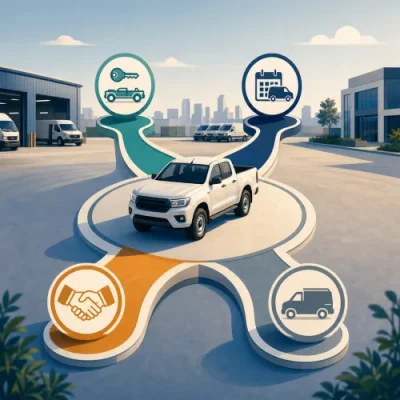
Most business car finance structures are designed to help a business acquire or use a vehicle without paying the full purchase price upfront. The differences usually come down to ownership, security, GST and tax treatment, repayments, residual values and end-of-term options.
| Finance structure | Typical ownership position | Common use case | End-of-term outcome |
|---|---|---|---|
| Chattel mortgage | The business generally owns the vehicle from the start, while the lender takes security over it | Businesses wanting ownership and a secured commercial car loan structure | Loan is paid out; any balloon payment must be paid, refinanced or managed as agreed |
| Finance lease | The financier usually owns the vehicle during the lease term | Businesses wanting use of a vehicle without initial ownership | Residual value may be paid, refinanced or the vehicle may be returned or dealt with under the lease terms |
| Commercial hire purchase | The financier usually owns the vehicle until the final payment or purchase option is completed | Businesses wanting to hire the vehicle over time with a path to ownership | Ownership may transfer after final payment and any required option amount |
| Operating lease or rental-style arrangement | The provider usually retains ownership | Businesses wanting vehicle use with less focus on ownership | Vehicle is usually returned, replaced or renewed under the arrangement |
Chattel mortgage: a common commercial car loan structure
A chattel mortgage is one of the most common forms of business vehicle finance in Australia. The vehicle is the “chattel”, or movable asset, and the lender takes a mortgage or security interest over it. In practical terms, the business usually takes ownership of the vehicle at the beginning, while the lender registers an interest in the vehicle as security for the loan.
Chattel mortgages are often used for utes, vans, cars, light commercial vehicles and some business equipment where the vehicle is mainly for business use. The borrower makes regular repayments over the agreed term. Some chattel mortgages include a balloon payment at the end, which can reduce regular repayments but leaves a larger amount to deal with later.
Potential advantages of a chattel mortgage
- The business generally owns the vehicle from the start, subject to the lender’s security interest.
- Repayments can be structured over a fixed term, which may support cash flow planning.
- A balloon payment may be available, depending on lender criteria and the vehicle.
- If the business is eligible and registered for GST, there may be GST and tax implications to discuss with an accountant.
Potential considerations
- The vehicle is used as security, so missing repayments can have serious consequences.
- A balloon payment can create refinancing or cash flow pressure at the end of the term.
- The business is usually responsible for running costs, insurance, servicing and depreciation risk.
- Tax treatment depends on business use, entity structure and other factors.
If you are comparing a chattel mortgage with other commercial options, it can help to first clarify whether the vehicle will be mostly for business use or mixed personal and business use. For a broader comparison of purpose and borrower type, see Personal and Commercial Car Loans in Australia: Key Differences Explained.
Finance lease: using the vehicle without owning it upfront
A finance lease is a structure where the financier usually purchases the vehicle and leases it to the business for an agreed period. The business makes lease payments in return for using the vehicle. Unlike a chattel mortgage, the business generally does not own the vehicle at the start of the agreement.
Finance leases may include a residual value, which is an amount set at the beginning of the lease and dealt with at the end of the term. The business may have options such as paying the residual, refinancing it, returning the vehicle or entering a new arrangement, depending on the contract.
Potential advantages of a finance lease
- The business can use a vehicle without purchasing it outright at the start.
- Regular lease payments may support predictable budgeting.
- End-of-term options may provide flexibility, depending on the agreement.
- It may suit businesses that plan to update vehicles regularly.
Potential considerations
- The financier usually owns the vehicle during the lease term.
- The residual value must be understood before signing, as it can affect total cost and end-of-term decisions.
- There may be restrictions or obligations around vehicle condition, use, insurance and disposal.
- Accounting and tax treatment should be confirmed with a qualified adviser.
Commercial hire purchase: hiring with a path to ownership
Commercial hire purchase is a business finance arrangement where the financier buys the vehicle and hires it to the business over a fixed period. The business makes regular payments and may take ownership once all payments and any final option amount have been made.
This structure has historically been used for business vehicles and equipment. It can look similar to a chattel mortgage in some ways because the business is working towards ownership, but the legal ownership position during the term can be different.
Potential advantages of commercial hire purchase
- It can provide a structured path to vehicle ownership.
- Repayments are generally known in advance, subject to the contract terms.
- It may suit some businesses that prefer not to own the vehicle until the end of the finance term.
Potential considerations
- The financier may retain ownership until the agreement is completed.
- Early payout, termination or vehicle sale options may be limited or subject to costs.
- Tax and GST treatment can differ from other structures and should be checked before applying.
- Not every lender offers commercial hire purchase, and product availability can vary.
Operating leases and rental-style vehicle arrangements
An operating lease or rental-style arrangement is generally more focused on vehicle use than vehicle ownership. The provider usually retains ownership, and the business pays for access to the vehicle over the agreed period. Some arrangements may include servicing, maintenance, tyres, registration or fleet management features, while others may be simpler.
These structures may appeal to businesses that want to update vehicles regularly, manage a fleet, or avoid owning vehicles that may depreciate. However, they can also include usage limits, condition requirements and end-of-term obligations.
Potential advantages
- The business may be able to access vehicles without intending to own them.
- Some arrangements may bundle running or fleet management services.
- It may help businesses that want regular vehicle replacement cycles.
Potential considerations
- The business usually does not build ownership in the vehicle.
- There may be kilometre limits, excess usage charges or condition requirements.
- Total cost should be compared carefully against buying or financing the vehicle.
- The accounting treatment can be different from loan-style finance.
Residual values and balloon payments
Many business vehicle finance structures involve a larger amount at the end of the term. In a chattel mortgage, this is commonly called a balloon payment. In a lease, it is often referred to as a residual value. The exact meaning depends on the contract.
A balloon or residual can reduce regular repayments during the term, but it does not remove the cost. The business still needs a plan for what happens at the end. Options may include paying the amount from business funds, refinancing it, trading the vehicle, selling the vehicle, or entering a new arrangement. The available options depend on the finance structure, vehicle value, lender criteria and contract terms.
Before agreeing to a balloon or residual, ask:
- How much will be due at the end of the term?
- Is the amount fixed, estimated or subject to conditions?
- What happens if the vehicle is worth less than expected?
- Can the amount be refinanced, and would approval be reassessed?
- Are there fees, payout rules or restrictions if the vehicle is sold early?
You can use a vehicle loan calculator to model how different loan terms, repayment amounts and end-of-term payments may affect cash flow. Calculator results are estimates only and will not confirm lender approval, pricing or suitability.
GST, tax and accounting considerations
Tax treatment is one of the main reasons business owners compare finance structures carefully. Depending on the structure and the business, there may be issues involving GST, interest, depreciation, lease payments, business-use percentage, fringe benefits tax, record keeping and asset treatment.
For example, a business that is registered for GST may need to consider whether and when GST credits may be available. A business that uses a vehicle partly for private use may need to keep records showing business use. A company providing a vehicle to an employee or director may also need to consider fringe benefits tax implications.
These areas can be complex and can change depending on the business structure, vehicle type, contract, use pattern and accounting method. A lender or broker can explain the finance product, but an accountant or tax adviser is generally better placed to explain tax outcomes for your business.
How vehicle use can affect the structure
The way the vehicle is used can influence whether a commercial car loan structure is appropriate. Lenders may ask whether the vehicle is mainly for business use, private use, commuting, mixed use, delivery work, rideshare, trade work, farm use or fleet use.
Common factors include:
- Business-use percentage: A vehicle used mainly for business may be assessed differently from one used mostly for personal purposes.
- Borrower type: A sole trader, partnership, company or trust may need different documentation.
- Vehicle type: A passenger car, ute, van, truck or specialised vehicle may affect lender appetite and loan structure.
- Age and condition: Older vehicles may have different finance terms or security requirements.
- Income evidence: Businesses may need financial statements, tax returns, BAS, bank statements or other documents, depending on lender criteria.
Self-employed borrowers who do not have standard employee payslips may also need to consider documentation requirements. For more detail, see Self-Employed and Low Doc Car Loans in Australia: Eligibility and Documentation.
Questions to ask before choosing a business car finance structure
Before applying for business car finance structures, consider asking your lender, broker, accountant or adviser the following questions:
- Who will legally own the vehicle during the finance term?
- Is the vehicle used as security, and how is that security recorded?
- What documents will the business need to provide?
- Are repayments fixed or variable?
- Is there a balloon payment, residual value or final option amount?
- What happens if the business wants to sell, upgrade or refinance early?
- Are there early repayment, break, termination or payout fees?
- How does the structure affect GST, depreciation, interest, lease payments or other tax items?
- How will private use, employee use or director use be recorded?
- What insurance obligations apply while the finance is in place?
Which business vehicle finance structure may suit different businesses?
There is no single structure that suits every business. A chattel mortgage may appeal to businesses that want ownership from the start and are comfortable with a secured commercial car loan. A finance lease may suit businesses that want vehicle use with end-of-term options. Commercial hire purchase may appeal where a business wants a structured path to ownership under that product type. Operating leases may suit businesses more focused on access, fleet turnover or bundled services than ownership.
The right option depends on cash flow, tax position, business-use percentage, vehicle type, ownership preference, future upgrade plans and lender availability. It is also important to compare the total cost, not just the monthly repayment.
Final thoughts
Business vehicle finance in Australia can involve several structures, each with different ownership, repayment, tax and end-of-term implications. The key is to understand what you are signing up for before focusing on the repayment amount alone.
Start by clarifying how the vehicle will be used, who should own it, whether a balloon or residual is acceptable, what documentation is available and what tax questions need professional advice. With those points clear, it becomes easier to compare chattel mortgages, finance leases, commercial hire purchase and lease-style options in a more practical way.