Farm equipment finance eligibility is not based on one single rule. Australian lenders and finance providers generally assess the farmer, the farming business, the equipment being purchased and the proposed repayment structure together. The aim is to understand whether the finance is suitable for the asset, whether repayments appear manageable and whether the application fits the provider’s lending criteria.
This guide explains the information Australian farmers, agribusiness owners and rural operators are commonly asked to provide when applying for farm equipment finance, and the factors that may affect eligibility. It is general information only and does not take into account your personal objectives, financial situation or needs.
What does farm equipment finance eligibility usually involve?
Eligibility for farm equipment finance usually depends on whether a lender is comfortable with the borrower, the asset and the repayment proposal. For example, a lender may consider whether the equipment is suitable for commercial farm use, whether the applicant can demonstrate income, and whether the loan term is appropriate for the equipment’s expected working life.
Providers may assess applications differently depending on whether the finance is for a tractor, harvester, irrigation system, livestock handling equipment, farm vehicle or another productive asset. New and used machinery may also be treated differently.
Common assessment areas include:
- the applicant’s identity, business structure and trading history;
- ABN, GST registration or company details where relevant;
- farm income, seasonal cash flow and existing commitments;
- credit history and previous repayment conduct;
- details of the equipment, supplier and purchase price;
- the proposed deposit, trade-in or balloon payment if applicable;
- the security position, including whether the equipment will be used as security;
- the purpose of the equipment and how it supports the farm operation.
Common farm machinery finance application requirements
Documentation requirements vary between lenders, brokers and finance products. A straightforward application for a known borrower may require less information than a larger purchase, a specialised asset or an application from a newer farm business.
The table below summarises information commonly requested during a farm machinery finance application.
| Application area | Examples of information lenders may request | Why it may matter |
|---|---|---|
| Identity and business details | Personal identification, ABN, ACN if applicable, business name, trust details or partnership information | Helps confirm who is borrowing and how the farming operation is structured |
| Income and cash flow | Financial statements, tax returns, BAS, bank statements, accountant-prepared figures or farm income records | Helps assess whether repayments may be manageable, including during seasonal income periods |
| Existing debts and commitments | Current equipment loans, vehicle finance, overdrafts, leases, mortgages or trade accounts | Shows the broader repayment obligations of the business |
| Asset details | Supplier quote, invoice, make, model, year, serial number, hours of use, condition and intended use | Helps assess the equipment’s value, suitability and security position |
| Deposit or trade-in | Cash contribution, trade-in value or equity in existing machinery | May affect the loan amount, loan-to-value position and repayment level |
| Repayment preference | Monthly, quarterly, seasonal or structured repayments, plus any balloon or residual amount | Helps match repayments to cash flow, subject to provider criteria |
Business structure, ABN and trading history
Farm equipment finance is often arranged for a business purpose, so providers usually need to understand the legal structure behind the application. A sole trader, partnership, company and trust may each involve different signing requirements and supporting documents.
Many lenders will ask for an ABN where the finance is for business or commercial farm use. Some may also consider how long the business has been trading, whether the applicant is GST registered and whether the equipment will be used mainly for income-producing activities. Newer operations may still be able to apply, but they may be asked for additional context, stronger supporting information or a different contribution structure.
Financial documents and seasonal farm income
Agricultural income can be irregular. Grain, livestock, horticulture, dairy and mixed farming businesses may have different income cycles, input costs and exposure to seasonal conditions. Because of this, lenders often look beyond one month of revenue and consider the broader pattern of farm income and expenses.
Depending on the application, you may be asked to provide:
- recent financial statements or management accounts;
- business and personal tax returns;
- BAS or GST records;
- business bank statements;
- details of forward contracts, livestock sales, crop income or other expected receipts;
- evidence of existing finance commitments;
- accountant or bookkeeper-prepared reports.
Where seasonal income is important, it can help to explain when revenue is usually received and when major costs are paid. Some finance structures may allow repayments to be aligned with seasonal cash flow, but availability and terms depend on the lender, the application and the asset being financed.
Low-doc farm equipment finance: what may still be required?
Low-doc farm equipment finance may suit some applicants who cannot provide full financial statements or who need a simpler application process. However, low-doc does not mean no checks. Providers still need enough information to assess the application and meet their own credit criteria.
A low-doc application may still involve:
- proof of identity and business details;
- an ABN or other business registration information;
- bank statements or BAS records;
- a supplier invoice or equipment quote;
- details of the asset, deposit and repayment proposal;
- a declaration of income or accountant confirmation in some cases;
- credit checks and existing liability checks.
Low-doc finance may also involve different pricing, deposit expectations, loan limits or security requirements compared with a fully documented application. Farmers should compare the total cost and suitability of the structure rather than focusing only on the paperwork required.
Equipment details that can affect eligibility
The asset itself is a major part of the assessment. A lender may be more comfortable financing equipment that is identifiable, marketable and appropriate for the borrower’s operation. Specialised, heavily modified or older machinery may require closer review.
Factors that may affect the assessment include:
- New or used equipment: Used machinery may require more detail about condition, age, hours of use and resale value.
- Supplier type: Purchases from recognised dealers may be easier to verify than private sales, although private sales may still be considered by some providers.
- Equipment age and condition: Older assets may affect the loan term, deposit requirement or security value.
- Asset type: A common tractor, ute or seeder may be assessed differently from highly specialised equipment.
- Intended use: Providers may ask how the machinery will be used in the farming business and whether it supports income generation, efficiency or compliance needs.
- Location and access: Rural and remote locations can affect inspection, transport, insurance and valuation considerations.
If you are still comparing finance structures for different types of machinery, the article on comparing farm equipment finance loan options may help you understand how loan type, term and repayment structure can differ.
Credit history and existing commitments
Credit history can influence eligibility, pricing and the amount of supporting information requested. Lenders may consider past repayment conduct, current debts, credit enquiries and any defaults or arrears. A minor issue does not automatically mean an application cannot proceed, but it may need to be explained.
Existing commitments are also important. A farm may appear profitable but still have significant repayments across land loans, overdrafts, trade accounts, vehicles and existing machinery finance. Providers usually assess whether the proposed new equipment loan fits within the broader debt position of the business.
Before applying, it may be useful to review:
- current equipment and vehicle repayments;
- overdraft limits and usage;
- seasonal input finance or supplier accounts;
- property debt and interest commitments;
- any personal guarantees or related entity obligations.
Deposit, trade-in and security considerations
Some farm equipment finance arrangements may fund a large portion of the asset cost, while others may require a deposit, trade-in or additional security. This depends on the lender’s criteria, the asset type, borrower profile and overall risk assessment.
A deposit or trade-in may help reduce the amount borrowed and may lower repayments, although it also uses cash or equity that may be needed elsewhere in the business. A balloon or residual amount may reduce regular repayments but leaves a larger amount payable at the end of the term, so it should be considered carefully.
The equipment itself is often used as security for the finance. In some cases, providers may request additional security or guarantees, particularly for larger applications, higher-risk assets or newer businesses. Farmers should understand what is being offered as security and what happens if repayments are not made.
How repayment affordability is assessed
Repayment affordability is not only about whether a farm can make the first payment. Lenders may consider whether repayments remain manageable across seasonal cycles, poor production years, commodity price changes, rising input costs and other business pressures.
When preparing an application, consider modelling repayments under different scenarios. You can use a supplied farm equipment finance repayment calculator as a planning tool to estimate possible repayment amounts, noting that calculator results are indicative only and may not reflect the final offer, fees or lender assessment.
Useful questions to ask may include:
- Will repayments align with the farm’s income cycle?
- What happens if the season is weaker than expected?
- Can the business handle repairs, maintenance and insurance as well as repayments?
- Does the loan term make sense for the equipment’s useful working life?
- Is a balloon or residual amount realistic at the end of the term?
What can delay or weaken a farm equipment finance application?
Many delays occur because key information is missing or inconsistent. Preparing documents early can make the process smoother, although it does not guarantee approval or a particular outcome.
Common issues include:
- incomplete supplier quotes or missing asset details;
- unclear ownership or business structure;
- financial statements that do not match bank activity or tax records;
- unexplained credit issues or arrears;
- uncertain seasonal cash flow assumptions;
- equipment that is older, specialised or difficult to value;
- applications submitted without considering existing debt commitments;
- requests for a loan term that is too long for the asset’s age or condition.
If there are unusual circumstances, it is often better to explain them upfront. For example, a recent drought, flood, herd reduction, crop failure or major capital investment may have affected recent financial results. Lenders may still ask detailed questions, but a clear explanation can help them understand the context.
How to prepare before applying
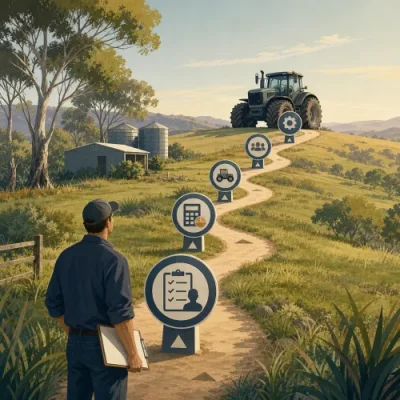
A well-prepared application gives the lender or broker a clearer picture of the farm, the equipment and the repayment plan. Before you apply, consider the following steps.
- Clarify the equipment need. Identify the asset, expected purchase price, supplier and how it will support the operation.
- Review your financial position. Check current debts, seasonal cash flow and upcoming expenses.
- Gather documents. Prepare identity, ABN or business structure details, financial records and bank statements where available.
- Check the repayment structure. Consider whether standard, seasonal or structured repayments may suit your cash flow, subject to lender availability.
- Understand the total cost. Ask about interest, fees, balloon payments, insurance, maintenance and end-of-term obligations.
- Seek support if needed. A broker or finance professional may help organise the application and explain available options, but outcomes still depend on provider criteria.
Questions to consider asking before signing finance documents
Before accepting a farm equipment finance offer, take time to understand the obligations. Important questions may include:
- What is the interest rate and is it fixed or variable?
- What fees apply upfront, during the loan and at the end of the term?
- Are repayments monthly, quarterly, seasonal or otherwise structured?
- Is there a balloon, residual or final payment?
- Can extra repayments be made, and are there fees for doing so?
- What security is being taken over the equipment or other assets?
- What insurance or registration requirements apply?
- What happens if the equipment is sold, damaged or no longer needed?
- What are the consequences of missed or late repayments?
Professional tax, legal or financial advice may be appropriate where the transaction is significant, the business structure is complex or the equipment will materially affect the farm’s cash flow.
In Conclusion
Farm equipment finance eligibility in Australia usually depends on the strength of the applicant, the farming business, the equipment and the repayment proposal. Lenders commonly assess identity, business structure, income, seasonal cash flow, credit history, existing debts, asset details and security.
Being prepared does not guarantee approval, but it may help reduce delays and support a clearer assessment. Farmers should approach the application with accurate documents, realistic repayment assumptions and a clear understanding of how the equipment fits into the farm’s broader operating plan.