EV loan rates are only one part of the cost of financing an electric vehicle. Your repayments and the total amount you pay over the life of the loan can also be shaped by fees, loan term, deposit size, balloon payments, the vehicle you choose and how a lender assesses your application.
This guide explains how EV car loan repayments are usually calculated in Australia, what a comparison rate does and does not show, and which cost factors to check before you apply for finance for a new or used electric vehicle.
What an EV loan rate actually means
An EV loan rate is the interest rate charged on the amount you borrow to buy an electric vehicle. Interest is the lender's charge for providing credit, and it is usually expressed as an annual percentage rate.
For many car loans, interest is calculated on the outstanding loan balance. As you repay the loan, the balance generally reduces, which means the interest portion of each repayment may reduce over time while the principal portion increases. The exact structure depends on the loan contract.
EV finance in Australia may be offered as a secured car loan, unsecured personal loan, dealer finance, broker-arranged finance or another form of credit. The rate and repayment structure can vary between lenders and products.
Interest rate versus comparison rate
When comparing EV loan rates, it is useful to understand the difference between the advertised interest rate and the comparison rate.
| Rate type | What it generally shows | Important limitation |
|---|---|---|
| Interest rate | The percentage rate used to calculate interest on the loan balance. | It may not include upfront or ongoing fees, so it may not reflect the full cost of the loan. |
| Comparison rate | A rate that combines the interest rate with certain standard fees and charges for a specified loan amount and term. | It is based on an example scenario, so your actual cost may differ if your loan amount, term, fees or features are different. |
A comparison rate car loan can help you identify whether a loan with a lower headline rate may still be more expensive once standard fees are included. However, it is not a complete substitute for checking the full loan contract, as some costs and optional features may not be captured in the comparison rate.
Key factors that can affect EV loan rates in Australia
Lenders set rates according to their own credit policies, funding costs, risk assessment and product structure. The following factors commonly influence EV loan rates and repayment estimates, although the weight given to each factor can vary between providers.
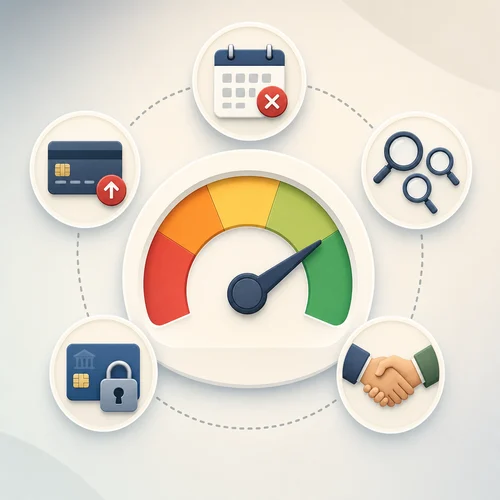
Your credit profile
Your credit history, existing debts, repayment behaviour and overall creditworthiness can influence the rate you are offered. A stronger credit profile may improve your options, but no particular rate or approval outcome can be assumed.
Your income and expenses
Lenders generally assess whether you can afford the proposed repayments after considering your income, living expenses and other financial commitments. If the lender sees the loan as higher risk, it may affect the rate, the amount you can borrow or whether finance is available.
The vehicle being financed
For secured EV car loans, the vehicle is usually used as security for the loan. Lenders may consider the vehicle's age, condition, value, make, model and resale prospects. A new EV may be assessed differently from a used EV, and older vehicles may attract different criteria depending on the lender.
Loan amount and deposit
The amount you borrow affects both your repayments and total interest cost. A larger deposit can reduce the amount financed, which may lower repayments and the total interest payable. However, the suitability of using savings as a deposit depends on your broader financial position.
Loan term
A longer loan term can reduce regular repayments because the debt is spread over more months. However, it can also increase the total interest paid over the life of the loan. A shorter term may increase each repayment but can reduce total interest if the rate and other conditions are similar.
Secured or unsecured finance
Many car loans are secured against the vehicle. Secured finance may be priced differently from unsecured personal loans because the lender has an asset it can rely on if the borrower defaults. This does not mean secured finance is always cheaper or more suitable; the comparison depends on the loan terms, fees, eligibility criteria and your circumstances.
Fixed or variable rate structure
Some car loans use a fixed rate, meaning the interest rate and repayments are generally set for the agreed loan term. Others may use a variable rate, which can move up or down according to the lender's terms. Fixed repayments can help with budgeting, while variable products may have different features and risks.
Green or EV-specific loan criteria
Some lenders may offer finance products designed for electric or lower-emission vehicles. These products can have specific eligibility rules, such as vehicle type, age or emissions criteria. Availability, pricing and eligibility depend on the lender and should be checked carefully before relying on an advertised offer.
How EV car loan repayments are calculated
EV car loan repayments are generally influenced by:
- Amount borrowed: the vehicle price plus any financed costs, less any deposit or trade-in value.
- Interest rate: the rate applied to the outstanding loan balance.
- Loan term: the length of time over which the loan is repaid.
- Repayment frequency: weekly, fortnightly or monthly repayments can change the timing of payments.
- Fees: some fees may be paid upfront, while others may be added to the loan or charged during the term.
- Balloon or residual payment: if included, this can reduce regular repayments but leaves a larger amount payable at the end.
An EV loan calculator can help you test different loan amounts, terms and repayment assumptions. Calculator results are estimates only and may not include every lender fee, eligibility condition or contract feature.
Fees that can affect the total cost of EV finance
EV finance fees vary by lender and product. Not every loan will include every fee, and the name of each fee can differ. Common fees to check include:
- Application or establishment fee: an upfront charge for setting up the loan.
- Monthly or annual account fee: an ongoing fee charged during the loan term.
- Broker fee: where a broker is involved, any broker fee or commission arrangement should be disclosed according to applicable requirements.
- Early repayment or exit fee: some loans may charge a fee if you repay early or close the loan before the agreed term.
- Late payment or dishonour fee: fees may apply if a scheduled repayment fails or is missed.
- Security registration costs: secured car loans may involve registration of a security interest over the vehicle.
- Variation fee: a fee may apply if you request changes to the loan after settlement.
Fees can make a meaningful difference to total cost, especially where the interest rate looks competitive but the loan includes high upfront or ongoing charges. Ask for a full breakdown before comparing offers.
How balloon payments change repayments and total cost
A balloon payment, sometimes called a residual payment, is a lump sum left to pay at the end of the loan term. In a car loan, a balloon can reduce regular repayments because you are not repaying the full principal evenly across the term.
However, a balloon does not make the debt disappear. You may need to pay the balloon from savings, refinance it, trade in or sell the vehicle, or use another arrangement accepted by the lender. Each option carries risks, particularly if the EV is worth less than expected at the end of the term.
Before choosing a balloon payment, consider whether the lower regular repayment is worth the larger end-of-term obligation and whether you have a realistic plan for meeting it.
New and used EV loans may be assessed differently
The cost of finance can differ between new and used electric vehicles. A new EV may have a manufacturer warranty and a clearer valuation, while a used EV may require closer attention to age, kilometres, service history, battery condition and resale value.
Some lenders apply stricter criteria to older used vehicles or may limit the maximum vehicle age at the end of the loan term. This can affect whether the loan is available, the term offered or the rate applied. If you are comparing new and used EVs, it is worth comparing the vehicle price and the finance cost together rather than focusing only on the purchase price.
Why the lowest advertised repayment may not be the cheapest option overall
A lower repayment can be appealing, but it does not always mean the loan has the lowest total cost. Repayments can be reduced by extending the loan term, adding a balloon payment or financing fees into the loan. These choices may increase the total interest or leave you with a larger future obligation.
When comparing EV finance fees and repayments, look beyond the monthly number and ask:
- What is the total amount repayable over the full term?
- Which fees are included in the repayment estimate?
- Is there a balloon payment or residual amount at the end?
- Can I make extra repayments, and are there limits or fees?
- What happens if I repay the loan early?
- Is the rate fixed or variable?
- Does the loan require comprehensive insurance or other conditions?
How eligibility and rates can be connected
Eligibility is not separate from pricing. A lender may approve, decline or adjust a loan offer based on its assessment of the borrower, the vehicle and the proposed loan structure. Factors such as credit history, income stability, debt levels and deposit size can influence both loan availability and rate.
If you are still working out whether you are likely to meet lender criteria, our guide to EV loan eligibility in Australia explains the main application factors in more detail.
Using a broker to compare EV finance options
A broker may help you understand how different lenders assess EV finance applications and what information is needed to compare options. Brokers do not determine every lender's criteria, and using a broker does not guarantee approval or a particular rate. However, they may be able to explain product differences, fees and documentation requirements.
If you want support comparing lender criteria, you can learn more about the site's broker referral partner network.
A practical checklist before you apply
Before applying for an EV loan in Australia, it can help to prepare the following:
- Your preferred EV model, price and whether it is new or used.
- Your intended deposit or trade-in amount.
- Your preferred loan term and repayment frequency.
- Whether you are considering a balloon payment.
- An estimate of upfront and ongoing fees.
- Your income, employment and expense information.
- Details of existing debts and credit commitments.
- Insurance, registration, charging and running-cost estimates.
Comparing EV loan rates is not just about finding an attractive advertised rate. A useful comparison looks at the full cost of borrowing, repayment flexibility, fees, loan structure and whether the finance arrangement fits your budget and circumstances.