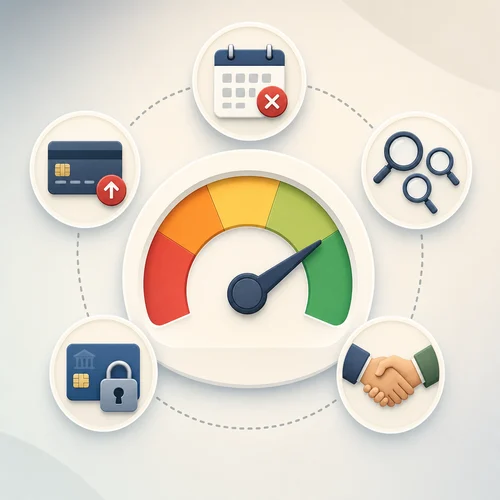
Understanding your first home buyer borrowing capacity can help you approach the home loan process with more confidence. A lender is not only asking how much you earn. It is also assessing whether the loan appears affordable after everyday expenses, existing debts, dependants, loan costs and possible interest rate changes are considered.
This guide explains the main factors Australian lenders commonly consider when assessing borrowing power for a first home buyer. It is general information only and does not take your personal objectives, financial situation or needs into account. Lending outcomes depend on your circumstances and each lender's criteria.
If you are still comparing the broader steps involved in first home buyer home loan eligibility, it can help to understand how borrowing capacity fits into the pre-application stage.
What borrowing capacity means for a first home buyer
Borrowing capacity, sometimes called borrowing power, is an estimate of how much a lender may be prepared to lend based on its assessment of your ability to repay. It is not the same as the property price you can afford, because your purchase budget also depends on your deposit, upfront costs and any relevant grants or concessions.
For example, two first home buyers with the same salary may receive different borrowing capacity estimates if one has credit card limits, a car loan and high living expenses, while the other has fewer debts and a larger deposit. Lenders look at the whole picture rather than one number in isolation.
How lenders assess home loan serviceability
Home loan serviceability is the lender's assessment of whether you can afford the proposed repayments while meeting your other financial commitments. The lender will usually consider your income, regular expenses, existing debts and the proposed loan repayments under its policy settings.
Many lenders also test repayments at a higher assessment rate than the advertised interest rate. This is often called a buffer or serviceability buffer. The purpose is to check whether the loan may still be manageable if interest rates rise or if repayments are higher than expected. The exact buffer and assessment method can vary by lender and may change over time.
You can use a borrowing capacity calculator as a starting point, but calculator results are estimates only. They do not replace a lender's full assessment and should not be treated as an approval.
The main factors that can affect first home buyer borrowing capacity
| Factor | How it may affect assessment | What to review before applying |
|---|---|---|
| Income | Higher stable income may support stronger serviceability, depending on the lender's treatment of that income. | Payslips, employment type, overtime, bonuses, self-employed income and any secondary income. |
| Living expenses | Higher ongoing expenses can reduce the amount available for loan repayments. | Bank statements, rent, bills, transport, groceries, insurance, childcare and subscriptions. |
| Existing debts | Personal loans, car loans, credit cards and buy now pay later commitments may reduce borrowing power. | Balances, repayment amounts, credit limits and whether debts can be reduced before applying. |
| Dependants | Dependants can increase assessed household costs and may reduce surplus income. | Childcare, schooling, healthcare and other family-related costs. |
| Deposit and LVR | A larger deposit may reduce the loan-to-value ratio and may affect lender appetite, loan options and costs. | Deposit size, genuine savings, upfront costs and whether lenders mortgage insurance may apply. |
| Credit history | Credit conduct can affect lender confidence and may influence approval conditions or pricing. | Credit report accuracy, repayment history and recent credit enquiries. |
| Loan term | A longer term may reduce repayments but can increase total interest paid over the life of the loan. | Whether the repayment amount and loan term suit your long-term plans. |
Income: what lenders may count and how
Lenders usually want to understand how reliable and ongoing your income is. For employees, this may involve checking base salary, employment history and payslips. For casual, contract or self-employed applicants, lenders may ask for more evidence because income can be less predictable.
Some income may not be counted in full, or may need to meet specific lender policy requirements. This can include overtime, bonuses, commissions, allowances, rental income or income from a second job. If income is irregular, a lender may average it, discount it or exclude it depending on its policy.
For first home buyers, this means the income you see in your bank account may not always match the income a lender uses in its assessment.
Expenses: why your spending habits matter
Lenders typically review your declared living expenses and may compare them with transaction history or expense benchmarks. If your declared expenses appear unusually low, the lender may apply a higher benchmark amount in its assessment.
Common expense categories include rent, utilities, groceries, transport, insurance, medical costs, childcare, education, entertainment, streaming services and other recurring payments. Even small subscriptions can matter if there are many of them.
A useful step before applying is to review three to six months of spending and separate essential costs from discretionary spending. This can help you understand your real surplus income and identify expenses that may be reduced before you approach a lender.
Debts and credit limits can reduce borrowing power
Existing debts are a major part of a lender assessment home loan process. Personal loans, car loans, student debts, credit cards and buy now pay later accounts can all affect serviceability.
Credit cards can be important even when the balance is low. Some lenders assess repayments based on the approved credit limit, not just the amount currently owing. A card with a high unused limit may still reduce borrowing capacity because it represents credit you could draw on later.
Before applying, it may be worth reviewing whether unused credit limits are still needed and whether small debts can be paid down. This does not guarantee a better borrowing outcome, but it may improve the way your commitments are assessed.
Deposit size, LVR and upfront costs
Your deposit affects more than the amount you need to borrow. It also influences your loan-to-value ratio, usually shortened to LVR. LVR compares the loan amount with the property value. A lower LVR generally means you are borrowing a smaller percentage of the property's value.
Lenders may have different policies for different LVR levels. A smaller deposit may limit loan options or result in lenders mortgage insurance, subject to lender and insurer criteria. A larger deposit may provide more flexibility, but the outcome still depends on the full application.
First home buyers should also allow for upfront costs such as conveyancing, inspections, loan establishment costs, government charges and moving costs. Depending on your state or territory and your circumstances, grants or concessions may be available, but eligibility rules can vary and should be checked carefully.
Credit history and repayment conduct
Your credit history is one part of how lenders assess risk. It may show repayment history, credit enquiries, defaults, court judgments, credit accounts and other information held by credit reporting bodies.
A strong credit history does not automatically mean a lender will approve a loan, and a weaker history does not always mean an application cannot proceed. However, credit conduct can influence whether a lender is comfortable with the application, whether further explanation is needed and what loan terms may be available.
Checking your credit report before applying can help you identify errors or unexpected listings. If something looks incorrect, it is generally better to address it before lodging a home loan application.
Interest rate buffers and repayment stress testing
A lender may assess your application using repayments based on a higher rate than the product rate. This is designed to test whether repayments may remain affordable if rates increase. It is one reason your borrowing capacity estimate may be lower than expected after speaking with a lender or broker.
This is also why comparing only advertised interest rates can be misleading. The interest rate affects repayments, but your assessed borrowing capacity also depends on the lender's serviceability model, buffer, loan term, debts and expenses.
When planning, it can be helpful to compare estimated repayments at different loan amounts or interest rate assumptions. A repayment calculator can support this kind of estimate-based planning, provided you remember that the result is not a lender decision.
Why borrowing capacity can vary between lenders
It is common for borrowing capacity estimates to differ between lenders. Each lender has its own credit policy, assessment rate, acceptable income rules, expense treatment and risk appetite. One lender may include certain income that another lender discounts. One may treat a credit commitment more conservatively than another.
This does not mean you should simply chase the highest possible loan amount. Borrowing near your maximum capacity can leave less room for changes in income, expenses, interest rates or personal circumstances. The amount a lender may approve is not always the same as the amount that feels comfortable to repay over time.
Questions to ask before relying on a borrowing power estimate
- Does the estimate include all my debts and credit limits?
- Have I allowed for upfront buying costs as well as the deposit?
- Are my living expenses realistic, based on recent bank statements?
- How would repayments change if interest rates increased?
- Would the proposed repayment still leave room for maintenance, insurance and unexpected costs?
- Am I relying on income that a lender may not count in full?
- Does the estimate reflect a single application or a joint application?
Getting an individual assessment
Online estimates can be useful early in the process, but they cannot account for every lender policy or personal circumstance. If you are close to applying, an individual assessment can help you understand which documents may be needed, how your debts and expenses may be viewed, and whether there are issues to address before lodging an application.
You can explore the site's broker support options if you want help understanding how different lenders may assess your situation. A broker or lender can provide information about available products and application requirements, but any loan offer will still depend on lender assessment and approval criteria.
Key takeaways for first home buyers
First home buyer borrowing capacity is shaped by income, expenses, debts, credit history, dependants, deposit size, loan term and lender policy. The lender is trying to determine whether the proposed home loan appears affordable, not simply whether your income is high enough.
The most practical preparation steps are to understand your spending, reduce unnecessary credit commitments where appropriate, check your credit report, build your deposit and use calculators as guides rather than promises. This can help you enter the home loan process with clearer expectations and fewer surprises.