Bad credit caravan finance can be a sensitive topic because approval, pricing and loan conditions are rarely based on one factor alone. In Australia, lenders may look at your credit history, income, expenses, existing debts, the caravan being purchased and whether the proposed loan appears affordable for your situation.
This article explains how past credit issues may affect caravan finance eligibility, loan costs and borrowing risks. It is general information only and does not take your personal objectives, financial situation or needs into account.
What does bad credit mean for caravan finance?
"Bad credit" is not a single category used in the same way by every lender. It may refer to a range of situations, including missed repayments, defaults, debt collection activity, court judgments, a limited credit history, previous hardship arrangements or a discharged bankruptcy. Some applicants may have one older issue that has since been resolved, while others may have several recent credit problems.
For caravan finance eligibility, the details matter. A lender may consider when the issue occurred, whether it has been paid or settled, whether there is a reasonable explanation, and whether your current income and expenses show capacity to manage new repayments.
How lenders may assess a caravan loan with bad credit
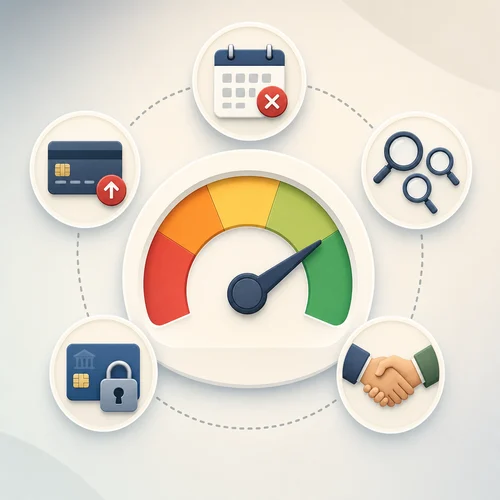
Each lender has its own credit policy, and outcomes depend on individual circumstances and provider criteria. However, common assessment factors may include the following.
- Credit report and repayment history: Lenders may review missed payments, defaults, arrears, recent credit enquiries and whether existing accounts are being managed on time.
- Income stability: Employment income, self-employed income, pension income or other regular income may need to be verified. Some applicants may need to provide extra documentation.
- Living expenses and existing debts: A lender will usually consider whether the proposed repayment fits alongside rent or mortgage payments, credit cards, personal loans, buy now pay later commitments and everyday expenses.
- Deposit or contribution: A larger deposit may reduce the amount borrowed, but it does not remove the need for an affordability assessment.
- The caravan's age, value and condition: For secured caravan loans, the asset may be assessed because it forms part of the lender's security. Older or unusual caravans may be treated differently by some lenders.
- Loan amount and term: A smaller loan or shorter term may reduce total interest, but the repayment still needs to be manageable. A longer term may lower each repayment but can increase the total interest paid.
- Recent financial conduct: Lenders may place weight on whether your recent bank statements show consistent income, regular savings, manageable spending and no ongoing arrears.
If you are still comparing broad caravan finance options, it can help to understand these assessment factors before making multiple applications.
Credit issues and possible lender concerns
The table below outlines how different credit issues may be viewed. It is not a lender policy guide, and it should not be treated as a prediction of approval or decline.
| Credit situation | Why it may matter | What may help your application |
|---|---|---|
| Missed repayments | May suggest difficulty managing existing commitments, especially if recent or repeated. | Evidence that accounts are now up to date and repayments have been consistent for a period. |
| Paid or unpaid defaults | Defaults can indicate a previous failure to meet a credit obligation. | Proof the default has been paid or settled, plus a clear explanation and stronger recent conduct. |
| Multiple recent credit enquiries | May suggest financial stress or repeated unsuccessful applications. | Waiting before applying again and being selective about lenders or finance channels. |
| Limited credit history | A lender may have less evidence of how you manage credit. | Stable income, savings history, bank statements and low existing debt. |
| Discharged bankruptcy or insolvency history | May signal a higher-risk application and may limit available lenders. | Full disclosure, evidence of discharge where relevant, and a record of stable finances since the event. |
How bad credit may affect loan costs
A weaker credit profile may limit the number of lenders willing to consider an application. It may also affect the interest rate, fees, deposit requirement, loan term or security requirements offered. This does not mean a higher-cost loan is automatically unsuitable, but it does mean you should look carefully at the total cost and repayment risk.
Costs to compare may include:
- Interest rate and comparison rate: The comparison rate can help show the combined effect of interest and certain fees, although it may not include every cost that applies to your situation.
- Establishment and ongoing fees: These can add to the cost of borrowing and should be considered alongside the advertised rate.
- Early repayment or payout conditions: Some loans may charge fees if you refinance or pay out early.
- Secured versus unsecured structure: A secured loan may use the caravan as security. If repayments are not maintained, the lender may have rights in relation to the secured asset.
- Total interest over the full term: A longer loan term may make repayments feel more manageable but can increase the total amount paid over time.
Before applying, you can use a caravan finance calculator to test how different rates, loan terms and deposit amounts may affect repayments. Calculator results are estimates only and should be checked against actual loan offers and your full budget.
Responsible lending caravan finance considerations
Australian consumer credit providers generally need to assess whether a regulated credit contract is unsuitable for the borrower. In practical terms, this usually involves making inquiries about your financial situation and verifying relevant information before providing credit.
This is one reason an application may be declined even if the caravan is reasonably priced or the applicant is keen to proceed. If the lender considers that the repayments may cause substantial hardship, or that the loan does not fit the information provided, it may not be appropriate for the lender to approve the loan.
For borrowers, the key point is that approval should not be the only goal. A caravan loan with bad credit may create additional pressure if repayments are high, income is irregular, or there are already overdue accounts. Borrowing for a lifestyle asset should be weighed against essential expenses, emergency savings and existing debt commitments.
Caravan loan approval with defaults: what to prepare
If you have defaults or other credit issues, preparation can make the application process clearer. It will not guarantee approval, but it may help you understand your position and avoid avoidable delays.
- Check your credit report before applying: Look for incorrect information, unpaid defaults, outdated contact details or accounts you do not recognise.
- Correct genuine errors: If something is wrong, contact the credit reporting body or relevant credit provider and follow their dispute process.
- Be ready to explain past issues: A short, factual explanation may help clarify whether the issue was a one-off event, such as job loss, illness or business disruption.
- Show recent stability: Current payslips, bank statements, tax documents for self-employed applicants and evidence of savings may be relevant.
- Reduce avoidable debt where possible: Lower credit card balances or fewer outstanding commitments may improve affordability, depending on your situation.
- Avoid multiple applications in quick succession: Repeated credit enquiries can affect how some lenders view the application.
- Consider a lower purchase price: A less expensive caravan may reduce the loan amount and repayment pressure.
If you are unsure what documents to gather or which lenders may consider your circumstances, speaking with caravan finance brokers may help you understand application requirements. A broker's involvement does not guarantee approval, and any available options will depend on lender criteria and your financial position.
Risks of taking out caravan finance with bad credit
Bad credit finance can come with risks that should be considered before signing a loan contract. These risks are not limited to the interest rate.
Higher repayments may reduce financial flexibility
If the loan has a higher rate or fees, your regular repayments may be higher than expected. This can leave less room for insurance, registration, maintenance, storage, fuel, campsite fees and unexpected repairs.
The caravan may be at risk if the loan is secured
With secured caravan finance, the caravan may be used as security for the loan. If repayments are not made and the issue is not resolved, the lender may be able to take enforcement action in line with the loan contract and applicable law.
A new loan can worsen existing financial stress
If you already have overdue accounts, payday loans, high credit card balances or irregular income, taking on another repayment may increase the risk of hardship. A declined application can be disappointing, but unaffordable approval can be more damaging over time.
Refinancing later is not certain
Some borrowers hope to refinance once their credit improves. Refinancing may be possible for some people, but it depends on market conditions, lender policies, the caravan's value and the borrower's financial position at the time. It should not be relied on as the main reason for accepting a loan that is difficult to afford now.
Warning signs that borrowing may not be appropriate yet
It may be worth pausing your caravan purchase or seeking independent guidance if:
- you are behind on essential bills or existing loan repayments;
- you would have little or no emergency buffer after buying the caravan;
- you need to use credit to cover the deposit, insurance or registration;
- the repayment only fits your budget if nothing goes wrong;
- you are relying on overtime, seasonal income or future refinancing to keep up;
- you feel pressured to sign quickly before fully understanding the contract.
Financial difficulty can happen even when a borrower has made a careful decision. If you are already experiencing hardship, contact your existing lenders as early as possible to discuss available hardship options. You may also wish to seek free financial counselling before taking on new credit.
What to do if your application is declined
A declined application does not necessarily mean you will never qualify for caravan finance. It may mean the timing, lender, loan amount or financial position did not meet the lender's criteria.
After a decline, consider asking for general feedback, reviewing your credit report, checking your budget and avoiding a rush of new applications. You may also choose to save a larger deposit, reduce existing debts, wait for recent credit issues to age, or consider a lower-cost caravan. For broader preparation steps, you can also read about how to improve your chances of getting approved for a caravan loan.
Questions to ask before accepting a bad credit caravan loan
Before signing, ask questions that focus on affordability and risk rather than approval alone:
- What is the total amount repayable over the full loan term?
- What fees apply at the start, during the loan and if I pay it out early?
- Is the loan secured against the caravan?
- What happens if I miss a repayment?
- Can I make extra repayments, and are there conditions?
- Does the repayment still fit after allowing for insurance, servicing, repairs and travel costs?
- Would waiting, saving a larger deposit or buying a cheaper caravan reduce the risk?
Key takeaway
Bad credit may affect caravan finance eligibility, the number of lenders available, the rate and fees offered, and the overall borrowing risk. A past credit issue does not automatically define your current position, but lenders are likely to consider both your credit history and your ability to manage repayments now.
The safest approach is to check your credit report, prepare accurate documents, compare the full cost of any loan and consider whether the caravan purchase remains affordable if circumstances change. A suitable finance outcome is not just one that gets approved; it is one that can be managed responsibly over the life of the loan.