New businesses and self-employed operators often ask whether they can qualify for truck finance without years of trading history. The short answer is that it may be possible, but approval, loan structure, interest rate, deposit requirements and repayment terms depend on your circumstances and the lender's criteria.
For sole traders, subcontractors, owner-drivers and newly registered businesses, the key is usually showing a clear commercial purpose, realistic cash flow and enough supporting evidence for the lender to assess the risk. This article explains common truck loan eligibility criteria in Australia and what may strengthen an application.
Can a new business get truck finance in Australia?
A new business can apply for truck finance in Australia, including where the business has a new ABN or limited trading history. However, newer applicants may face closer assessment because the lender has less historical information to rely on.
Lenders may consider whether the truck is essential to earning income, whether the borrower has relevant industry experience, and whether expected revenue can reasonably support repayments. A lender may also look at personal financial position, credit history, deposit size and the type, value and age of the truck being financed.
If you are comparing your broader options, the Truck Loans Australia homepage provides an overview of truck loan pathways available through the site.
How self-employed truck finance applications are assessed
Self-employed truck finance in Australia is commonly assessed on both business and personal factors. This is especially relevant for sole traders, partnerships and small proprietary companies where the owner's finances and business finances may be closely linked.
Assessment criteria vary by lender, but may include:
- ABN and business registration details: how the business is structured, when the ABN was registered and whether the activity matches the truck's intended use.
- Trading history: how long the business has been operating and whether income is consistent enough to support repayments.
- Industry experience: whether the applicant has experience driving, contracting, managing deliveries or operating within the transport industry.
- Cash flow: whether bank statements, invoices, contracts or forecasts indicate the business can meet loan repayments and operating costs.
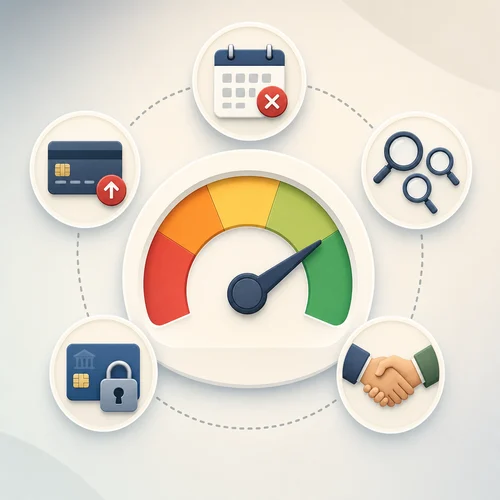
- Credit history: personal and, where relevant, business credit conduct, existing debts and repayment history.
- Asset and security position: the value and suitability of the truck, whether it will secure the loan, and whether additional security or a guarantor is requested.
- Deposit or equity contribution: whether the applicant can contribute funds upfront, which may reduce the amount financed.
- Truck details: make, model, age, condition, mileage, purchase price and whether the truck suits the proposed work.
Truck loan eligibility criteria for sole traders
A sole trader truck loan application may be assessed differently from an application by a larger established company. Because a sole trader is personally responsible for the business, lenders may place significant weight on personal income, credit history, bank conduct and living expenses.
Common factors for sole traders may include:
- whether the applicant has a current ABN and is carrying on a genuine business activity;
- recent income evidence, such as tax returns, business bank statements or contract income;
- personal expenses and other loan commitments;
- whether the truck will be used mainly for business purposes;
- the applicant's experience in the work the truck will perform;
- the strength of the purchase invoice, dealer quote or private sale documentation.
Some lenders may be more comfortable if the sole trader has regular subcontracting work, signed transport contracts, repeat clients or a history of similar work. Others may require stronger financial documents or a larger deposit where the business is newly established.
What if you have a new ABN?
New ABN truck finance can be more challenging than finance for an established business, but a new ABN does not automatically rule out an application. Lenders may want to understand why the ABN is new and whether the applicant has relevant prior experience.
For example, an experienced employed driver moving into owner-driver work may be viewed differently from an applicant with no transport background. A new business with confirmed contracts, a clear business plan and a suitable truck may also present a stronger case than one relying only on uncertain future work.
Where a business is very new, lenders may pay closer attention to:
- personal income history before starting the business;
- evidence of confirmed or likely work;
- cash reserves available for registration, insurance, fuel, maintenance and downtime;
- the applicant's credit profile;
- whether the truck is reasonably priced for the work proposed;
- the applicant's capacity to make repayments if revenue takes time to build.
Documents that may support a newer business application
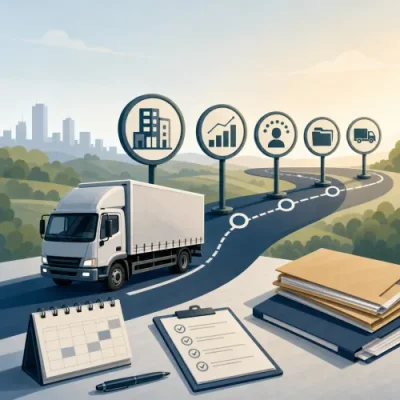
The exact documents required for a commercial truck loan will depend on the lender, loan type and applicant profile. However, new businesses and self-employed operators are often asked for more detail because there may be limited trading history.
Useful supporting documents may include:
- driver licence and identification documents;
- ABN details and business registration information;
- recent business and personal bank statements;
- tax returns, notices of assessment or accountant-prepared financials if available;
- BAS statements if the business is registered for GST and has lodged them;
- customer contracts, subcontractor agreements, work orders or letters of engagement;
- invoices or evidence of recent income;
- a truck invoice, dealer quote or sale agreement;
- insurance quotes or evidence that suitable cover can be arranged;
- a simple business plan or cash flow forecast where the business is new.
For a more detailed preparation list, see the site's truck loan document checklist.
Why cash flow matters as much as eligibility
Eligibility is not only about whether a lender may approve the application. It is also about whether the repayment commitment is realistic for the business. Truck finance repayments sit alongside fuel, tyres, servicing, insurance, registration, permits, tolls, repairs, downtime and tax obligations.
Before applying, it can help to estimate repayments under different loan amounts and terms. You can use a truck loan repayment calculator as a starting point, noting that calculator results are estimates only and do not confirm eligibility, pricing or approval.
When reviewing affordability, consider:
- how much work is already confirmed rather than hoped for;
- whether income is seasonal or irregular;
- how the business would manage unexpected repairs or delayed invoices;
- whether a shorter or longer loan term better suits cash flow;
- whether a balloon or residual payment is appropriate, if offered;
- the total cost of borrowing, not just the regular repayment.
Factors that may strengthen a truck loan application
Newer businesses cannot create trading history overnight, but they can often improve how clearly their application explains the risk. A stronger application usually gives the lender enough information to understand the business, the truck and the repayment plan.
Ways to strengthen an application may include:
- Prepare a clear business case: explain what the truck will do, who the customers are and how it will generate income.
- Show relevant experience: include evidence of previous employment, contracts or industry background where relevant.
- Keep bank accounts organised: separating business and personal transactions can make cash flow easier to assess.
- Contribute a deposit if possible: an upfront contribution may reduce the loan-to-value ratio, although requirements vary.
- Choose a suitable truck: a truck that fits the work and budget may be easier to justify than an oversized or unsuitable vehicle.
- Check your credit report: identifying errors or unpaid accounts before applying may help avoid surprises.
- Avoid multiple rushed applications: several credit enquiries in a short period may affect how some lenders view the file.
Common reasons a newer applicant may face difficulty
Not every application will meet lender criteria. Some issues may lead to requests for more information, different loan terms, a larger deposit or a decline.
Common challenges include:
- limited or no evidence of income;
- unclear business purpose for the truck;
- poor or inconsistent bank account conduct;
- existing debts that reduce repayment capacity;
- credit defaults, late payments or unresolved credit issues;
- a truck purchase price that appears high compared with its value or intended use;
- insufficient cash reserves for operating costs;
- contracts that are informal, short-term or not yet confirmed.
If any of these apply, it may still be worth understanding what evidence could address the concern. However, applicants should avoid taking on finance that could place the business under pressure if income is uncertain.
Loan structures a new or self-employed operator may encounter
Commercial truck finance can be structured in different ways. The right structure depends on the business, tax position, cash flow and lender criteria. Common options may include secured commercial loans, chattel mortgages, finance leases or hire purchase-style arrangements, depending on what the lender offers and what suits the applicant.
Each structure can affect ownership, GST treatment, tax deductions, balloon payments, early payout costs and how the truck appears in the business accounts. Tax and accounting outcomes depend on individual circumstances, so it is sensible to speak with a qualified accountant before choosing a structure.
Questions to ask before applying
Before submitting a truck loan application, new businesses and self-employed operators may benefit from asking:
- What evidence will the lender accept if my business has limited trading history?
- Will my personal credit history be assessed?
- Is a deposit required, and how would it affect the application?
- Can I include on-road costs, insurance or equipment in the finance, if needed?
- What happens if my income is seasonal or contract-based?
- Are there early repayment fees, monthly fees or other charges?
- Is the truck acceptable as security given its age, condition and use?
- What documents can I prepare before applying to reduce delays?
Key takeaway
New businesses, sole traders and self-employed operators may be able to get truck finance in Australia, but eligibility is assessed case by case. Lenders commonly look at ABN details, trading history, income evidence, industry experience, credit conduct, deposit, truck value and repayment affordability.
The more clearly you can show how the truck supports income and how repayments will be managed, the easier it may be for a lender to assess the application. That does not guarantee approval or particular terms, but it can help you approach the process with better preparation and fewer surprises.