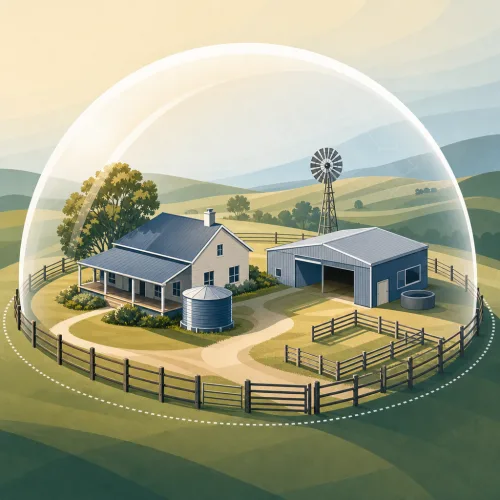
Farm property insurance is designed to help protect the physical structures and fixed improvements that support a farming operation. For many Australian farms, these assets can represent a large share of the farm's insured value, from machinery sheds and hay storage to fencing, water infrastructure, silos, yards and homestead buildings.
Unlike crop insurance, livestock insurance or mobile machinery cover, farm property insurance generally focuses on buildings and infrastructure attached to, or forming part of, the rural property. The exact cover available depends on the insurer, policy wording, selected sections, sums insured, exclusions and the details listed on the policy schedule.
General information only: This article explains common features and decision factors. It is not personal financial advice. Cover, pricing, eligibility and claims outcomes depend on your circumstances and the provider's criteria.
What is farm property insurance?
Farm property insurance is a part of rural property insurance that can cover buildings, fixed structures and other improvements used in a farming business or located on rural land. It is often arranged as one section of a broader farm insurance package, alongside other covers such as liability, machinery, livestock, crops or business interruption.
The purpose is to help manage the financial impact if insured property is damaged or destroyed by an event covered by the policy. Common insured events may include fire, storm, impact, malicious damage or theft-related damage, but the covered events and limits vary. Some risks, such as flood, accidental damage, machinery breakdown or damage to certain outdoor items, may require specific wording or optional extensions.
Farm property insurance assets that may be covered
Every farm is different, so property schedules can vary significantly. A grazing property may need to focus on fencing, yards, water systems and sheds, while a horticultural business may have packing facilities, cool rooms, irrigation assets and storage structures. Broadacre operations may have silos, chemical sheds, workshops and large machinery storage.
The table below outlines common rural property assets that farmers may need to consider when reviewing farm property insurance.
| Asset type | Examples | Details to check |
|---|---|---|
| Farm buildings | Workshops, shearing sheds, storage buildings, dairies, packing sheds, stables | Construction type, use, age, condition, insured value and whether contents are covered separately |
| Farm sheds | Machinery sheds, hay sheds, chemical sheds, fertiliser sheds | Whether the shed, contents, stored goods and hazardous materials are treated differently |
| Fencing and gates | Boundary fences, internal fences, laneways, gates, stock fences | Whether fencing is included automatically, limited, excluded or subject to a separate sum insured |
| Water infrastructure | Tanks, pumps fixed in place, troughs, bores, pipes, irrigation infrastructure | Whether above-ground and underground components are covered, and for which insured events |
| Storage and processing assets | Silos, grain bins, cool rooms, wool stores, produce storage areas | Whether the structure, stock inside and spoilage-related losses require separate cover |
| Yards and fixed improvements | Cattle yards, sheep yards, loading ramps, crushes, fixed feeding systems | Whether the asset is considered a fixed improvement, plant item or excluded outdoor property |
| Farm dwelling and domestic structures | Farmhouse, worker accommodation, garages, domestic sheds | Whether the dwelling is covered under a farm policy, a home policy or a separate section |
Farm buildings insurance: why the schedule matters
Farm buildings insurance usually relies heavily on the policy schedule. The schedule is the document that identifies the insured property, selected sums insured, excesses, endorsements and special conditions. If a building is not listed correctly, or if its use has changed, a claim may become more complicated.
Details that may be relevant include:
- the building's location on the property;
- its construction materials, such as steel, timber, brick, concrete or mixed materials;
- roofing type and age;
- whether it contains electrical systems, solar equipment, refrigeration, fuel, chemicals or hay;
- whether it is used for farming, storage, commercial processing, accommodation or domestic purposes;
- the estimated cost to repair, replace or rebuild it; and
- any recent upgrades, extensions or deterioration.
Farmers should not assume that every structure on a property is automatically covered. Older sheds, disused buildings, temporary structures and unapproved additions may require closer review.
Farm shed insurance and stored property
Farm shed insurance can be especially important because sheds often house high-value assets or materials. A machinery shed may contain tools, spare parts and equipment. A hay shed may hold seasonal feed. A chemical shed may carry additional safety and storage considerations.
It is important to distinguish between cover for the shed itself and cover for what is inside it. The building may be insured under farm property insurance, while tractors, harvesters or other mobile plant may need separate equipment cover. For a deeper explanation of mobile assets, see our guide to farm equipment insurance.
Stored goods may also be treated differently depending on the policy. Hay, grain, fertiliser, chemicals, tools, produce and spare parts may have separate sub-limits or may need to be listed under a contents, produce, stock or farm materials section.
Fencing insurance: what to review carefully
Fencing can be one of the most overlooked rural property assets. On some farms, the cost of replacing boundary fencing, internal paddock fencing, gates and posts after a bushfire, flood or storm can be substantial. However, fencing cover can vary widely between policies.
When reviewing fencing insurance, consider asking:
- Are fences covered automatically or only if specifically listed?
- Is there a separate limit for fencing?
- Are boundary fences and internal fences treated differently?
- Does the policy cover removal of damaged fencing debris?
- Are gates, posts, laneways and electric fencing components included?
- Are fences covered for bushfire, storm, flood or impact?
- Does wear and tear, gradual deterioration or poor maintenance affect cover?
Neighbouring boundary obligations and shared fencing arrangements can also make claims more complex. Insurance does not replace the need to understand legal responsibilities and practical repair arrangements, particularly where more than one landholder is affected.
Water infrastructure, tanks and irrigation assets
Water infrastructure is often central to the productive capacity of a farm. Tanks, bores, troughs, channels, pumps, pipework and irrigation systems can be exposed to fire, storm, accidental impact, theft and other risks. However, not all water assets are treated the same way under rural property insurance.
Fixed tanks or pumps attached to buildings may be treated differently from portable pumps or moveable irrigation equipment. Above-ground pipework may be easier to identify and insure than underground systems. Irrigation pivots, centre pivots and other specialised infrastructure may need specific listing or separate cover.
Before reviewing a policy, prepare a clear inventory that notes what is fixed, what is portable and what is essential to farm operations. This can help avoid confusion between property insurance, equipment insurance and breakdown cover.
Replacement value, indemnity value and underinsurance
One of the most important decisions in farm property insurance is how assets are valued. Policies may use different settlement bases, and the wording matters.
- Replacement value generally refers to the cost of replacing or rebuilding an insured item with a new equivalent, subject to policy conditions.
- Indemnity value generally allows for age, condition, wear and depreciation when calculating a claim settlement.
- Agreed value or scheduled value may apply to specific assets where a value is recorded, subject to the policy terms.
Underinsurance can occur when the sum insured is lower than the actual cost to repair, replace or rebuild the asset. In rural areas, rebuilding costs may be affected by transport, labour availability, site access, debris removal, updated building standards, materials and regional demand after a major event.
Farmers should review values regularly, especially after building upgrades, new infrastructure, inflation in construction costs, changes in farm use or major purchases. If bushfire is a key risk for your region, you may also find our article on bushfire insurance adequacy useful when thinking about insured values and asset records.
What may be excluded or limited?
Exclusions and limitations differ by policy, so the product disclosure statement, policy wording and schedule need careful reading. Common areas to check include:
- Wear and tear: gradual deterioration, corrosion, rust, rot or poor maintenance is commonly excluded.
- Flood: flood cover may be included, excluded, limited or offered as an option, depending on the insurer and location.
- Earth movement: erosion, landslip, subsidence or earth movement may have limited cover.
- Unoccupied or unused buildings: vacant dwellings, abandoned sheds or unused structures may need disclosure.
- Temporary structures: shade structures, tarps, portable shelters and temporary fencing may not be treated as permanent buildings.
- Contents and stock: items inside buildings may need separate sections or limits.
- Compliance and approvals: unapproved structures or non-compliant works may create issues.
- Outdoor property: signs, yards, troughs, pumps, fencing and gates may be subject to specific limits.
Do not rely only on broad descriptions such as "farm property" or "rural property". The specific definitions, insured events and exclusions determine how the policy may respond.
How farm property cover differs from other farm insurance sections
Farm insurance policies often combine multiple sections, but each section has a different role. Understanding the difference helps reduce gaps and duplication.
- Farm property insurance usually focuses on buildings, fixed structures and improvements.
- Farm equipment insurance generally relates to mobile plant, tractors, harvesters, implements and other machinery.
- Crop insurance focuses on insured crops and specified crop-related risks.
- Livestock insurance relates to insured animals and covered loss events.
- Public and products liability deals with certain third-party injury or property damage claims, not damage to your own buildings.
- Business interruption may help with loss of income after an insured event, but it is usually separate from the cost of repairing physical property.
A property loss can involve several sections at once. For example, a storm may damage a shed, destroy stored tools, affect electrical systems and interrupt production. The policy response will depend on which sections are active and how each asset has been recorded.
Information to gather before reviewing a policy
Good preparation can make it easier to compare rural property insurance options and discuss your needs with an insurer or broker. Consider preparing:
- a current asset register of buildings, sheds, fencing, tanks and fixed infrastructure;
- photos or videos of key assets;
- construction details, approximate age and condition of each building;
- replacement cost estimates where available;
- records of renovations, extensions and upgrades;
- maps showing locations of buildings, fences, access tracks and water infrastructure;
- details of fire protection, water access, security systems and maintenance programs;
- claims history and known risks, such as flood exposure or bushfire risk; and
- details of leased, shared or third-party property on the farm.
If the property includes both business and domestic assets, separate those clearly. A farmhouse, worker accommodation, domestic garage or private contents may not be insured in the same way as a shearing shed, workshop or storage facility.
Questions to ask before choosing farm property insurance
Before deciding whether a policy is appropriate, farmers may wish to ask the provider or adviser questions such as:
- Which buildings and fixed assets are specifically listed on the schedule?
- Are any structures excluded because of age, condition, construction type or use?
- What insured events apply to buildings, sheds, fencing and water infrastructure?
- Is flood included, optional or excluded?
- Are fencing, gates, yards, tanks and pumps subject to sub-limits?
- How are rebuilding costs, debris removal and professional fees treated?
- Does the policy use replacement value, indemnity value or another settlement basis?
- Are stored goods, produce, tools and spare parts covered under the same section?
- What excess applies to different types of claims?
- What evidence is required if a claim is made?
Policy wording can be technical, and farm properties often have unusual combinations of assets. If you need help interpreting schedules, exclusions or valuation methods, you can consider speaking with a farm insurance professional through the brokers page.
Keeping your farm property insurance up to date
Farm property insurance should not be set and forgotten. A policy that suited the farm several years ago may no longer reflect current buildings, land use, asset values or risks.
Review your cover after major changes such as:
- building a new shed, storage facility, dairy, workshop or dwelling;
- installing tanks, solar systems, irrigation or fixed plant;
- changing from one farming activity to another;
- leasing part of the property or adding agistment arrangements;
- expanding storage of hay, grain, fuel or chemicals;
- subdividing, purchasing or selling land;
- taking on employees, contractors or visitors more frequently; or
- experiencing a major weather event or claim.
Accurate records and regular reviews can help ensure the policy better reflects the farm's real assets. They can also make claims documentation easier if damage occurs. No policy can remove every risk, but clear schedules, realistic insured values and an understanding of exclusions can reduce uncertainty when reviewing cover.
Key takeaway
Farm property insurance can cover a wide range of rural property assets, including buildings, sheds, fencing, fixed infrastructure, water systems, storage facilities and sometimes farm dwellings. The important point is that cover depends on the policy wording and what is listed or limited on the schedule.
Before comparing policies, take time to document your property assets, understand how they are valued and check how the policy treats exclusions, sub-limits and insured events. This will help you ask better questions and make a more informed decision about rural property insurance for your farm.