Why farm equipment insurance matters
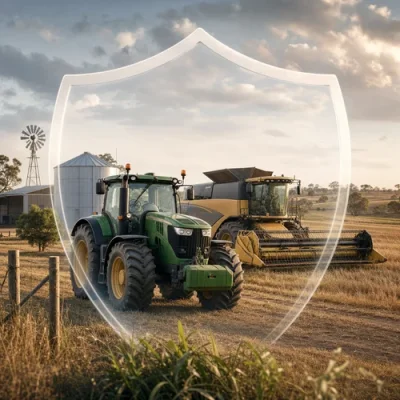
Farm machinery is central to many Australian farming operations. Tractors, harvesters, irrigation systems, seeders, generators and smaller tools can represent a significant investment and may be difficult to replace quickly if they are damaged, stolen or lost.
Farm equipment insurance is designed to help manage these risks by providing financial protection for insured machinery and tools, subject to the terms, limits and exclusions of the policy. It is not a substitute for maintenance, safe operating procedures or broader risk planning, but it can be an important part of a farm insurance program.
Rural Australian farms operate across diverse regions and conditions. Natural events such as drought, flood, storm and bushfire can affect equipment and infrastructure, while theft, vandalism, breakdowns and accidents can interrupt day-to-day work. The right form of cover depends on the type of farm, the machinery used, how the equipment is stored and where it operates.
What is farm equipment insurance?
Farm equipment insurance is a specialised form of cover for machinery and tools used in agricultural operations. It can help pay for repair or replacement when insured equipment is damaged, stolen or lost because of an event covered by the policy.
This cover is usually more specific than general farm insurance because it focuses on mobile and stationary equipment. General farm insurance may cover a wider range of assets and risks, such as farm buildings, livestock, liability and other property. For a broader explanation of policy components, see this guide to what farm insurance can cover.
Examples of equipment that may be covered
The exact list depends on the insurer and policy wording, but farm equipment insurance may apply to items such as:
- tractors and attachments
- harvesters and other harvesting machinery
- ploughs, seeders and cultivation equipment
- irrigation systems and pumps
- milking machines and other dairy equipment
- generators, chainsaws and smaller agricultural tools
- stationary plant and machinery used in farm operations.
Some equipment may need to be individually listed, especially if it is high value, specialised or used away from the main property. The policy schedule and wording are the key documents for confirming what is insured.
Key coverage areas to check
Farm equipment policies differ, so it is important to read the product documents rather than assuming all machinery-related losses are automatically covered. Common areas to review include the following.
Damage to insured equipment
Damage cover may apply when machinery is affected by an insured event, such as an accident, storm, fire, vandalism or another listed peril. The policy should explain whether cover applies to repair costs, replacement costs, or another method of settlement.
Theft or attempted theft
Theft cover can help with the cost of replacing stolen insured equipment. Insurers may require evidence such as proof of ownership, serial numbers, photographs, police reports and details of how and where the equipment was stored.
Liability connected with equipment use
Some farm equipment insurance arrangements may include liability protection, or liability may be handled through a separate farm liability section. This can be relevant if farm machinery causes damage to another person's property or contributes to injury to a third party. The scope of liability cover, insured activities and exclusions should be checked carefully.
Business interruption or machinery breakdown add-ons
Some policies may allow optional extensions for specific situations, such as business interruption connected with machinery breakdown or loss of use. These extensions are not automatic and may have their own limits, waiting periods and exclusions. For more detail on income disruption concepts, see this related guide to farm business interruption insurance.
Specialised or high-value machinery
Specialised machinery, high-value plant or equipment with unique attachments may need separate listing, higher limits or additional endorsements. This is particularly important where replacement would be expensive, delayed or dependent on specialist parts.
Common exclusions and limitations
Exclusions vary by policy, but several limitations are common in farm equipment insurance. Understanding them before a claim occurs can reduce confusion later.
| Issue | Why it matters |
|---|---|
| Wear and tear | Gradual deterioration from age, use or lack of maintenance is typically not treated as an insured event. |
| Mechanical breakdown | Breakdown may be excluded unless a specific machinery breakdown extension applies. |
| Uninsured perils | Some natural or man-made events may be excluded or only covered with an endorsement. |
| Geographic restrictions | Cover may be limited to particular locations, properties or operating areas. |
| Policy limits and deductibles | Claim payments may be affected by sums insured, sub-limits, excesses and depreciation or settlement rules. |
| Security and storage conditions | Theft cover may depend on how equipment was secured, stored or transported. |
Because exclusions can differ significantly, the policy wording should be reviewed alongside the schedule. If wording is unclear, it may be useful to discuss the issue with the insurer or with farm insurance brokers who understand rural risks.
How to assess your machinery before choosing cover
A practical equipment review can help determine what needs to be insured and whether existing cover is still appropriate.
Build an equipment inventory
Keep a written record of insured machinery and tools. Useful details include:
- make, model and year
- serial number or identifying marks
- purchase date and purchase price
- current estimated value
- condition and usage
- attachments and modifications
- storage location
- maintenance and repair history.
Photographs, invoices and maintenance records can also help if a claim needs to be made.
Estimate values carefully
Underestimating machinery values may leave a shortfall after a loss, while overestimating values may contribute to higher premiums than necessary. Values should reflect the policy's basis of settlement, which may differ between market value, agreed value or replacement cost depending on the insurer and the item.
For a starting point when thinking about broader farm cover levels, the Farm Insurance Calculator may help organise the types of assets and exposures to consider.
Consider how equipment is used
Cover needs may change if machinery is used across multiple properties, transported on public roads, hired out, used by contractors or stored away from the main farm. These details can affect underwriting, exclusions and claims handling.
Comparing farm equipment insurance quotes
When requesting a quote, insurers will usually need detailed information about the machinery and the farming operation. This may include the type of farm, property location, equipment values, storage arrangements, maintenance history and previous claims.
When you compare farm equipment insurance quotes, it is important to compare more than the premium. Consider:
- which items are insured and whether they are listed correctly
- the events covered for damage, loss and theft
- the sums insured, sub-limits and excesses
- whether liability is included or separate
- how the policy treats breakdown, wear and tear and gradual deterioration
- any geographic or storage restrictions
- optional endorsements for specialised equipment or business interruption
- the insurer's claims process and experience with agricultural risks.
A lower premium may come with higher excesses, narrower cover or more restrictive conditions. A higher premium may provide broader features, but it still needs to match the farm's actual risks and budget.
Ways farmers may be able to manage premium costs
Premiums are influenced by many factors, including equipment values, location, claims history, storage arrangements and the scope of cover selected. The following measures may be worth discussing with an insurer, although discounts or premium reductions are not guaranteed.
Bundle related policies where appropriate
Some insurers may offer pricing or administrative benefits when farm, property, liability and equipment covers are arranged together. Bundling should still be assessed against the quality and suitability of each section of cover.
Improve security
Secure storage, locked sheds, alarms, monitoring cameras, immobilisers or other theft-prevention measures may help reduce theft risk. Insurers may ask for details of security arrangements, particularly for high-value machinery.
Maintain equipment regularly
Regular servicing and maintenance can reduce the risk of preventable breakdowns and may support smoother claims handling by showing that equipment has been properly cared for. Maintenance does not remove policy exclusions for wear and tear, but good records can help distinguish accidental damage from gradual deterioration.
Review cover when equipment changes
Buying, selling, upgrading or modifying machinery can change the value and risk profile of the farm. Policies should be reviewed regularly so that the schedule reflects current equipment rather than outdated information.
What to do if farm equipment is damaged or stolen
The claims process depends on the insurer and the type of loss, but the following steps are commonly relevant.
- Make the area safe. Prevent further damage or injury where it is safe to do so.
- Notify the insurer promptly. Early notification helps the insurer explain the next steps and any evidence required.
- Record the incident details. Note the date, time, location, circumstances and equipment involved.
- Collect evidence. Photos, videos, invoices, serial numbers, maintenance records and repair quotes may support the claim.
- Report theft or vandalism to police. A police report may be required for theft-related claims.
- Follow the insurer's instructions. The insurer may appoint an assessor, request further documents or ask that damaged equipment be retained for inspection.
Claim timelines can vary depending on the complexity of the loss, the availability of parts or replacement equipment, the quality of documentation and whether the insurer needs an assessor's report. Keeping an up-to-date inventory can make this process easier.
Reviewing farm equipment insurance over time
Farm equipment insurance should not be treated as a set-and-forget product. Farming operations change as equipment is replaced, production methods shift, new properties are leased or purchased, and seasonal risks evolve.
A regular review can help identify outdated sums insured, missing equipment, new attachments, changed storage arrangements or gaps between equipment cover and the broader farm insurance program. Reviewing the policy wording, not just the renewal premium, is important because cover can depend on definitions, exclusions and conditions.
Farm equipment insurance can help protect valuable machinery and reduce the financial impact of insured damage, theft or loss. The most useful policy is one that accurately reflects the machinery being used, the risks of the farm and the conditions under which the equipment operates.
Published: Thursday 3rd October, 2024
Last updated: Wednesday 26th August, 2026