Choosing between jet ski financing sources
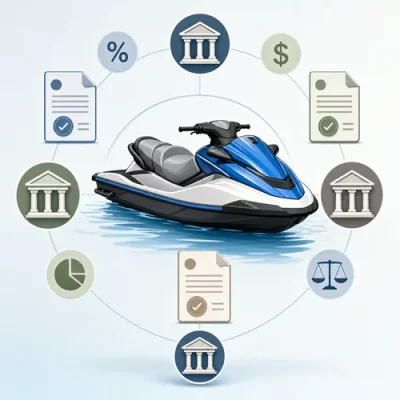
A jet ski can be a significant purchase, so the financing source you choose can affect the total amount you repay, how predictable your repayments are and how much flexibility you have later. This guide focuses on comparing common financing channels in Australia: dealer finance, bank loans, personal loans and credit union finance.
For a broader explanation of loan types, budgeting and the wider jet ski loan process, see our main guide to jet ski loan options. Here, the focus is narrower: how to compare financing sources before you buy.
Quick comparison: dealer finance vs bank loan vs personal loan vs credit union finance
| Finance source | How it usually works | Potential advantages | Points to check carefully |
|---|---|---|---|
| Dealer finance | The dealership helps arrange finance, often through one or more lenders it works with. | Convenient because the purchase and finance can be handled in one place; may offer flexible terms depending on the lender. | Compare the rate, fees and total repayment cost against non-dealer options. Do not rely only on the advertised monthly repayment. |
| Bank loan | You apply directly with a bank, often before or during the purchase process. | May suit buyers with strong credit history; can offer structured terms and, in some cases, secured loan options. | Approval can take longer, eligibility criteria may be stricter and collateral may be required for some secured loans. |
| Personal loan | You borrow through a personal loan, which may be unsecured or secured depending on the lender and product. | Can provide flexibility around loan amount and repayment term; unsecured options may avoid using another asset as collateral. | Unsecured personal loans may carry higher interest rates than secured loans, depending on your credit profile and lender criteria. |
| Credit union finance | You apply through a member-focused credit union, subject to its membership and lending rules. | May offer personalised service, member benefits or competitive terms for eligible borrowers. | Membership may be required, and product availability or eligibility can vary between credit unions. |
Dealer finance: convenience with fine print
Dealer finance is often appealing because it can be arranged at the same time as the jet ski purchase. A dealership may work with multiple lenders, which can make the process feel streamlined for buyers who want to organise the purchase and finance together.
The main risk is focusing too heavily on convenience. A lower monthly repayment can still result in a higher total cost if the term is long, the interest rate is higher or additional fees apply. Before signing, compare the dealer offer with at least one external option, such as a bank, personal loan lender or credit union.
Questions to ask about dealer finance
- Which lender is providing the finance?
- Is the rate fixed or variable?
- What fees apply at establishment, during the loan and at payout?
- Are there penalties for early repayment or missed payments?
- What is the total amount payable over the full loan term?
Bank loans: structure and eligibility
A bank loan may be suitable for buyers who want to arrange finance separately from the dealership. Banks often assess credit history, income, existing debts and the details of the proposed purchase. If your credit history is strong, a bank may offer competitive terms, although this depends on the lender and your financial position.
Some bank loans may be secured, meaning collateral is involved. A secured loan may have different pricing and conditions from an unsecured loan, but it also creates obligations around the asset or collateral. Bank approval processes can also be more detailed, so timing matters if you are trying to buy a particular jet ski from a dealer or private seller.
Personal loans: flexible, but compare secured and unsecured options
Personal loans are commonly used for jet ski purchases because they can be flexible. Depending on the lender, you may be able to choose between a secured and unsecured personal loan. An unsecured loan does not require you to provide collateral, but it may have a higher interest rate than a secured option, depending on your credit score and financial background.
When comparing personal loans, look beyond the headline rate. Check the comparison of fees, repayment frequency, redraw or extra repayment conditions if offered, and the cost over the full term. A longer term may reduce each repayment but increase the total interest paid over time.
Credit union finance: member-focused lending
Credit unions can be another option for Australian jet ski buyers. They are often member-focused and may provide more personalised service than some larger lenders. If you already hold accounts with a credit union, you may be able to ask whether member benefits or loyalty offers apply to a jet ski loan.
The limitation is access. You may need to become a member before applying, and each credit union sets its own eligibility rules, loan products and assessment criteria. As with any lender, compare the total cost, not just the rate or repayment amount.
How fixed and variable rates affect the comparison
Interest rates directly affect both regular repayments and total loan cost. A fixed rate remains the same for the agreed fixed period, which can make budgeting more predictable. A variable rate can move with market conditions, which may change your repayments over time.
Neither structure is automatically better in every situation. When comparing offers, consider whether repayment certainty or potential flexibility is more important to you, and read the loan agreement to understand how the rate can change.
Compare offers by total cost, not just repayments
Monthly repayments are easy to compare, but they can be misleading if the loan terms are different. A lower repayment over a longer term may cost more overall than a higher repayment over a shorter term. If you are estimating how different rates and terms may affect repayments, a jet ski loan repayment calculator can help you model scenarios before you request formal quotes.
If you decide to compare jet ski finance options, keep the same loan amount and similar term in mind where possible so the offers are easier to assess side by side.
What to compare in each finance offer
- The interest rate and whether it is fixed or variable.
- The loan term and repayment frequency.
- Establishment, monthly, annual or payout fees.
- Early repayment rules and any penalties.
- Missed payment fees or default consequences.
- The total amount payable over the full loan term.
- Whether collateral is required.
Read the loan agreement before committing
The loan agreement sets out your obligations and the lender's terms. Read it carefully before signing, especially if the finance is arranged at the point of sale and you feel pressure to finalise the purchase quickly.
Pay close attention to the repayment schedule, rate type, fees and conditions for early repayment or missed payments. If a term is unclear, ask the lender to explain it before you proceed. Understanding the agreement can help you avoid surprises after the jet ski purchase is complete.
Credit score considerations
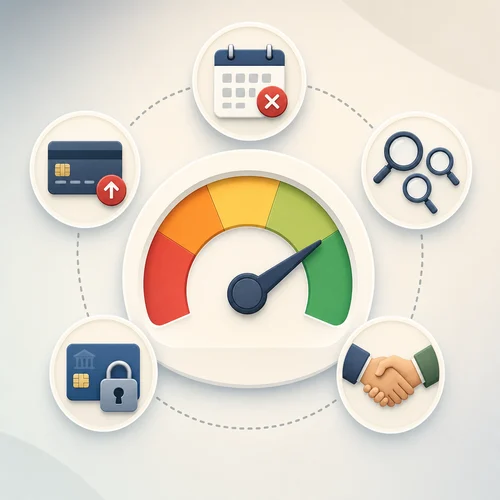
Your credit score can influence whether a lender approves finance and what terms may be offered. A higher score may improve your chances of receiving more favourable terms, while a lower score may result in higher rates or a declined application.
Before applying, you may want to review your credit report and check that the information is accurate. In Australia, the original source article noted that consumers can obtain a free yearly credit report from major credit reporting agencies such as Equifax or Experian. You can also read more about how credit scores affect jet ski financing options.
Keep the application process in perspective
This article is not intended to repeat a full application checklist, but it is useful to know what lenders commonly request. You may need to provide identification, income details, information about existing debts and details of the jet ski you intend to purchase. Examples can include a driver licence or passport, recent payslips, tax returns, bank statements and details of current loans or credit cards.
Providing complete and accurate information can reduce delays. However, approval and loan terms depend on the lender's assessment criteria and your financial circumstances.
What about credit cards?
The original article noted that some credit cards may offer introductory 0% interest periods. For most jet ski buyers, a credit card is not the main finance channel to compare against dealer finance, bank loans, personal loans or credit unions. It may only be relevant for short-term borrowing where the balance can be repaid within the promotional period and all fees, limits and conditions are understood.
Final checklist before choosing a finance source
- Compare at least two finance sources where practical, such as dealer finance and an external lender.
- Use the same loan amount and similar term when comparing offers.
- Check whether the loan is secured or unsecured.
- Read the full loan agreement, including fees and repayment conditions.
- Consider the total cost over the full term, not only the monthly repayment.
- Allow time for assessment, especially with banks or credit unions.
- Make sure ongoing ownership costs such as insurance, registration and maintenance are considered separately from the loan repayment.
Choosing jet ski finance is a comparison exercise. Dealer finance may be convenient, banks may provide structured loan options, personal loans may offer flexibility and credit unions may suit eligible members seeking a more local or member-focused lender. The better choice depends on the terms available, the full cost of borrowing and how clearly the agreement fits your circumstances.