Why credit checks matter when comparing loans
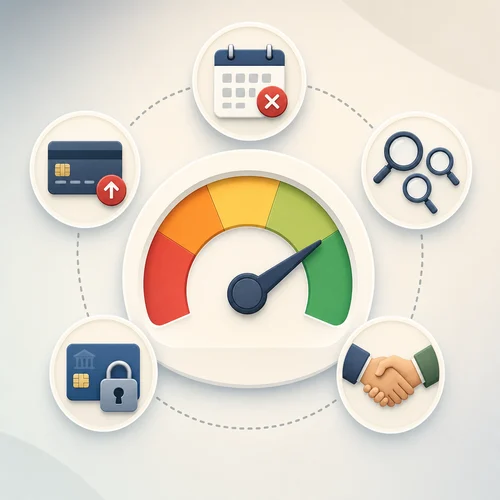
When you look for finance, lenders use information from your credit file to assess how you have managed credit in the past. Your credit score is influenced by factors such as payment history, current debts, the length of your credit history, the mix of credit you use and recent credit activity.
Credit checks are part of this process, but not all checks have the same effect. A soft credit check can help provide a preliminary view of your credit position without affecting your score. A hard credit check is usually linked to a formal credit application and may affect your score.
Understanding this difference is useful if you are comparing personal loans, car loans or other credit products. It can help you research options before deciding whether to proceed with a formal application.
What is a soft credit check?
A soft credit check, sometimes called a soft enquiry or soft pull, is a type of credit enquiry that does not affect your credit score. It gives a limited or summary view of credit information and is commonly used for early-stage checks rather than final lending decisions.
Soft checks may occur in situations such as:
- checking your own credit score or credit report;
- loan prequalification or pre-approval estimates;
- credit card or loan offers based on preliminary eligibility;
- some non-lending checks, such as those used for utilities, phone plans, rentals or insurance-related assessments.
Because soft checks do not affect your score, they can be helpful during the research stage. They allow you to gather preliminary information before deciding whether to make a formal application.
Soft checks vs hard checks
The main difference between a soft check and a hard check is the effect on your credit score and the stage of the lending process in which each is used.
| Feature | Soft credit check | Hard credit check |
|---|---|---|
| Typical use | Prequalification, checking your own credit, preliminary eligibility checks | Formal applications for loans, credit cards or other credit products |
| Effect on credit score | Does not affect your credit score | May lower your score, especially if several applications are made in a short period |
| What it indicates | Research or preliminary assessment | A request for new credit |
| Best suited to | Comparing options before applying | Proceeding with a selected lender or product |
A hard enquiry can suggest to credit reporting bodies and lenders that you are seeking new credit. One hard enquiry may have only a limited effect, but multiple hard enquiries close together can create a stronger signal that you are actively applying for debt.
How soft checks help loan shoppers
Soft checks can be useful when you want to compare loans without creating unnecessary credit file activity. They are commonly used in prequalification processes, where a lender or comparison service provides an initial indication of possible loan terms based on limited information.
Prequalification is not the same as approval. It is an early-stage estimate and does not guarantee that a lender will approve a loan or offer the same terms after a full assessment. However, it can help you narrow your options before deciding whether a hard credit check is worthwhile.
If you choose to compare loan options or make an enquiry, check whether the initial assessment uses a soft or hard credit check before you proceed.
How to compare loans without unnecessary credit score impact
Start with information that does not require a formal application
Before applying, gather information about loan types, repayment terms, fees and eligibility criteria. Online comparison tools and calculators can help you estimate possible repayment amounts without immediately submitting a credit application.
For vehicle finance research, a car loan repayment calculator can help you compare how different loan amounts, terms and repayment assumptions may affect your budget.
Ask what type of credit check will be used
Before entering detailed personal information or agreeing to an assessment, ask whether the provider will run a soft check or a hard check. The distinction matters because a hard enquiry may appear on your credit file and may affect your score.
Compare more than the interest rate
Interest rates are important, but they are not the only factor that affects the cost or practicality of a loan. Also consider:
- loan term;
- estimated repayment amount;
- repayment frequency;
- upfront and ongoing fees;
- late payment charges;
- early repayment conditions or prepayment penalties;
- whether repayment flexibility suits your circumstances.
Reading the fine print is important because fees and penalties can change the total cost of a loan and affect how flexible the loan is if your circumstances change.
What happens after prequalification?
If you receive a prequalification result based on a soft credit check, treat it as guidance rather than a final decision. The lender may still need to verify your information before making a formal offer.
Common next steps may include providing documents such as:
- identification;
- proof of income;
- employment details;
- information about existing debts and expenses;
- details of the asset being financed, if relevant.
A formal loan application will usually involve a hard credit check. For that reason, it is sensible to apply only after you have narrowed your shortlist and are comfortable with the product, fees and repayment obligations.
Managing hard enquiries during the application stage
Hard enquiries are not always avoidable. If you decide to apply for a loan, a lender will usually need to complete a fuller assessment. The aim is not to avoid legitimate checks altogether, but to avoid submitting unnecessary applications.
To reduce avoidable credit file activity:
- research lenders and loan terms before applying;
- use soft-check prequalification where available;
- avoid submitting applications with multiple lenders without understanding the credit check involved;
- prepare requested documents before making a formal application;
- continue paying existing debts and bills on time;
- avoid taking on unrelated new credit while a loan application is being assessed.
If you want more background on how credit scores can affect lending outcomes, see this guide to how your credit score affects loan approval and interest rates.
Where no-credit-check loans fit in
No-credit-check lending is often discussed by borrowers who are concerned about their credit file or previous credit problems. However, the phrase can mean different things depending on the provider and product. It is important to understand how the lender assesses applications, what information they use and what costs or conditions apply.
Soft checks and no-credit-check assessments are not the same thing. A soft check is a type of credit enquiry that does not affect your score. A no-credit-check loan refers to how a lender describes its assessment process. If you are researching this area, this guide explains how no-credit-check loan assessments work in Australia.
Practical checklist before you apply
- Check your own credit report or score so you understand your starting position.
- Use calculators and general information to estimate repayments before making applications.
- Ask whether any prequalification uses a soft or hard credit check.
- Compare fees, repayment terms and penalties as well as interest rates.
- Shortlist suitable options before submitting a formal application.
- Prepare documents such as income evidence, identification and debt information.
- Keep existing accounts in good standing while you research and apply.
Common questions about soft credit checks
Will checking my own credit score affect it?
No. Checking your own credit score is generally treated as a soft enquiry and does not affect your credit score. It can be a useful way to monitor your credit position and check whether the information on your file appears accurate.
Do lenders always use soft checks for prequalification?
Soft checks are commonly used for prequalification, but you should not assume this automatically. Ask the lender or service provider what type of check will be used before you proceed.
Can a soft check guarantee approval?
No. A soft check can support a preliminary estimate or prequalification result, but approval usually depends on a fuller assessment. A lender may still review income, expenses, debts, identity documents and other application details.
Can loan comparison websites affect my credit score?
Some comparison services use soft checks, while others may direct you to a lender application that involves a hard check. Review the terms and privacy information and look for clear wording about whether using the service will affect your credit score.
Key takeaway
Soft credit checks are useful because they let you research and compare loan options without affecting your credit score. Hard checks are usually part of a formal application and may affect your score, so it is worth using soft-check tools and prequalification carefully before applying.
The safest approach is to research first, confirm what type of credit check will be used, compare the full cost of the loan and apply only when you are ready to proceed with a selected option.