
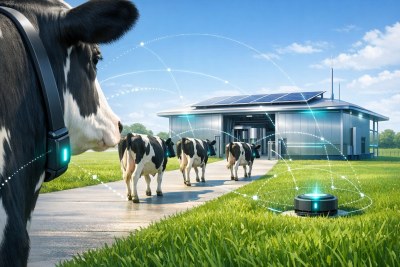
The reported system uses collars to help guide cows through virtual boundaries towards the milking area, while robotic milkers identify animals and decide whether they are ready to be milked. The story is not simply about a new gadget. It points to a broader capital-planning issue for dairy and livestock businesses: the next equipment upgrade may involve collars, sensors, software, connectivity, gates, yards, backup processes, training and servicing obligations, rather than one clearly defined asset.
For farm equipment finance planning, that matters because the cost and risk profile can look different from a conventional tractor, vat or yard upgrade. A robotic dairy system may promise labour efficiencies and more flexible management, but the finance assessment also needs to consider downtime risk, repair access, subscription or platform costs, data reliability, animal training periods and whether existing infrastructure can support the technology. Using an estimation tool such as the Farm Equipment Finance Calculator can be useful for comparing indicative repayment scenarios, but connected systems usually need a wider budget than the headline equipment price.
Key questions for producers considering similar technology include:
- whether the expected labour saving is recurring, measurable and realistic for the herd size;
- how software, collar replacement, service contracts and connectivity costs are treated in the budget;
- whether finance terms align with the useful life of the hardware and the pace of technology change;
- how animal welfare requirements, training and monitoring will be managed under state rules; and
- what backup arrangements apply if robots, collars, power or data connections fail.
The Tasmanian example also shows why general enthusiasm for automation needs to be balanced with caution. Researchers cited in the reporting noted that more work is needed on how virtual fencing interacts with autonomous, cow-driven dairy systems, particularly where animals are moved as a mob rather than choosing milking times individually. Regulatory settings for virtual fencing also vary by jurisdiction and approved systems, so compliance cannot be assumed nationally.
From a finance perspective, the strongest lesson is that automation should be assessed as an operating model, not just a machinery purchase. Where income remains milk-price and season dependent, seasonal repayments, working-capital reserves and conservative downtime assumptions may all deserve attention before a farm commits major capital to connected dairy technology.
Please Note: We do not endorse any specific products or companies. Some content is sourced from third parties, including press releases, and may not be independently verified for accuracy or completeness.