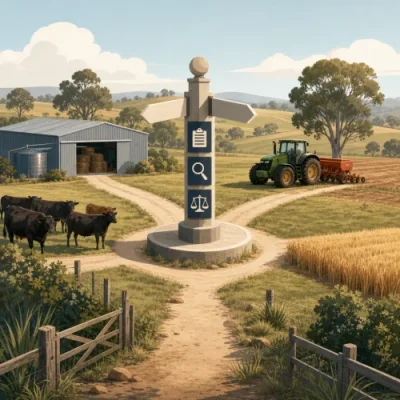
Farm insurance can be difficult to compare because farms are rarely standard risks. A mixed farming operation may need cover for buildings, fencing, machinery, livestock, crops, liability, business interruption and private-use assets, while a smaller rural property may need a different mix of protection.
A farm insurance broker can help farmers and rural businesses navigate that process. Brokers may gather details about the farm, approach insurers or underwriting agencies, explain quote options and assist with policy reviews or claims. However, using a broker does not guarantee that cover will be available, suitable or cheaper. Outcomes depend on the farm’s circumstances, insurer appetite, policy terms and the broker’s role.
This article explains how farm insurance brokers work in Australia, what to expect after a quote enquiry, how broker remuneration may operate and what to ask before deciding whether to use one.
What is a farm insurance broker?
A farm insurance broker is an intermediary who helps arrange insurance between a client and one or more insurers. In the agricultural insurance context, that may include farm package policies, rural property insurance, crop or livestock cover, machinery insurance, liability cover and other business insurance sections.
Some brokers specialise in rural and agribusiness risks, while others operate as general insurance brokers with access to farm insurance products. A broker may work with individual farm owners, family partnerships, companies, trusts, contractors or larger agribusinesses.
In Australia, insurance broking is part of the financial services industry. Brokers who provide financial services generally need to operate under an Australian financial services licence or be authorised by a licensee. The exact obligations, documents and advice process can vary depending on the client, product and type of advice being provided.
How farm insurance brokers work in Australia
The broker process can vary, but it commonly involves a structured review of the farm’s operations, assets and risk exposures before quotes are requested or policy recommendations are discussed.
1. Initial enquiry and contact
The process often starts when a farmer contacts a broker directly or submits an enquiry through a referral or quote service. For example, a farmer may request information through the Farm Insurance website and may then be contacted by a participating broker, depending on availability and the details provided.
At this stage, the broker may ask for basic information such as:
- farm location and property size;
- main farming activities, such as cropping, grazing, horticulture or mixed farming;
- business structure and turnover range;
- major assets, including buildings, sheds, fencing, machinery and stock;
- current insurance arrangements and renewal date;
- recent claims history or known risks.
A quote enquiry is not the same as an insurance application or approval. The broker may need more information before insurers can consider whether to offer terms.
2. Understanding the farm’s risk profile
Agricultural insurance relies heavily on the details. A broker may ask about the way the farm operates, not just what assets are on the property. This can include seasonal activities, contractors, employees, chemical storage, on-farm visitors, agistment, transport, produce sales, irrigation, fire protection and biosecurity controls.
The aim is to identify risks that may need to be covered, disclosed or managed. For example, a farm with high-value harvesting machinery, short seasonal windows and exposure to bushfire risk may need different policy settings from a smaller grazing property with limited built infrastructure.
3. Approaching insurers or underwriting markets
Once the broker has enough information, they may approach insurers, underwriting agencies or other insurance markets that consider rural risks. Not every insurer will quote on every farm, and some may apply conditions, exclusions, higher excesses or coverage limitations.
A broker’s market access can be useful where a farm is complex, has changed operations, has a claims history, or needs several cover sections considered together. However, a broker can only seek terms from markets they can access, and the range of options may vary.
4. Comparing quotes and policy terms
A broker may present one or more quote options and explain differences in premium, excess, sums insured, sub-limits, exclusions and endorsements. For farm insurance, the lowest premium may not provide the most appropriate protection if important assets or risks are excluded or underinsured.
Useful comparison points may include:
- which buildings, sheds, fences and fixed assets are listed;
- whether machinery is covered for accidental damage, theft, fire or breakdown, where relevant;
- how livestock, crops or produce are treated;
- public and products liability limits and exclusions;
- business interruption or loss of income triggers;
- storm, flood, bushfire, hail or cyclone treatment;
- excesses, waiting periods and claims conditions;
- whether the policy is replacement value, market value, indemnity value or another settlement basis.
If you are still clarifying what farm insurance may include, it may help to read What Does Farm Insurance Cover in Australia? before comparing broker quotes.
5. Arranging cover and documentation
If a farmer decides to proceed, the broker may help arrange the policy, confirm payment options, issue or forward policy documents and explain key obligations. These may include disclosure obligations, duty to take reasonable care not to make a misrepresentation, risk management conditions, premium payment requirements and policy change notifications.
Farmers should keep copies of the policy schedule, product disclosure statement or policy wording, certificates of currency, invoices and any written advice or recommendations provided.
6. Ongoing review and claims support
Some brokers provide ongoing service at renewal, when farm operations change or if a claim occurs. This may include updating sums insured, adding new machinery, reviewing liability exposures, checking whether new activities affect cover, or helping communicate with the insurer during a claim.
The level of claims support can vary, so it is worth asking what the broker will and will not do if a loss occurs.
Broker, insurer or referral service: what is the difference?
The terms can be confusing, especially when a farmer uses a website to request farm insurance quotes. The following table explains the general difference.
| Option | Typical role | What to check |
|---|---|---|
| Insurance broker | Helps a client seek, compare or arrange insurance through available markets. | Licence or authorisation, remuneration, scope of advice, available insurers and service terms. |
| Insurer | Issues the policy, sets underwriting terms and handles claims under the policy contract. | Policy wording, exclusions, claims process, premium, excesses and financial strength indicators where available. |
| Referral or quote service | Collects an enquiry and may refer it to participating brokers or providers. | Who will contact you, how your information is used and whether the service itself gives advice. |
A referral service may help start the process, but the broker or insurer will usually be responsible for the insurance discussion, quote, advice or policy arrangement. You can also review the site’s brokers page to understand the broker-related pathway available through this website.
General information versus personal advice
Farmers should understand the difference between general information and advice that takes personal circumstances into account.
General information explains how insurance works, common cover types or issues to consider. It does not assess whether a product is appropriate for a particular farm.
Personal advice considers one or more of your objectives, financial situation or needs. If a broker provides personal advice to a retail client, additional disclosure and advice obligations may apply. In business insurance, the documentation and process can vary depending on the type of client and product.
Before relying on a broker’s comments, ask whether they are providing general information, personal advice or factual assistance only. If advice is provided, ask what information it is based on and what assumptions have been made.
How farm insurance brokers may be paid
Farm insurance brokers may be paid in different ways. Common remuneration models include:
- Commission: the insurer pays the broker a percentage of the premium if a policy is placed.
- Broker fee: the client pays a separate fee for arranging, reviewing or servicing cover.
- Combination model: the broker receives commission and also charges a client fee.
- Other benefits or arrangements: some brokers may have commercial arrangements that should be disclosed where relevant.
Remuneration is not automatically a problem, but it should be transparent. Ask how the broker is paid, whether any fee is refundable, whether fees apply at renewal or cancellation, and whether commissions differ between insurers.
What documents and disclosures should farmers look for?
The documents provided will depend on the product, client type and service being offered. In many broker arrangements, farmers may see documents such as:
- a Financial Services Guide, which explains who the broker is, the services offered, remuneration and complaints process;
- a Product Disclosure Statement or policy wording, which explains the insurance terms, exclusions and conditions;
- a policy schedule, which lists the insured parties, sums insured, excesses and selected cover sections;
- a Statement of Advice, record of advice or written recommendation, where applicable;
- invoices, certificates of currency and renewal notices.
Do not rely only on a verbal summary. Farm insurance policies can contain important limits, exclusions and conditions that affect how the policy responds to a claim.
Information to prepare before speaking with a farm insurance broker
A broker conversation is usually more useful when the farmer has accurate information ready. Preparing details can also reduce the risk of underinsurance, incorrect schedules or delays in seeking quotes.
Consider preparing:
- a list of farm buildings, sheds, silos, yards, fencing and water infrastructure;
- estimated replacement or insured values for major assets;
- machinery details, including make, model, year, attachments and finance interests;
- livestock numbers, classes and seasonal changes;
- crop types, growing areas and storage arrangements, where relevant;
- employee, contractor, visitor and agritourism exposures;
- details of chemicals, fuel, fertiliser, hay, grain or other stored materials;
- recent improvements, purchases or changes to farm activities;
- current policy documents and claims history.
If figures are uncertain, say so. A broker can explain what information may be needed, but farmers remain responsible for ensuring the information they provide is accurate and complete to the best of their knowledge.
Questions to ask a farm insurance broker
Before using a farm insurance broker, it may help to ask direct questions about their role, market access and service model.
- Are you licensed or authorised to provide insurance broking services in Australia?
- Do you specialise in agricultural insurance or rural business insurance?
- Which insurers or underwriting agencies can you approach for farm insurance?
- Are there insurers you do not deal with?
- Will you provide general information, personal advice or factual assistance?
- How are you paid, and what fees or commissions apply?
- What information do you need from me before seeking quotes?
- How will you compare policy exclusions, limits and excesses?
- What happens if the farm changes during the policy period?
- Will you assist if I need to make a claim?
- What is your complaints process?
Benefits and limitations of using a broker
A broker can be valuable, but it is still important to understand the limits of the service.
Potential benefits
- Access to insurance markets that may consider rural or complex agricultural risks.
- Help structuring cover across multiple farm assets and activities.
- Explanation of policy terms, exclusions and disclosure obligations.
- Support at renewal or when the farm changes.
- Assistance communicating with insurers during some claims.
Possible limitations
- A broker may not access every insurer in the market.
- Quotes may not be available for all farms or all risks.
- Premiums, excesses and terms depend on insurer criteria and farm-specific information.
- Some services may involve broker fees or commissions.
- The farmer still needs to review documents and provide accurate information.
When might a broker be especially useful?
A farm insurance broker may be worth considering when a farm has multiple assets, complex operations, prior claims, high-value machinery, seasonal labour, agritourism exposure, contracting activities, crop or livestock complexity, or concerns about underinsurance.
A broker may also be useful when renewing cover after major changes, such as purchasing new land, adding sheds, expanding livestock numbers, installing irrigation, diversifying income streams or changing from hobby farming to commercial production.
For simpler rural properties, direct insurer options may also be considered. The key is to compare not only the premium but also the scope of cover, exclusions, limits, service model and claims pathway.
Red flags and issues to clarify
Farmers should slow down and ask more questions if they encounter unclear explanations or pressure to proceed without time to review documents.
Issues to clarify include:
- unclear broker fees or commission arrangements;
- no clear explanation of who is providing the insurance service;
- limited discussion of exclusions or underinsurance risk;
- quotes that appear to omit major farm assets or activities;
- pressure to choose based only on price;
- uncertainty about whether the broker will help at claim time;
- documents that do not match the farm’s actual operations.
If something is unclear, ask for the explanation in writing. Insurance decisions can have significant financial consequences if a policy does not respond as expected.
Final Thoughts
Farm insurance brokers in Australia may help farmers understand risks, seek quotes, compare policy options and manage ongoing insurance reviews. Their value often comes from understanding rural operations and explaining how different insurance sections may work together.
Before using a broker, farmers should understand the broker’s role, authorisation, remuneration, market access, advice process and claims support. A broker conversation is most effective when the farmer prepares accurate information about assets, operations and risks, then carefully reviews the policy documents before proceeding.