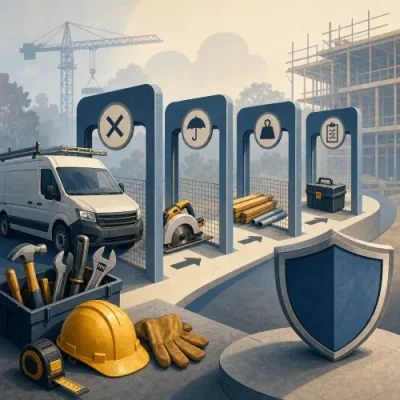
Tradie insurance exclusions and policy conditions can make a major difference at claim time. A policy may look suitable on the quote summary, but the wording usually sets out when cover applies, when it does not, and what you must do before and after an incident.
For Australian tradies, contractors and small trade business owners, checking the fine print is not just an admin task. It can affect site access, client contracts, tool replacement, public liability claims, vehicle use and work in progress. This article explains common exclusions and conditions to review before relying on cover. It is general information only and does not consider your objectives, financial situation or needs.
If you are comparing broader insurance for tradespeople, price is only one factor. The policy wording, insured amounts, excesses, exclusions and claim requirements all matter.
Exclusions, conditions and limits are not the same thing
Insurance documents often use several different concepts that affect whether a claim is paid and how much may be paid.
| Policy term | What it generally means | Why tradies should check it |
|---|---|---|
| Exclusion | A situation, cause of loss, activity or item the policy does not cover. | An exclusion can remove cover even if the policy otherwise seems relevant. |
| Condition | A requirement you must meet for cover to apply or for a claim to proceed. | Failing to meet a condition may reduce, delay or affect a claim. |
| Limit or sub-limit | The maximum amount the insurer may pay for a category of cover. | A policy may cover an item, but only up to a capped amount. |
| Excess | The amount you may need to contribute to a claim. | A higher excess can affect whether smaller claims are practical. |
| Endorsement | A policy change, extension or restriction added to the standard wording. | Endorsements can add cover, narrow cover or impose extra requirements. |
Do not rely only on a certificate of currency. A certificate may confirm that a policy exists and show some headline details, but it usually does not explain every exclusion, condition or sub-limit.
Common tradie insurance exclusions to check
Exact wording varies between insurers and policy types, but many tradie insurance policies include exclusions or limitations in the following areas.
Unlicensed, unlawful or non-compliant work
Policies may exclude claims linked to work performed without required licences, permits, qualifications or legal authority. For example, a policy may respond differently if a task required a licensed electrician or plumber but was performed by someone who was not appropriately licensed.
Tradies should check whether the policy expects compliance with Australian standards, building codes, workplace safety requirements, manufacturer instructions or industry rules. If your trade involves regulated work, this can be especially important.
Known defects, poor workmanship and faulty work
Public liability and business insurance policies are not usually designed to act as a warranty for the quality of your work. They may exclude the cost of correcting defective workmanship, replacing faulty materials or redoing work that was not completed properly.
However, some policies may respond to resulting damage in certain circumstances. For example, the cost of fixing your own faulty work may be treated differently from damage caused to a third party’s property. The difference depends on the policy wording and the facts of the claim.
Contractual liability you accepted beyond normal legal liability
Some client or head contractor agreements include indemnities, hold harmless clauses or insurance obligations. A policy may exclude liability you accepted under a contract if you would not have had that liability under general law.
Before signing a contract, check whether it requires cover that your policy does not provide. This is particularly relevant for subcontractors, builders, maintenance contractors and tradies working on commercial sites.
Professional advice, design or certification
Public liability insurance may not cover claims arising from professional advice, design specifications, certification, inspection, project management or consultancy work. Some trades perform tasks that cross into advice or design, even if that is not their main business.
If you prepare plans, give technical recommendations, sign off compliance, inspect work or provide consulting services, ask whether professional indemnity or another form of cover is needed. Policy response depends on your role, qualifications, contract and insurer criteria.
Subcontractors and labour hire
Some policies restrict or exclude claims involving subcontractors unless they are disclosed, insured separately or working under certain conditions. Others may cover the principal business but not the subcontractor’s own liability.
If you use subcontractors, labour hire, apprentices or casual workers, check:
- whether they are automatically included;
- whether you must declare payments to them;
- whether they need their own insurance;
- whether you must collect certificates of currency; and
- how workers compensation obligations may apply in your state or territory.
High-risk work, heights, heat, excavation or hazardous materials
Some work activities may be excluded or subject to special conditions. Depending on the policy, this can include work at certain heights, hot works, asbestos, demolition, excavation, confined spaces, rail, mining, airports, marine sites or other high-risk environments.
Do not assume a general trade policy covers every job you accept. If your work changes, or a client asks you to perform an unusual task, check whether the policy still applies.
Vehicles, tools and property left unattended
Tool insurance exclusions often relate to theft from vehicles, unsecured storage, overnight parking, forced entry evidence and unattended equipment. A policy may require tools to be locked in a vehicle, locked toolbox, garage, site box or secure storage area.
Commercial vehicle policies may also exclude certain uses, drivers, modifications, trailers, loads or tools inside the vehicle. Vehicle cover and tool cover are usually separate issues, so check both policies if your ute, van or trailer carries work gear.
Wear and tear, gradual deterioration and maintenance issues
Insurance is generally aimed at unexpected events, not normal ageing or maintenance. Policies commonly exclude wear and tear, rust, corrosion, gradual deterioration, mechanical breakdown, faulty maintenance or damage that develops over time.
For tradies, this can apply to tools, machinery, vehicles, site equipment, stock and premises. Keep service records and maintenance evidence where relevant.
Pre-existing damage or circumstances known before the policy started
Claims may be excluded if they relate to damage, defects, disputes or circumstances you knew about before the policy began or before renewal. This can include known water ingress, a previous complaint, a client dispute or damage discovered before cover was arranged.
When applying for or renewing cover, answer disclosure questions carefully and update the insurer or broker if your circumstances change.
Cyber, pollution, asbestos and environmental risks
Many standard business or liability policies exclude or restrict cyber events, pollution, asbestos and environmental contamination. Some trades may face these risks more often than they expect, particularly where they handle building materials, connect smart systems, manage client data or work around older buildings.
If these risks are part of your work, do not assume they are covered under a standard tradie policy.
Public liability exclusions deserve close attention
Public liability insurance can be important for tradies who work in homes, on building sites, in commercial premises or around the public. However, it still has exclusions and conditions.
Common public liability exclusions may relate to injury to workers, damage to your own property, faulty workmanship, contractual liability, professional advice, vehicle use, pollution, asbestos, product issues or work performed outside the policy’s described business activities.
If public liability is a key requirement for your jobs, read more about public liability insurance for Australian tradespeople and compare that guidance with your own policy wording.
Tool insurance exclusions and evidence requirements
Tool insurance can be valuable for tradies who rely on portable tools, power tools, testing equipment, ladders, compressors, generators or specialised gear. But tool claims often depend heavily on conditions and proof.
Check whether your policy has requirements for:
- locked storage when tools are not in use;
- evidence of forced entry after theft;
- serial numbers, receipts or valuation records;
- limits for individual items and total claims;
- cover for tools in transit or on-site overnight;
- employee-owned tools;
- hired or borrowed equipment; and
- replacement value versus market value settlement.
A practical tool register can help. Include photos, make and model details, serial numbers where available, purchase receipts and estimated replacement costs. Store a copy somewhere separate from the tools themselves.
Contract works exclusions and site conditions
Contract works insurance may apply to construction, renovation or installation work in progress, depending on who arranges the policy and what the contract requires. Exclusions can be significant because project risks can involve multiple parties, materials, partially completed work and changing site conditions.
Areas to check include:
- when cover starts and ends;
- whether existing structures are covered;
- storm, flood, water damage or theft conditions;
- security requirements for materials left on-site;
- defects, design errors or faulty materials;
- testing and commissioning restrictions;
- subcontractor responsibilities; and
- whether the policy matches the contract value and project scope.
If you are relying on a principal contractor’s project policy, ask for enough information to understand your position. A certificate alone may not confirm whether your specific work, materials or responsibilities are covered.
Policy conditions that can affect tradie claims
Conditions are not always as obvious as exclusions, but they can be just as important. They set out what you must do for cover to operate properly.
Accurate disclosure when applying or renewing
Insurers ask questions to assess risk. These may relate to your trade, turnover, staff, subcontractors, locations, claims history, hazardous activities, licensing, tools, vehicles and contract types. Inaccurate or incomplete answers can cause problems later.
Review your details at renewal, especially if your business has grown, changed services, moved into commercial work, hired staff, bought new equipment or started subcontracting.
Staying within the business description
Your policy may describe your business activities. If you are insured as a residential carpenter but start doing structural steel installation, roofing, project management or commercial fit-outs, you may be outside the original risk description.
Tell your insurer or broker before taking on materially different work. Do not wait until a claim occurs to find out whether the activity was covered.
Security, storage and maintenance obligations
Policies may require reasonable precautions to prevent loss. For tools, this can mean locking vehicles, securing site boxes and not leaving equipment visible. For premises, it may involve alarms, locks, fire protection or safe storage of flammable materials.
For vehicles and machinery, service and maintenance records may help show that damage was accidental rather than caused by neglect or gradual deterioration.
Claim notification and cooperation
Most policies require you to notify the insurer promptly after an incident or when you become aware of a potential claim. You may also need to avoid admitting liability, making settlement offers or authorising repairs without approval, unless emergency action is needed to prevent further loss.
For practical guidance, see the site’s step-by-step guide to submitting an insurance claim as a tradesperson.
Evidence and record keeping
Claims are easier to assess when you can provide clear evidence. Depending on the incident, useful records may include:
- photos or videos of damage;
- incident reports and witness details;
- police reports for theft or malicious damage;
- invoices, receipts and proof of ownership;
- contracts, job sheets and scope documents;
- licences, permits and compliance certificates;
- maintenance logs; and
- communications with clients, contractors and suppliers.
Good records do not guarantee a claim outcome, but poor records can make it harder to show what happened and what was lost.
How to review the fine print before relying on cover
You do not need to memorise every clause, but you should know where the major risk points are. Use this process when reviewing a new policy, renewal or client insurance requirement.
- Match the policy to your actual work. Check that the business description, trade category and activities reflect what you do now, not what you did when you first bought cover.
- Read the exclusions section. Look for activities, locations, materials, work types or causes of loss that may affect your jobs.
- Check conditions and endorsements. Pay attention to security, licensing, subcontractor, maintenance, notification and evidence requirements.
- Review limits and sub-limits. Make sure you understand caps for tools, equipment, contract works, legal costs, temporary repairs and other categories.
- Compare the policy with your contracts. Client contracts may require specific cover types, limits, interested party clauses or certificates of currency.
- Ask questions before starting work. If a condition is unclear, clarify it before relying on the policy.
Questions to ask your insurer or broker
If the policy wording is unclear, ask direct questions and keep written notes of the response. You may want to ask:
- Does this policy cover all the trade activities I currently perform?
- Are there exclusions for heights, hot works, excavation, demolition, asbestos or other higher-risk tasks?
- What conditions apply to tools left in a vehicle, trailer or on-site?
- Are subcontractors covered, excluded or required to hold their own insurance?
- Does the policy cover damage caused by my work, or only certain types of resulting damage?
- Are professional advice, design, certification or inspection services excluded?
- What evidence would be needed for a theft, liability or contract works claim?
- Does my client contract require cover this policy does not provide?
Where you need help interpreting policy wording or comparing exclusions, you can speak with a participating insurance professional through the brokers page. Any insurance outcome, pricing or availability will depend on your circumstances and insurer criteria.
When to review exclusions and conditions
Reviewing policy wording once and filing it away is rarely enough. Tradie businesses change over time, and those changes can affect cover.
Consider reviewing your policy when you:
- renew your insurance;
- take on a new type of work;
- start working on commercial, government or high-risk sites;
- hire employees, apprentices or subcontractors;
- buy new tools, machinery, vehicles or trailers;
- sign a new subcontract or head contract;
- move premises or change storage arrangements;
- begin offering design, inspection or consulting services; or
- experience a claim, near miss or client dispute.
Final Thoughts
Tradie insurance can provide important protection, but only within the terms of the policy. Exclusions, conditions, sub-limits and evidence requirements determine how cover works in practice.
Before relying on a policy, check whether it matches your trade activities, contracts, tools, vehicles, workers and worksites. Pay close attention to licensing, subcontractors, unattended tools, faulty workmanship, high-risk activities and claim notification requirements.
If you are unsure, ask questions before the job starts. It is usually easier to adjust cover, disclose a change or clarify a condition before an incident than to solve a policy problem after a claim has occurred.