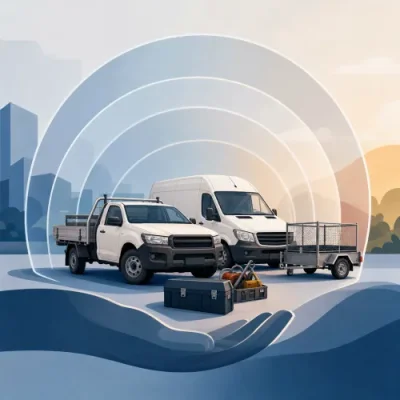
If your ute, van, trailer or work vehicle is essential to getting jobs done, a standard personal car insurance policy may not be enough. Many tradies use their vehicles to carry tools, visit job sites, tow trailers, transport materials or advertise their business. Those uses can change the risk profile for an insurer.
Commercial vehicle insurance for tradies is designed to cover vehicles used for business purposes, subject to the policy terms, exclusions and provider criteria. It can help manage repair, replacement, liability and interruption risks connected with work vehicles, but the right cover depends on how the vehicle is used, who drives it and what is carried in or attached to it.
What is commercial vehicle insurance for tradies?
Commercial vehicle insurance is motor insurance for vehicles used in a business. For tradies, that may include utes, vans, dual cabs, work cars, trailers and, in some cases, specialised trade vehicles or mobile plant. It is different from personal motor insurance because the vehicle is assessed in the context of business use rather than private use only.
A tradie might need business vehicle insurance in Australia if the vehicle is used to:
- travel between job sites, suppliers and client premises;
- carry tools, equipment, stock or materials;
- tow a work trailer or equipment trailer;
- transport employees, subcontractors or apprentices for work purposes;
- display business signwriting or modifications; or
- operate as part of a registered trade business, sole trader operation or contractor arrangement.
Cover varies between insurers. Some policies are designed for a single self-employed tradie with one ute, while others are built for businesses with several vehicles and multiple drivers.
Personal car insurance versus work vehicle insurance
A key issue is whether the insurer knows the vehicle is being used for business. A personal motor policy may cover limited commuting or private use, but it may not be appropriate for regular trade work. If the vehicle is used commercially and the insurer has not been told, a claim could be affected depending on the policy wording and circumstances.
| Issue to compare | Personal motor insurance | Commercial or business vehicle insurance |
|---|---|---|
| Main purpose | Private use, commuting and personal driving, depending on the policy | Business use, trade work and work-related travel, depending on the policy |
| Vehicle contents | Usually limited cover for personal items, if any | May allow options connected with business equipment, but tools often need separate cover |
| Drivers | Often based on nominated or household drivers | May allow business drivers, employees or approved operators, subject to conditions |
| Modifications and signage | May need to be declared and may not suit the policy | More likely to consider work-related modifications, if disclosed and accepted |
| Business interruption needs | Generally not designed around lost work access | May offer options such as hire vehicle benefits, subject to policy terms |
The practical takeaway is simple: be upfront about business use when seeking tradie ute insurance or van insurance for tradies. The insurer or broker needs accurate information to assess the risk and explain what is and is not covered.
What types of vehicles can be covered?
Work vehicle insurance may apply to a range of vehicles commonly used by tradespeople. The exact eligibility depends on the insurer, vehicle type, registration, modifications and use.
Utes and dual cabs
Utes are common for electricians, plumbers, carpenters, landscapers and builders because they can carry tools, materials and equipment. If the ute has canopies, racks, drawers, toolboxes, signage or other modifications, those details should be disclosed when arranging cover.
Vans
Vans are often used by mobile service tradies and contractors who need enclosed storage. Policies may consider how the van is parked overnight, whether it is garaged, what security is fitted and whether tools or equipment are stored inside.
Trailers
Trailer insurance for tradies can be more complex than many business owners expect. Some motor policies may include limited cover for a trailer while attached to the insured vehicle, while others require the trailer to be listed separately. Cover for the trailer itself is different from cover for the tools, machinery or materials being carried in it.
Specialised vehicles and mobile plant
Some trade businesses use vehicles or equipment that may not fit a standard commercial motor policy, such as excavators, skid steers, compressors, scissor lifts or other mobile plant. These may need separate plant and equipment cover, depending on the asset and how it is used.
What can commercial vehicle insurance cover?
Policy options differ, but commercial vehicle insurance for tradies commonly falls into several broad categories.
Comprehensive cover
Comprehensive cover is generally the broadest motor option. It may cover accidental damage to the insured vehicle, theft, fire, storm or malicious damage, as well as damage caused to someone else's vehicle or property. Limits, exclusions, excesses and insured value settings apply.
Third party property damage
Third party property damage cover is usually narrower. It is designed to cover damage your vehicle causes to another person's vehicle or property, but it generally does not cover damage to your own vehicle unless a specific additional benefit applies.
Fire and theft options
Some insurers offer third party fire and theft cover. This may suit some business owners who want protection against certain major events but do not want or need comprehensive cover. Whether that is appropriate depends on the vehicle value, business reliance on the vehicle and the owner's risk tolerance.
Hire vehicle, towing and downtime benefits
Some policies offer optional or included benefits such as towing after an accident, hire vehicle after theft or accident, windscreen cover, signwriting cover or replacement keys. These benefits can matter if losing access to a vehicle would delay jobs or reduce income. They are not automatic across all policies, so it is worth checking the wording closely.
Tools in vehicles: do not assume they are covered
One of the most common misunderstandings is assuming vehicle insurance automatically covers tools stored in a ute, van or trailer. In many cases, tools, equipment and stock need separate tools cover, general property cover or portable equipment cover. Some policies may include limited benefits, but they can have conditions such as locked storage, evidence of forced entry, overnight restrictions or item limits.
If tools are central to your work, read How to Protect Your Tools and Equipment with the Right Insurance for more detail on tool theft, storage, documentation and claims considerations.
Common exclusions and conditions to check
Every policy is different, but tradies should pay close attention to exclusions and conditions that can affect claims. Areas to check include:
- Undisclosed business use: make sure the insurer understands how the vehicle is used for work.
- Unlisted drivers: some policies restrict cover for young drivers, unlicensed drivers or drivers not approved under the policy.
- Vehicle modifications: canopies, racks, toolboxes, lifts, trays, refrigeration units and other changes may need to be disclosed.
- Overloading or unsafe loads: claims may be affected if the vehicle or trailer is used outside legal or manufacturer limits.
- Unsecured tools or materials: theft claims may depend on how items were stored and whether security conditions were met.
- Off-road or site use: driving on unsealed roads, construction sites, farms or rough terrain may be treated differently by insurers.
- Wear and tear: gradual deterioration, mechanical failure and maintenance issues are usually not treated the same as insured events.
- Use outside the agreed business description: changing from local trade work to delivery, courier work or higher-risk use may require reassessment.
These conditions are a reminder that work vehicle insurance is not just about the vehicle. It is also about how the vehicle is operated, stored, maintained and used in the business.
What information may be needed for a quote?
When comparing work vehicle insurance, tradies are usually asked for details that help the insurer assess risk. This may include:
- vehicle make, model, year, registration and market or agreed value;
- business structure, trade type and typical work activities;
- whether the vehicle is used privately as well as for business;
- regular drivers, driver ages and driving history;
- where the vehicle is parked during the day and overnight;
- annual kilometres or usual travel area;
- trailers, accessories, signwriting and modifications;
- security features such as alarms, immobilisers, locks and garaging;
- claims history; and
- optional benefits required, such as hire vehicle or windscreen cover.
Accurate information matters. If the policy is based on incomplete or incorrect details, a future claim may be delayed, reduced or declined depending on the situation and policy terms.
How commercial vehicle insurance fits into trades insurance cover
Commercial motor cover is usually one part of a broader risk plan. A tradie may also need public liability, tools cover, personal accident or income protection, contract works, plant and equipment cover, workers compensation or other business insurance, depending on their circumstances and legal obligations.
If you are reviewing multiple cover types, the Trades Cover Insurance homepage provides a starting point for exploring trades insurance quotes and cover categories. General information can help you prepare, but the policies available and their pricing will depend on your business, insurer criteria and the information you provide.
Questions to ask before choosing a policy
Before taking out or renewing a policy, it can help to ask practical questions rather than focusing only on the premium. Consider asking:
- Does the policy clearly cover my actual business use?
- Are all drivers, vehicles and trailers correctly listed?
- Are modifications, canopies, racks, drawers and signwriting included?
- Does the policy cover the trailer when attached, detached, parked or stored?
- Are tools and equipment covered, or do they need separate insurance?
- What is the excess for different claim types?
- Is there a hire vehicle benefit if the work vehicle is stolen or damaged?
- Are there restrictions on where the vehicle can be driven or parked?
- How are claims assessed: market value, agreed value or another basis?
- What documentation would be needed if a claim occurs?
A broker may be able to help explain business-use questions, compare policy features and identify gaps. Any recommendation should be based on your circumstances, and cover is always subject to insurer acceptance and policy terms.
What to do if you need to claim
If your work vehicle is damaged, stolen or involved in an accident, follow the insurer's claim instructions as soon as reasonably possible. The exact process varies, but useful steps may include:
- Make sure everyone is safe and contact emergency services if needed.
- Record the date, time, location and details of what happened.
- Take photos of damage, road conditions, theft entry points or the site, where safe to do so.
- Collect the other party's details if another vehicle or property is involved.
- Report theft, malicious damage or serious incidents to police if required.
- Do not authorise major repairs unless your insurer confirms the process.
- Provide receipts, service records, modification details or ownership documents if requested.
For tradies, claim documentation can be especially important because vehicles often contain business equipment or have modifications. Keeping records before something goes wrong can make the process easier if you need to prove what was insured.
Key takeaway for tradies
If a vehicle helps you earn income, it should be insured on that basis. Commercial vehicle insurance can help protect utes, vans, trailers and work vehicles used by tradies, but the details matter. Business use, drivers, modifications, trailers, tools and optional benefits can all affect whether a policy is suitable for your needs.
Review the wording, disclose how the vehicle is used and consider how the vehicle fits into your broader trades insurance cover. The right questions upfront can reduce surprises at claim time.