Bad credit truck loans: what actually changes?
Applying for truck finance with bad credit can feel uncertain, especially if the truck is needed for work, freight, construction, agriculture, trades or another income-producing purpose. A poor, limited or inconsistent credit history may affect how a lender views the application, but the outcome depends on the full picture: your income, business cash flow, existing debts, the truck itself, the loan structure and the lender's criteria.
In Australia, bad credit truck loans are not a single product with one set of rules. Different lenders assess risk in different ways. Some may decline applications with recent defaults or unstable income, while others may consider them if the borrower can show stronger affordability, a suitable deposit, reliable business revenue or a clear explanation for past credit issues.
This article is general information only. It is not personal financial advice, and it does not guarantee that a lender, broker or finance provider will approve an application or offer a particular rate.
What can count as bad credit for truck finance?
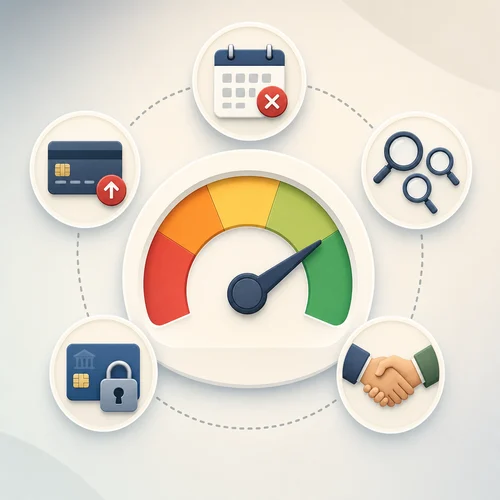
Bad credit usually refers to information on your credit file or financial history that suggests a higher lending risk. It may include:
- missed or late repayments on loans, credit cards, utilities or other accounts;
- defaults, court judgments, bankruptcies or serious credit infringements;
- multiple recent credit enquiries in a short period;
- high levels of existing debt compared with income;
- irregular bank account conduct, such as dishonours or frequent overdrawing;
- limited credit history, which can make it harder for a lender to assess repayment behaviour; or
- business cash flow that is inconsistent, seasonal or poorly documented.
For self-employed applicants and small business owners, lenders may also look beyond a personal credit score. They may review trading history, business bank statements, tax records, invoices, contracts, asset position and the expected use of the truck.
How bad credit can affect truck loan eligibility
Bad credit does not affect every application in the same way. The lender's decision may depend on whether the finance is for personal use, business use or a mixed-use situation. Commercial truck loans may involve different assessment factors from personal truck finance, although lenders still need to be satisfied that the loan is manageable and appropriate for the application type.
Bad credit may affect eligibility in several practical ways:
| Assessment factor | Possible impact on a truck finance application |
|---|---|
| Credit file issues | A lender may ask for an explanation, require stronger supporting documents or decide the risk is outside its criteria. |
| Income or business cash flow | Irregular or hard-to-verify income may make affordability harder to demonstrate, especially for self-employed borrowers. |
| Existing debts | High repayments on other loans or credit cards may reduce borrowing capacity. |
| Deposit or equity | A larger deposit may reduce lender risk, but whether it helps depends on the lender and the overall application. |
| Truck age, condition and value | Some lenders may be more cautious with older, specialised or harder-to-resell trucks. |
| Loan structure | Balloon payments, long terms or low initial repayments may improve cash flow in the short term but can increase future repayment risk. |
If you are still learning how truck finance works generally, it may help to read the broader guide to understanding the basics of truck financing before focusing on credit-specific issues.
Why bad credit may increase the cost of truck finance
Credit history can influence the interest rate, fees, deposit requirement and loan conditions a lender is prepared to offer. Borrowers with stronger credit profiles may have access to a wider range of lenders and pricing options. Borrowers with credit issues may face fewer options or higher costs because the lender is pricing for additional risk.
Possible cost impacts include:
- higher interest rates: a lender may charge more where the application is considered higher risk;
- larger upfront contribution: some lenders may require a deposit or trade-in equity;
- more restrictive terms: the lender may limit the loan term, truck age or amount financed;
- additional fees: fees vary between providers and should be reviewed before signing; and
- reduced flexibility: some repayment structures may not be available to applicants with certain credit issues.
Before applying, it can be useful to test different repayment scenarios using a truck finance calculator. This can help you think through how repayments may change if the rate, term, deposit or balloon amount changes. A calculator is only an estimate and does not confirm eligibility or pricing.
What lenders may look for when credit history is weak
When credit history is not ideal, other parts of the application may become more important. Lenders may want to understand whether the credit issue was isolated, whether it has been resolved, and whether the proposed truck finance is affordable now.
Clear evidence of income or business revenue
For employed applicants, this may include payslips, employment details and bank statements. For self-employed applicants, lenders may request business bank statements, tax returns, BAS records, financial statements or accountant-prepared information. Requirements vary by lender and loan type.
An explanation for past credit issues
A simple, factual explanation may help a lender understand the circumstances behind a default, missed payment or period of financial difficulty. For example, an applicant may explain a temporary loss of work, a business interruption or a dispute that has since been resolved. An explanation does not guarantee a favourable outcome, but unclear or unexplained credit issues can make assessment harder.
Stable recent bank conduct
Recent account behaviour may matter. Lenders may look at whether bills and loan repayments are being met, whether there are frequent dishonours, and whether the applicant has enough surplus cash flow to manage a new truck repayment.
A suitable truck and finance structure
The truck itself is often an important part of the application. A lender may consider the truck's age, kilometres, condition, market value, intended use and whether it will be used to generate income. Specialised vehicles or older used trucks may require closer assessment because resale value can be less predictable.
Commercial truck loans and self-employed borrowers with bad credit
Self-employed borrowers and small business owners often have more complex applications than PAYG employees. Income may vary from month to month, tax records may not reflect current trading conditions, and business expenses may be difficult to separate from personal spending.
If you are self-employed and have poor or limited credit history, it may help to prepare:
- recent business bank statements;
- tax returns, BAS records or financial statements where available;
- evidence of contracts, invoices or regular customers;
- details of current business debts and repayment commitments;
- an explanation of how the truck will support income or operations;
- details of any deposit, trade-in or asset backing; and
- a realistic repayment plan that accounts for fuel, maintenance, registration, insurance and downtime.
Some borrowers focus only on the monthly loan repayment, but a truck can carry substantial operating costs. A finance approval that looks manageable on paper may still create pressure if maintenance, tyres, insurance, tolls, fuel, repairs or seasonal slowdowns are not considered.
Can a deposit help if you have poor credit?
A deposit or trade-in can sometimes strengthen an application because it reduces the amount borrowed and may lower the lender's exposure. However, a deposit does not override all credit issues. A lender may still decline an application if affordability, recent credit conduct or the overall risk profile does not meet its criteria.
Using all available savings as a deposit can also create problems if it leaves no buffer for repairs, registration, insurance, tax obligations or business cash flow. For truck buyers, preserving working capital can be just as important as reducing the loan amount.
Should you apply with multiple lenders at once?
Submitting many applications in a short period can create multiple credit enquiries. Depending on your situation, this may make the credit file look riskier to some lenders. It may be better to understand your position, compare options carefully and avoid rushed applications that are unlikely to meet lender criteria.
If you are unsure what documents are needed or how your credit history may be viewed, you may choose to speak with a truck finance broker or finance professional. A broker may be able to explain general documentation expectations and help identify which types of lenders may consider certain circumstances. Broker involvement does not guarantee approval, and fees, commissions and lender panel arrangements should be understood before proceeding.
Practical steps before applying for truck finance bad credit options
Before lodging an application, consider taking these steps:
- Check your credit report. Review the information recorded and look for errors or outdated details.
- Resolve what you can. If there are unpaid defaults or arrears, consider whether they can be addressed before applying.
- Prepare a clear explanation. Be ready to explain what happened, when it happened and what has changed since.
- Gather income documents early. Missing paperwork can slow assessment or weaken the application.
- Estimate all truck costs. Include loan repayments, fuel, maintenance, insurance, registration, downtime and tax obligations.
- Consider a realistic truck choice. A lower-cost, suitable truck may be easier to support than stretching for a more expensive vehicle.
- Avoid overstating income or understating expenses. Lenders may verify documents, and inaccurate information can cause serious problems.
- Ask about fees and repayment flexibility. Understand establishment fees, monthly fees, early repayment conditions and balloon payment obligations where relevant.
When a bad credit truck loan may not be the right move
There are times when delaying an application may be safer than taking on a higher-cost loan. This may be worth considering if your income is unstable, your business cash flow is under pressure, you have unresolved arrears, or the truck purchase would leave no emergency buffer.
A truck can be essential for earning income, but finance can also create long-term obligations. If repayments are missed, consequences may include additional fees, further credit file damage, repossession of the secured vehicle or business disruption. The specific consequences depend on the contract and circumstances.
If you are in financial difficulty, consider seeking independent financial counselling or professional advice before taking on new credit.
How to approach a truck loan enquiry responsibly
If you decide to enquire about finance, be upfront about credit issues, income, debts and the intended use of the truck. A realistic application is more useful than one built around optimistic assumptions. You can also start with a general truck loan finance enquiry to understand what information may be needed before progressing further.
The key is to treat bad credit truck finance as a risk assessment, not a simple yes-or-no label. Credit history matters, but so do affordability, documentation, deposit, vehicle suitability and the strength of the overall application.
Key takeaways
- Bad credit can affect truck loan eligibility, pricing, lender choice and documentation requirements.
- Past credit problems do not always mean an application cannot be considered, but outcomes depend on individual circumstances and lender criteria.
- Borrowers with poor credit may need stronger evidence of income, business cash flow and recent financial stability.
- Higher-cost finance can create repayment pressure, so affordability should include total truck operating costs, not just the loan repayment.
- Preparing documents and understanding your credit file before applying may reduce avoidable delays and unsuitable applications.