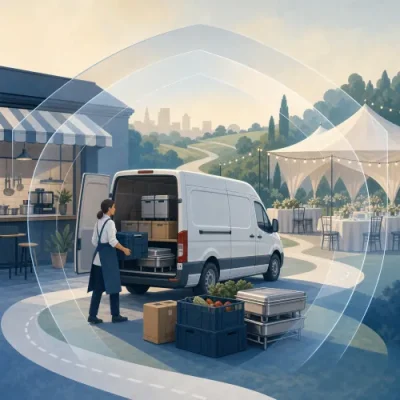
Vehicles can become a core part of a hospitality business, even when the main operation is a cafe, restaurant, bar, catering company or event service. A staff member delivering orders, a van carrying equipment to a wedding, or a ute collecting stock from suppliers can all create risks that may not be fully addressed by a standard personal motor policy.
Commercial vehicle insurance for hospitality businesses is designed to help manage vehicle-related risks connected with business use. The right cover depends on how the vehicle is used, who drives it, what it carries, where it travels and the insurer's policy terms. This article provides general information only and does not replace professional advice for your specific business.
When might a hospitality business need commercial vehicle insurance?
A hospitality business may need to consider commercial vehicle insurance when a car, van, ute, truck, trailer, food truck or other vehicle is used for business activities. This may include regular use or occasional use, depending on the policy and insurer.
Common examples include:
- Catering vans: transporting food, beverages, serving equipment, marquees, tables or staff to events.
- Food delivery vehicles: delivering meals, packaged food, drinks or wholesale products to customers or other businesses.
- Mobile food businesses: operating from a food truck, coffee van, market stall vehicle or trailer.
- Stock and supply transport: collecting fresh produce, alcohol, packaging, linen or commercial kitchen supplies.
- Event and function travel: moving equipment between venues, festivals, pop-ups, weddings or corporate functions.
- Staff business travel: employees using a business-owned vehicle, or in some cases their own vehicle, for work errands or deliveries.
Commercial vehicle insurance hospitality needs can vary widely. A small cafe that occasionally collects stock may have different risks from a caterer with multiple vans on the road every day. The key question is not only who owns the vehicle, but how it is actually used.
Why personal car insurance may not be enough
Personal car insurance is generally designed for private use, commuting and limited everyday driving. Some policies may allow certain incidental business use, while others may restrict or exclude claims connected with commercial activity. The position depends on the policy wording and what was disclosed to the insurer.
If a vehicle is used for deliveries, carrying business stock, towing business equipment or visiting event sites, the insurer may treat that as business use. If the insurer was not told about that use, a claim could be affected. This is why hospitality owners should check policy terms before assuming a personal motor policy will respond.
Important questions include:
- Is the vehicle registered and insured for private, business or commercial use?
- Does the policy allow delivery work or carrying goods for business?
- Are employees, casual staff or contractors permitted drivers?
- Is there cover for equipment, stock or tools carried in the vehicle?
- Are trailers, refrigeration units, signage or modifications included?
What can hospitality business vehicle insurance cover?
Commercial motor policies differ between insurers, but they often focus on damage to the insured vehicle, liability for damage caused to other people's property, theft and related vehicle risks. Some covers are standard, while others may be optional or subject to limits.
| Vehicle-related risk | Why it matters for hospitality businesses | Cover to ask about |
|---|---|---|
| Accident damage | A catering van or delivery vehicle may be off the road after a collision, affecting bookings, deliveries or stock runs. | Comprehensive commercial motor cover, repair arrangements, excesses and hire vehicle options. |
| Third-party property damage | A driver may damage another vehicle, a customer's property, a venue gate or loading dock. | Legal liability for property damage caused by use of the insured vehicle. |
| Theft or attempted theft | Vehicles, trailers, tools or equipment may be targeted, particularly when parked off-site or overnight. | Theft cover for the vehicle and any separate cover needed for contents, tools, stock or equipment. |
| Goods in transit | Food, beverages, stock or event equipment may be damaged while being transported. | Goods in transit, stock, contents or equipment cover, noting conditions and exclusions. |
| Special vehicle fit-outs | Food trucks, coffee vans and refrigerated vehicles may include expensive equipment or modifications. | Cover for modifications, fitted equipment, refrigeration units and declared vehicle value. |
| Downtime after an incident | Losing access to a vehicle can disrupt deliveries, catering jobs or event operations. | Hire vehicle benefits, business interruption cover or other continuity options, if available and suitable. |
Commercial vehicle insurance is not the same as public liability insurance, property insurance or business interruption insurance. A hospitality business may need more than one type of cover to address different risks. For a broader overview of venue and operational risks, see Understanding Hospitality Insurance: Considerations for Aussie Business Owners.
Vehicle risks that are specific to hospitality operations
Hospitality vehicles often carry time-sensitive, temperature-sensitive or high-value items. This can make vehicle use more complex than a simple trip from one workplace to another.
Food, beverages and temperature control
If a vehicle transports chilled, frozen or prepared food, a breakdown, collision or refrigeration failure could lead to spoilage. Standard motor cover may not automatically cover spoiled stock or loss of food due to temperature change. Businesses should ask whether stock, deterioration or goods in transit cover is available and what conditions apply.
Alcohol and regulated products
Venues, bars and caterers may transport alcohol or other regulated products. Insurance does not replace licensing or legal obligations. Owners should ensure transport practices comply with relevant state or territory requirements and that any stock cover accurately reflects what is being carried.
Event and off-site equipment
Caterers, mobile bars and event operators may transport cooking equipment, glassware, generators, marquees, display items or point-of-sale devices. These may not be covered under a motor policy unless specifically included. Separate property, portable equipment or general property cover may be needed.
Delivery pressures and driver fatigue
Busy periods can create tight delivery windows and pressure on drivers. Fatigue, unfamiliar routes, night driving and parking in congested areas can all increase risk. Insurance can help respond after an insured event, but it does not replace safe operating procedures.
Business-owned, staff-owned and contractor vehicles
Vehicle ownership matters, but it is only part of the assessment. Hospitality businesses should also consider who controls the trip and who benefits from the vehicle use.
Business-owned vehicles are usually the clearest case for commercial motor cover, because the vehicle is part of the business operation. This may include delivery vans, utes, refrigerated vehicles, food trucks, trailers or branded cars.
Employee-owned vehicles can create more uncertainty. If staff use their own cars for deliveries, errands or stock collection, their personal motor policy may not cover that use. The business should consider whether it needs non-owned vehicle liability cover, a reimbursement policy, driver checks or other risk controls. The employee should also check their own insurance arrangements.
Contractor and platform delivery drivers may have their own insurance obligations. A hospitality business should not assume a contractor's policy protects the business. Contract terms, proof of insurance and responsibility for goods should be reviewed carefully.
Where mixed personal and business use is involved, it can be useful to speak with an insurance broker experienced in hospitality about how ownership, driver arrangements and policy wording interact.
Compulsory third party insurance is different
In Australia, compulsory third party insurance, often called CTP or a similar name depending on the state or territory, relates to injury caused by motor vehicle accidents. It is separate from commercial motor insurance and does not usually cover damage to vehicles, business property, stock, equipment or third-party property damage.
Because CTP rules and names vary across Australia, hospitality owners should not rely on CTP as a substitute for commercial vehicle cover. It is one part of the motor insurance picture, not a complete business vehicle risk solution.
What affects premiums, terms and acceptance?
Insurers assess commercial vehicle insurance Australia applications using their own underwriting criteria. Premiums, excesses, exclusions and availability can vary based on the risk profile of the business and vehicle use.
Factors may include:
- vehicle type, age, value and condition;
- whether the vehicle is a car, van, ute, truck, trailer, food truck or refrigerated vehicle;
- business use, including delivery, catering, mobile service or stock transport;
- annual kilometres and operating areas;
- driver age, experience and claims history;
- where the vehicle is parked overnight;
- security features and tracking systems;
- modifications, signage, refrigeration units or fitted equipment;
- claims history for the business;
- the level of cover, excess and optional benefits selected.
No insurer is required to offer cover in every situation. Pricing and terms depend on the insurer's criteria and the information provided.
Policy details to check before choosing cover
Before arranging catering van insurance, food delivery vehicle insurance or a broader business vehicle insurance policy, review the policy wording and ask practical questions. The lowest upfront premium may not provide the protection your business expects if important uses or items are excluded.
- Declared use: Does the policy correctly describe hospitality use, delivery work, catering, mobile food service or stock transport?
- Drivers: Are employees, casuals, family members, contractors or learner drivers covered?
- Radius and locations: Are there restrictions on operating areas, interstate travel or event sites?
- Goods and equipment: Are food, beverages, stock, tools, equipment or portable items covered while in the vehicle?
- Refrigeration and spoilage: Is there cover for temperature-related loss, and what conditions apply?
- Trailers and attachments: Are trailers, coffee carts, mobile kitchens or towable equipment listed?
- Vehicle modifications: Have fitted kitchens, cool rooms, shelving, generators, branding and other modifications been disclosed?
- Hire vehicle after an incident: Is a replacement vehicle included, optional or unavailable?
- Excesses: Are there additional excesses for young drivers, inexperienced drivers, theft, windscreen claims or certain events?
- Exclusions: Are there exclusions for hire and reward, delivery platforms, unlicensed drivers, unsafe vehicles, overloading or unattended goods?
Risk management steps for hospitality vehicle use
Good risk management can reduce disruption and support clearer insurance arrangements. It may also help insurers understand the business more accurately when assessing cover.
- List every vehicle used for business. Include business-owned, owner-owned, employee-owned, leased and trailer assets.
- Document what each vehicle carries. Note food, alcohol, equipment, stock, cash, tools, refrigeration and event gear.
- Keep driver records. Record licence checks, induction, approved drivers and any relevant training.
- Set delivery and fatigue procedures. Avoid unrealistic schedules and encourage safe driving practices.
- Maintain vehicles and equipment. Keep service records, tyre checks, refrigeration maintenance and repair documentation.
- Secure vehicles and goods. Use appropriate locks, alarms, safe parking and unloading procedures.
- Review contracts. Check responsibilities for goods, event equipment, subcontractors and delivery arrangements.
- Update your insurer when operations change. New delivery services, a food truck, interstate events or extra drivers may affect cover.
How vehicle cover fits into hospitality business insurance
Commercial vehicle insurance is one part of a broader hospitality insurance program. A venue or catering business may also need to consider public liability, product liability, property, stock and contents, equipment breakdown, workers compensation, business interruption and other covers depending on its operations.
For example, a caterer may need vehicle cover for the van, goods in transit cover for equipment and stock, public liability for event sites, and property cover for the commercial kitchen. A cafe offering local deliveries may need to check whether delivery use affects its motor policy, staff arrangements and liability exposures.
You can explore how vehicle cover may sit alongside broader hospitality business insurance options, but any decision should be based on your own operations, policy terms and insurer criteria.
Questions to ask before arranging cover
When comparing hospitality business vehicle insurance options, ask clear questions rather than relying on assumptions. Useful questions include:
- Is my specific hospitality vehicle use covered, including deliveries or catering?
- Are all intended drivers covered under the policy?
- What happens if an employee uses their own car for business tasks?
- Are stock, food, beverages and equipment covered while being transported?
- Are fitted modifications, refrigeration units or mobile kitchen equipment included?
- Is there a hire vehicle benefit if my business vehicle is off the road?
- What exclusions apply to delivery work, mobile food operations or goods in transit?
- What changes must I report to the insurer during the policy period?
Key takeaway
A hospitality business may need commercial vehicle insurance whenever vehicles are used for deliveries, catering, mobile food service, stock transport, events or staff business travel. The main risks are not limited to road accidents. Owners also need to consider goods in transit, equipment, refrigeration, driver arrangements, vehicle modifications and business interruption from downtime.
Because policy terms vary, hospitality owners should disclose vehicle use accurately, compare cover details carefully and seek guidance where their operations involve mixed personal and business use, multiple drivers or specialised vehicles.