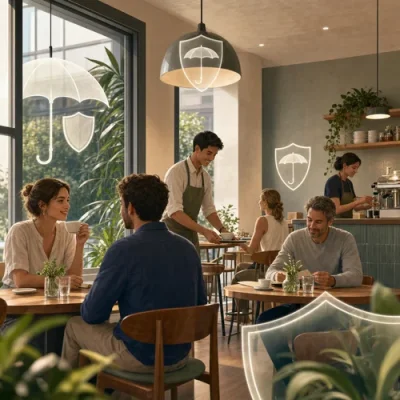
Running a cafe means welcoming members of the public into a busy environment where hot drinks, food preparation, wet floors, equipment, furniture and staff movement all intersect. If something goes wrong, the type of customer claim matters because different parts of a liability policy may respond in different ways.
For many Australian cafe owners, the confusing part is the difference between public liability and product liability. Public liability is often associated with customer injury or property damage connected with your premises or business activities. Product liability is more closely connected with harm allegedly caused by goods you supply, such as food, coffee, packaged items or takeaway products.
This article explains public liability vs product liability for cafe situations in practical terms. It is general information only and does not take your business circumstances, policy wording or insurer criteria into account. If you are reviewing cafe insurance, read the relevant policy documents carefully and seek professional assistance where needed.
What public liability insurance usually means for a cafe
Public liability insurance is designed to help protect a business if a member of the public claims they suffered personal injury or property damage because of the business's negligence or activities. For cafes, this commonly relates to incidents involving customers, visitors, contractors, delivery drivers or other third parties.
Examples of cafe-related public liability claims may include:
- a customer slipping on a recently mopped floor where warning signs were not used;
- a visitor tripping over an uneven entry mat or loose outdoor seating;
- a customer being burned after a staff member spills a hot drink while serving at the table;
- a child being injured by unstable furniture or a poorly secured display item;
- a customer's personal property being damaged because of an incident connected with the cafe's operations.
In broad terms, public liability can help with legal defence costs and compensation if the claim is covered and the cafe is found liable or agrees to settle. The availability and extent of cover depends on the policy wording, exclusions, limits, excesses and the circumstances of the incident.
What product liability means for food, drinks and takeaway items
Product liability relates to claims arising from products supplied by the business. In a cafe, the relevant products are usually food and beverages, but they may also include packaged goods, retail coffee beans, bottled drinks, cakes sold for takeaway, sauces, merchandise or hampers.
Product liability may become relevant where a customer alleges they were harmed because a product supplied by the cafe was unsafe, contaminated, incorrectly prepared, wrongly labelled or otherwise defective. For a food and beverage business, common examples include:
- food poisoning allegedly caused by a meal, sandwich, cake or pre-prepared item;
- illness allegedly caused by contaminated ingredients, poor storage or cross-contamination;
- an allergic reaction after a customer was given incorrect allergen information or the wrong item;
- injury caused by a foreign object in food, such as a piece of packaging or hard material;
- burns from a takeaway drink where the cup, lid or handling process is alleged to be unsafe.
Many business liability packages include product liability with public liability, but this should never be assumed. Some policies define product liability separately, apply specific conditions, or exclude certain goods, preparation methods or circumstances. A cafe owner should check whether product liability is included, what the limit is, and whether it matches the way the cafe actually sells food and beverages.
Public liability vs product liability for cafes: the key difference
The simplest way to separate the two is to ask what caused the alleged harm.
If the claim arises because of the cafe environment, premises, staff activity or general business operations, public liability is usually the starting point. If the claim arises because of food, drink or another product the cafe supplied, product liability is usually the more relevant concept.
| Claim scenario | Likely liability issue | Why it matters |
|---|---|---|
| A customer slips on a wet floor near the counter. | Public liability | The injury relates to the premises and how hazards were managed. |
| A customer says they became ill after eating a chicken sandwich bought from the cafe. | Product liability | The claim relates to a food product supplied by the cafe. |
| A staff member spills a hot coffee onto a seated customer. | Public liability, depending on circumstances | The harm may relate to service activity rather than a defect in the coffee itself. |
| A takeaway cup lid fails and hot coffee spills onto a customer. | Product liability or public liability may be considered | The claim may involve the supplied product, packaging, preparation or handling process. |
| A customer has an allergic reaction after receiving the wrong cake. | Product liability, possibly with operational issues | The harm relates to a supplied food item and may also involve staff procedures. |
In practice, a claim can involve both concepts. An insurer may consider the full circumstances before deciding which section of a policy responds. This is one reason cafe owners should avoid relying on broad assumptions and should review the actual policy wording.
Food poisoning, foodborne illness and cafe insurance
Food poisoning insurance is not always a separate standalone product. For many cafes, claims involving alleged foodborne illness may be considered under the product liability section of a business liability or cafe insurance policy, if that cover is included and the claim falls within the terms of the policy.
Foodborne illness claims can be complex because they may involve questions such as:
- what the customer consumed and when;
- whether other customers reported similar symptoms;
- how ingredients were stored, prepared and handled;
- whether temperature logs, cleaning records or supplier records are available;
- whether the alleged illness can be linked to the cafe's product;
- whether the cafe complied with relevant food safety procedures.
Good records can be important. While insurance can help respond to a covered claim, it does not replace day-to-day food safety, staff training, supplier management and hygiene systems. It also will not necessarily cover every incident, especially where exclusions or breaches of policy conditions apply.
Allergic reactions and customer claims
Allergic reaction claims are a specific concern for cafes because menu items often contain common allergens such as milk, eggs, peanuts, tree nuts, sesame, wheat, soy, fish or shellfish. Cross-contamination can also occur in kitchens, display cabinets, coffee machines, utensils and food preparation areas.
An allergic reaction cafe insurance claim may involve product liability if the customer alleges the food or drink supplied was unsafe or not as described. It may also involve operational questions, such as whether staff gave incorrect information, substituted ingredients, used the wrong milk, failed to follow a documented allergen process, or mixed up orders.
Cafe owners can reduce risk by:
- training staff not to guess about ingredients or allergen status;
- keeping ingredient and supplier information up to date;
- using clear internal processes for allergen requests;
- separating equipment or preparation areas where practical;
- recording customer allergen requests accurately;
- reviewing menus, display labels and verbal service procedures regularly.
Insurance may help with covered liability claims, but prevention and accurate communication are central to managing allergen risk.
When public liability and product liability overlap
Some cafe incidents do not fit neatly into one category. A hot drink burn is a common example. If a staff member trips and spills coffee on a customer, the incident may be treated as an operational or public liability issue. If a takeaway lid was defective or poorly fitted and caused the spill after the customer left the counter, product liability may also be considered.
Another example is a cake displayed in a cabinet. If a customer cuts themselves on broken glass from the display cabinet, that is more likely to involve the premises or equipment. If a foreign object is found inside the cake and causes injury, product liability may be more relevant.
The distinction matters because policy sections may have different limits, exclusions, conditions or definitions. The same insurer may assess different incidents in different ways depending on evidence, policy wording and the legal basis of the claim.
Does a cafe need both public liability and product liability?
Most cafes should at least consider both forms of liability protection because they interact with customers in person and supply food and beverages. However, whether a particular policy is suitable depends on the cafe's size, services, revenue, location, lease requirements, delivery arrangements, events, catering activities and insurer criteria.
Public liability may be relevant because customers enter the premises, sit at tables, use walkways, collect takeaway orders and interact with staff. Product liability may be relevant because the cafe prepares, handles, sells or distributes consumable products.
Some business insurance packages combine both public and product liability under one liability section. Others separate them or include important limitations. When comparing policies, cafe owners should look beyond the label and check what is actually covered.
For a broader overview of common cover types, see our general guide to understanding cafe insurance.
Policy details cafe owners should check
When reviewing cafe business insurance, the details matter. Useful questions to ask include:
- Is product liability included? Do not assume it is automatically part of public liability cover.
- What products are covered? Check whether the policy fits dine-in food, takeaway, catering, wholesale supply, packaged goods, online orders or delivery.
- What is the liability limit? Consider whether the limit applies separately or in aggregate, and whether it meets lease, event or supplier requirements.
- What exclusions apply? Look for exclusions relating to known defects, deliberate acts, product recalls, alcohol, imported goods, contractual liability or failure to comply with regulations.
- Are defence costs included? Check whether legal defence costs are inside or outside the limit and how claims are managed.
- What records are expected? Food safety logs, cleaning schedules, staff training records and incident reports may be relevant to a claim.
- Are subcontractors or delivery partners covered? If your cafe uses third-party services or external suppliers, check where your responsibility starts and ends.
- Are events and catering covered? Off-site service, markets and private functions may change the risk profile.
If you are unsure how a policy treats public liability and product liability, consider speaking with the insurer, an authorised representative or an insurance broker before relying on the cover.
Reducing the chance of customer injury claims
Insurance is only one part of managing liability risk. Practical risk controls can reduce the chance of an incident and may also help demonstrate that your cafe took reasonable steps if a claim occurs.
For premises and service-related risks, consider:
- cleaning spills promptly and using visible warning signs;
- checking flooring, mats, steps, ramps and outdoor seating areas;
- maintaining furniture, umbrellas, heaters and display stands;
- training staff in safe carrying and serving practices for hot drinks and food;
- keeping walkways clear, especially during busy periods;
- recording incidents as soon as practical, including photos and witness details where appropriate.
For food and product-related risks, consider:
- documented food safety procedures and staff training;
- temperature control for chilled, hot-held and stored ingredients;
- supplier records and batch information where relevant;
- clear allergen communication and order-handling processes;
- regular cleaning schedules and pest control measures;
- procedures for withdrawing or isolating products if a problem is identified.
Risk controls should be reviewed as your menu, opening hours, premises, staff, delivery model or catering activities change. A structured approach can also support wider financial resilience; our guide to creating a financial risk management plan for your cafe explains how cafe owners can think about business risks more broadly.
What to do if a customer makes a claim
If a customer is injured, becomes ill, or alleges your cafe caused harm, respond calmly and document the situation. The exact steps will depend on the incident, but cafe owners commonly need to:
- provide immediate assistance and call emergency services if required;
- make the area safe to prevent further harm;
- record the time, date, location and details of what happened;
- collect witness details where appropriate;
- preserve relevant evidence, such as CCTV, food samples, temperature logs, cleaning records, receipts or packaging;
- avoid admitting liability or making promises about compensation;
- notify the insurer or broker as soon as practical, following policy requirements;
- cooperate with the claims process and provide requested documentation.
Early notification is important because policies often include conditions about reporting incidents and not taking steps that may prejudice the insurer's position. If the incident involves food safety, you may also need to follow relevant regulatory or internal reporting processes.
Key takeaways for cafe owners
Public liability and product liability are closely related, but they are not the same. Public liability generally concerns injury or property damage connected with your cafe premises, staff activity or business operations. Product liability generally concerns harm allegedly caused by food, drinks or other products you supply.
For cafes, both areas can matter. A slip near the counter, a burn from table service, a food poisoning allegation and an allergic reaction may all create different insurance and evidence issues. Some incidents may involve both public and product liability, so the policy wording and factual details are critical.
Review your liability cover regularly, especially if you change your menu, start catering, sell packaged goods, use delivery platforms, host events or renovate your premises. The right approach is not just buying a policy; it is combining appropriate insurance, clear procedures, staff training and good records so your cafe is better prepared if a customer claim arises.
Published: Wednesday 26th February, 2025
Last updated: Thursday 20th August, 2026