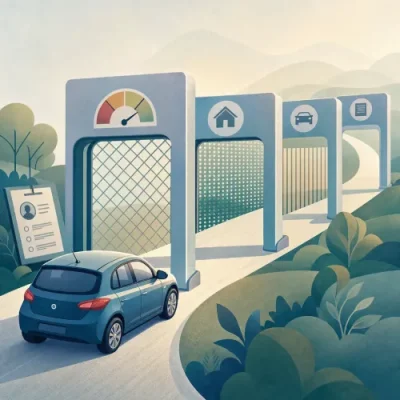
If you are worried about applying for a car loan with a low credit score, previous defaults, missed repayments or limited credit history, it is important to understand how lenders may assess risk. A low credit score does not necessarily mean you cannot apply for car finance in Australia, but it can influence whether a lender is willing to approve the application, what rate may be offered and what conditions may apply.
This article explains how a low credit score can affect car loan eligibility, costs and risks in Australia. It is general information only and does not take into account your personal objectives, financial situation or needs. Lender decisions, interest rates, fees and loan conditions depend on individual circumstances and provider criteria.
What does a low credit score mean for a car loan application?
Your credit score is one indicator lenders may use when assessing a car loan application. It is generally based on information in your credit report, such as repayment history, credit enquiries, defaults, credit accounts and certain public record information. Different credit reporting bodies and lenders may use different scoring methods, so there is no single score that applies across every provider.
A low credit score may suggest to a lender that there is a higher risk of missed repayments or financial stress. However, lenders usually consider more than the score alone. They may also review your income, expenses, employment situation, existing debts, savings pattern, bank account conduct, the vehicle being financed and the loan amount requested.
For applicants with impaired credit or limited credit history, the key issue is often whether the lender can be satisfied that the loan is affordable and suitable under its credit assessment process.
How low credit scores can affect car loan eligibility
Bad credit car loan eligibility is not the same across all lenders. Some lenders may have strict credit score or credit history requirements, while others may consider applications with previous credit issues if the borrower can show stable income, improved repayment behaviour and a realistic borrowing request.
A low credit score may affect eligibility in several ways:
- Fewer available lenders: Some providers may decline applications that fall outside their risk settings.
- More detailed assessment: The lender may ask for more documentation or explanations about past credit events.
- Lower borrowing capacity: The amount you can borrow may be limited if the lender considers your overall financial position higher risk.
- Restrictions on vehicle age or type: For secured car loans, some lenders may apply rules about the vehicle they are willing to accept as security.
- Greater focus on affordability: Your income, expenses, existing debts and repayment capacity may carry significant weight.
If you are still deciding whether to apply, it can help to compare general car loan options and understand how different products operate before submitting multiple applications.
Credit history factors lenders may look at
A low score can result from different credit history issues. Lenders may treat these issues differently depending on recency, severity and whether they have been resolved.
| Credit history factor | Why it may matter | What may help your application |
|---|---|---|
| Missed repayments | Recent missed repayments may suggest difficulty managing existing commitments. | Evidence that repayments are now up to date and affordable. |
| Defaults | A default can indicate a previous unpaid debt that reached a serious stage. | Proof the default has been paid, settled or is under an agreed arrangement. |
| Multiple recent credit enquiries | Several applications in a short period may raise questions about financial pressure. | A clear explanation and avoiding unnecessary new applications. |
| Limited credit history | Lenders may have less information to assess repayment behaviour. | Stable income, savings history and consistent bank account conduct. |
| High existing debts | Existing repayments reduce the income available for a new car loan. | Reducing debts where possible before applying. |
| Recent hardship or arrears | These may indicate current or recent financial stress. | Demonstrating that your situation has stabilised. |
Credit report errors can also affect how your credit history appears. If you believe an entry is incorrect, it may be worth addressing it before applying. For practical steps on this topic, see the guide to improving your credit score before seeking a car loan.
How a low credit score can affect interest rates and total cost
Car loan interest rates are commonly risk-based. This means an applicant assessed as lower risk may be offered different pricing from an applicant assessed as higher risk. A low credit score, previous defaults or inconsistent repayment history may lead to a higher interest rate, although the exact outcome depends on the lender and the full application.
A higher interest rate can affect:
- Monthly repayments: The same loan amount may cost more each month if the interest rate is higher.
- Total interest paid: Over the life of the loan, a higher rate can significantly increase total borrowing costs.
- Loan term decisions: A longer term may reduce each repayment but can increase total interest paid.
- Affordability assessment: Higher repayments may reduce the amount a lender considers affordable.
Before applying, it can be useful to test different loan amounts, terms and repayment assumptions using car loan calculators. Calculators provide estimates only, but they can help you understand how changes in interest rate or loan term may affect affordability.
Loan conditions that may apply with impaired credit car finance
Where a lender is willing to consider an applicant with impaired credit, it may apply conditions designed to manage risk. These conditions vary between providers and loan products.
Secured loan requirements
Many car loans are secured against the vehicle being financed. With a secured car loan, the lender takes an interest in the vehicle as security. This may reduce the lender's risk compared with unsecured lending, but it also means the vehicle may be at risk if repayments are not made and the lender takes enforcement action in accordance with the loan agreement and applicable law.
For low credit applicants, a lender may pay close attention to the vehicle's age, condition, value and suitability as security. Some lenders may be less willing to finance older vehicles, heavily modified vehicles or vehicles with uncertain valuation.
Deposit or equity expectations
A lender may prefer or require the borrower to contribute a deposit or trade-in value, particularly if the application is considered higher risk. A deposit can reduce the loan-to-value ratio and may reduce the amount borrowed, but it does not guarantee approval or a lower rate.
Shorter terms or lower loan amounts
A lender may limit the loan amount or term if it considers the proposed repayment commitment too high. A lower loan amount can sometimes make the application easier to assess from an affordability perspective, but the right approach depends on your financial position.
Additional documentation
Applicants with low credit scores may be asked to provide more supporting information. This may include bank statements, payslips, tax documents, details of existing debts, explanations for defaults or evidence that previous arrears have been resolved. You can review common application requirements in the article on documents lenders commonly request for a car loan application.
Responsible lending and affordability checks in Australia
Australian credit providers generally need to assess whether a loan is appropriate based on the applicant's circumstances and the applicable credit laws and lending obligations. While the exact process varies by lender and product, car loan assessment commonly considers whether the borrower can meet repayments without substantial hardship.
This means a lender may decline an application even if the applicant is willing to accept a higher interest rate. The issue is not only whether the lender is prepared to take risk, but whether the proposed loan appears affordable and suitable based on the information provided.
For borrowers, this is an important protection. A loan that is technically available may still create financial pressure if the repayments, fees, insurance, fuel, registration and maintenance costs are not realistic for your budget.
Risks of applying for a car loan with a low credit score
Applying for car finance with a low credit score can involve several risks. Understanding these risks before you apply can help you make a more informed decision.
- Higher borrowing costs: Higher rates and fees may make the car more expensive over time.
- Unsuitable repayment pressure: Taking on repayments that are too high can increase the risk of missed payments and further credit issues.
- More credit enquiries: Multiple applications in a short period may appear on your credit report and may affect how future lenders view your application.
- Risk to the vehicle: If the loan is secured and repayments are not maintained, the vehicle may be at risk under the loan agreement.
- Refinancing uncertainty: Some borrowers hope to refinance later, but future refinancing depends on lender criteria, credit history, vehicle value and market conditions at that time.
It is sensible to be cautious about any finance option that feels rushed, unclear or unaffordable. Avoid focusing only on the monthly repayment without checking the total cost, fees, loan term and consequences of missed payments.
How to prepare before applying
If you are concerned about your credit score, preparation can make the application process clearer. It does not guarantee approval, but it can help you understand your position and avoid avoidable mistakes.
- Check your credit report: Review your credit history for errors, defaults, repayment history and recent enquiries.
- Understand your budget: Include loan repayments, insurance, registration, fuel, servicing, tyres and unexpected repairs.
- Reduce unnecessary debt where possible: Lower existing commitments may improve affordability.
- Avoid multiple speculative applications: Research options first so you are not applying blindly.
- Prepare explanations for past credit issues: If a default or arrears event was caused by a specific situation that has since been resolved, clear documentation may help the lender understand the context.
- Consider a lower-cost vehicle: Borrowing less may reduce repayment pressure and may improve affordability.
- Read the loan terms carefully: Check fees, early repayment rules, arrears processes, secured loan conditions and any balloon or residual amount.
Questions to ask before accepting a loan offer
If you receive a car loan offer despite a low credit score, do not assess it on approval alone. The most important question is whether the loan is affordable and appropriate for your circumstances.
Useful questions include:
- What is the interest rate, and is it fixed or variable?
- What fees apply upfront, during the loan and at the end of the term?
- What is the total amount payable over the full loan term?
- Is the loan secured against the vehicle?
- What happens if I miss a repayment?
- Can I make extra repayments or pay the loan out early?
- Is there a balloon or residual payment at the end?
- Does the repayment still fit my budget if my income changes or expenses rise?
Comparing these details can help you look beyond whether an application is approved and focus on whether the loan conditions are manageable.
When it may be better to wait
In some situations, applying immediately may not be the most suitable option. Waiting may be worth considering if you have unresolved defaults, current arrears, unstable income, very limited savings or no clear budget for vehicle running costs.
Delaying a purchase can give you time to correct credit report errors, reduce debt, save a deposit, build a more consistent repayment record or choose a less expensive vehicle. This may improve your overall financial position, although it does not guarantee a particular loan outcome.
Key takeaways
A low credit score can affect car loan eligibility, interest rates and loan conditions in Australia, but it is usually only one part of the assessment. Lenders may also consider income, expenses, employment, existing debts, bank conduct, the vehicle and the amount being borrowed.
The main risks are higher costs, stricter conditions and taking on a loan that may not be affordable. Before applying, check your credit report, understand your budget, prepare documentation and compare loan features carefully. The goal should not simply be getting approved; it should be understanding whether the loan is manageable over its full term.