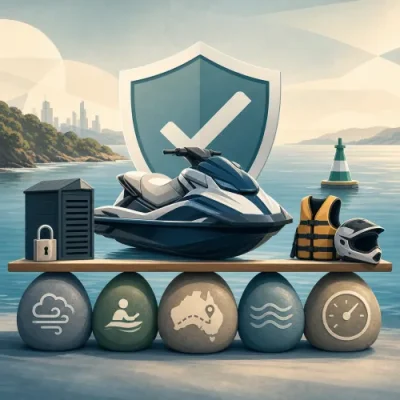
Jet ski insurance premiums are not calculated from one simple number. In Australia, insurers and brokers generally look at a mix of factors: the jet ski itself, how and where it is used, who rides it, where it is stored, the cover you choose and your claims history. That is why two owners with similar personal watercraft can receive different quotes.
This guide explains the main jet ski insurance price factors so you can understand what information may be requested when you request jet ski insurance quotes. It is general information only, not personal advice. The premium, cover terms, excesses and eligibility available to you will depend on your circumstances and the criteria of the insurer, broker or underwriting agency.
Why jet ski insurance premiums vary
Personal watercraft can present different risks from many other recreational assets. They are high-powered, often used in busy waterways, exposed to salt, sun and weather, and can be attractive theft targets. Insurers price these risks by estimating how likely a claim may be and how expensive that claim could be.
A premium is generally influenced by:
- the chance of a claim, such as theft, collision, storm damage or liability incidents;
- the possible cost of a claim, including repair costs, replacement value and third-party damage;
- the policy terms selected, including the type of cover, excess and insured value;
- the insurer's appetite for particular models, uses, storage locations or rider profiles.
No single factor guarantees a higher or lower premium. Insurers may weigh the same information differently, which is one reason comparing policy terms as well as price can be useful.
Key factors that affect jet ski insurance cost in Australia
1. The value of the jet ski
The value of your jet ski is one of the most important premium inputs. A newer, higher-value personal watercraft may cost more to repair or replace than an older or lower-value model. Insurers may ask for the purchase price, current estimated value, make, model, year and condition.
Some policies may use an agreed value, where the insured value is agreed with the provider when the policy is arranged. Others may use market value, where the payout is based on the watercraft's value at the time of loss, subject to the policy terms. Agreed value and market value options can affect both the premium and the way a claim is assessed.
2. Make, model, engine power and performance
The make and model of the jet ski can influence the premium because different models may have different repair costs, parts availability, performance characteristics and theft risk. A higher-powered PWC may be treated differently from an entry-level recreational model, especially if it is more expensive to repair or more likely to be used at speed.
Insurers may also consider whether the jet ski is a standard model or has been modified. Performance modifications, non-standard parts or custom accessories may need to be disclosed and may affect the availability, terms or cost of cover.
3. Type of cover selected
The type of cover you choose can make a substantial difference to the premium. A policy that covers your own jet ski for accidental damage, theft, fire and certain weather events will usually be priced differently from a policy focused mainly on third-party liability.
| Cover choice | How it may affect the premium |
|---|---|
| Third-party liability cover | May cost less than broader cover because it generally focuses on damage or injury you cause to others, subject to policy limits and exclusions. |
| Comprehensive cover | Usually reflects a broader range of risks, potentially including accidental damage, theft, fire and liability, depending on the policy. |
| Optional extras | Additional benefits such as accessories, trailer cover, towing or racing extensions may increase the premium if available. |
If you are comparing cover types, it can help to read a detailed explanation of comprehensive vs third party jet ski insurance before focusing on price alone.
4. Where the jet ski is kept
Storage is a major pricing factor because theft, vandalism, storm damage and weather exposure can all vary by location. A jet ski stored in a locked garage may present a different risk from one stored in an open driveway, shared storage area, marina, holiday property or on the street.
Insurers may ask:
- whether the jet ski is stored at home, in secure storage, at a marina or elsewhere;
- whether it is stored indoors or outdoors;
- whether it is kept on a trailer;
- what locks, alarms, immobilisers, GPS trackers or security devices are used;
- the postcode where it is usually stored.
Storage details should be accurate. If the jet ski is normally kept somewhere different from what is listed on the policy, this could create problems at claim time.
5. Your location and riding areas
Postcode can influence a jet ski insurance premium because insurers may consider theft patterns, storm exposure, coastal conditions, repair access and claim trends in an area. A PWC used mainly in sheltered inland waterways may present different risks from one frequently used in exposed coastal areas, surf conditions or busy boating zones.
Some policies also specify navigational limits or areas where the jet ski is covered. Riding outside the approved area, if applicable, may affect claims. Always check the policy wording for territorial limits, offshore restrictions and any state or territory requirements relevant to operating a personal watercraft.
6. How often and how the jet ski is used
A jet ski used occasionally on weekends may be assessed differently from one used frequently throughout the year. Insurers may consider whether the PWC is used for private recreation only, social riding, touring, fishing, club events, demonstrations, racing or commercial purposes.
Usage is important because some activities may be excluded unless specifically agreed. Racing, timed events, hire, reward, instruction or business use may require different cover or may not be available from all providers. If your use changes, you should tell your insurer or broker rather than assuming the existing policy still applies.
7. Rider age, experience and licence details
Depending on the provider, rider details may affect premium, excess or eligibility. Insurers may ask who will ride the jet ski, whether riders hold the appropriate personal watercraft or marine licence for their state or territory, and how experienced they are.
Some policies may apply restrictions for younger riders, inexperienced riders, unlisted riders or riders without the required licence. Others may adjust excesses or policy terms rather than the base premium. Because rules vary, it is worth checking whether the policy covers only named riders or allows other permitted riders.
8. Claims history and insurance record
Your past claims history can influence the premium because it helps insurers assess future claim risk. A history of multiple claims, policy cancellations, non-disclosure issues or unpaid premiums may affect pricing or availability.
On the other hand, some providers may consider a clean claims history positively, although discounts and rating benefits are not guaranteed and vary by insurer. When requesting quotes, answer claims history questions honestly and consistently. Non-disclosure can affect whether a claim is paid.
9. Excess amount
The excess is the amount you may need to contribute if you make a claim. Choosing a higher voluntary excess may reduce the premium with some providers, but it also means you could pay more out of pocket if a claim occurs. A lower excess may make a claim less expensive upfront, but the premium may be higher.
Some policies may include different excesses for different situations, such as theft, young riders, named storms or unlisted riders. When comparing quotes, check both the premium and the applicable excesses, not just the headline annual cost.
10. Trailer, accessories and additional equipment
Jet ski ownership often includes more than the watercraft itself. A trailer, covers, safety gear, electronics, fishing attachments, storage racks and other accessories may need to be insured separately or listed under the policy. Adding these items can affect the total premium, but leaving them off may mean they are not covered or are covered only up to a limited amount.
If you tow your jet ski, check whether the policy covers the PWC and trailer while in transit. Towing-related cover can vary between providers and may be subject to conditions about how the watercraft is secured.
11. Security, maintenance and condition
Security measures may influence how an insurer assesses theft risk. Locks, secure storage, immobilisers and tracking devices may be viewed differently depending on the provider and policy. They do not guarantee a lower premium, but they can form part of the underwriting picture.
Maintenance can also matter. A well-maintained jet ski may be less likely to suffer preventable damage, and maintenance records may help support certain claims. Poor condition, unrepaired damage or neglected servicing could affect cover availability or claims outcomes.
12. Payment method and policy structure
How you pay for cover may affect the total amount you pay over the policy period. Some providers may offer annual and instalment payment options, and instalments may include additional costs depending on the policy. There may also be administration charges for changes, cancellations or endorsements. These costs should be shown in the policy documents or quote information.
If you are working out the broader cost of ownership, including storage, servicing, registration, fuel, trailer expenses and insurance, you may want to use the site's calculators as a budgeting aid. Calculator outputs are only estimates and should not be treated as a quote or guarantee of premium.
Information you may need when requesting a quote
Having accurate information ready can make the quote process easier and reduce the risk of policy issues later. You may be asked for:
- make, model, year and hull identification details;
- purchase price, current value and finance details if relevant;
- engine size or performance details;
- storage address and storage method;
- security devices and trailer details;
- intended use, including private, club, racing or commercial use;
- rider details, age, licence status and experience;
- claims history and previous insurance details;
- accessories, modifications and optional equipment;
- preferred cover type, insured value and excess.
If any detail is uncertain, ask before guessing. Incorrect or incomplete information can affect the quote, the policy terms or a future claim.
How to compare jet ski insurance premiums fairly
A lower premium is not always better value if it comes with narrower cover, higher excesses or exclusions that matter to you. When comparing quotes, look at the whole policy, including:
- what is covered, such as accidental damage, theft, fire, storm, transit and liability;
- what is excluded, including racing, unlicensed riders, commercial use, corrosion, wear and tear or unattended theft conditions;
- policy limits for the jet ski, trailer, accessories, salvage, towing and liability;
- excesses that apply to different claim types or rider categories;
- valuation method, such as agreed value or market value;
- navigational limits and storage requirements;
- claims process, repair arrangements and documentation requirements.
A specialist broker may help explain how different insurers treat these factors, although cover availability, pricing and policy terms will still depend on individual circumstances and provider criteria.
Can you reduce your jet ski insurance premium?
There is no guaranteed way to reduce a premium, but some steps may help you present a clearer or lower-risk profile to insurers. Depending on the provider, you might consider:
- keeping the jet ski in secure storage when not in use;
- using suitable locks, alarms, immobilisers or tracking devices;
- maintaining the jet ski and keeping service records;
- reviewing whether your insured value is still accurate;
- choosing an excess you could realistically afford if you need to claim;
- disclosing only the use you actually need, rather than assuming broader use is covered;
- comparing policies on both cover and cost before renewing;
- asking whether any multi-policy, safety or claims-history considerations apply.
Be cautious about cutting cover solely to lower the premium. If you remove theft, accidental damage or accessories cover, you may be taking on more financial risk yourself. The right balance depends on your budget, watercraft value, riding habits and risk tolerance.
What affects PWC insurance cost the most?
The biggest cost drivers are usually the value and type of jet ski, the breadth of cover, storage security, location, rider profile, claims history and intended use. However, insurers do not all use the same pricing model. One provider may focus heavily on storage and theft risk, while another may be more sensitive to performance, usage or claims history.
That is why the most useful approach is to provide accurate information, compare like-for-like cover and read the policy wording before deciding. A premium only tells part of the story; the real value of a policy is whether it matches the risks you need to manage and the conditions you can reasonably meet.
Final thoughts
Jet ski insurance premiums in Australia are calculated by assessing the risk attached to the watercraft, the rider, the location, the cover selected and the way the PWC is stored and used. You do not need to know an insurer's exact pricing formula to make a more informed choice, but understanding the main factors can help you prepare for quotes and avoid surprises.
Before choosing a policy, consider the cover, exclusions, excesses, insured value and your obligations as carefully as the price. If you are unsure, ask questions before buying so you understand what is and is not covered.