If you have missed repayments, defaults, a thin credit file or other credit issues, you may be wondering whether it is still possible to apply for caravan finance. The short answer is that some people with impaired credit history may still be able to apply, but the outcome depends on the lender, the strength of the overall application and whether the loan appears affordable.
This guide explains how bad credit can affect caravan loan eligibility in Australia, what lenders may consider before making a decision, and how to approach the process without assuming that approval, pricing or loan terms are certain.
Can you apply for caravan loans with bad credit?
Having bad credit does not necessarily prevent you from making an enquiry or submitting an application for a caravan loan. However, it can narrow the range of lenders willing to consider the application and may change the type of loan, interest rate, deposit requirement or loan conditions offered.
Different lenders assess risk in different ways. Some may decline applications with recent serious defaults or unresolved bankruptcy-related history. Others may look more closely at recent repayment conduct, income stability, current debts and whether the caravan provides acceptable security for the loan.
If you are at the early enquiry stage, the Caravan Loans Australia homepage can be a starting point for understanding general caravan loan pathways. Any application should still be assessed against your own circumstances and the relevant lender's criteria.
What lenders may mean by bad credit
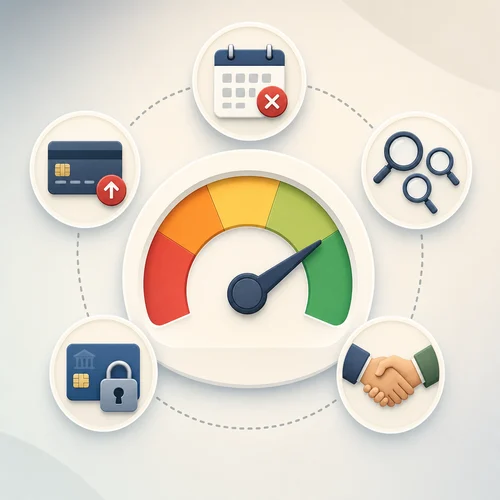
"Bad credit" is not a single fixed category. It can refer to a range of credit history issues, from a few missed repayments through to more serious events. The timing, amount, frequency and whether the issue has been resolved can all matter.
| Credit issue | Why it may matter to a lender |
|---|---|
| Late or missed repayments | May suggest repayment pressure or inconsistent payment habits, especially if recent or repeated. |
| Defaults or collections activity | Can indicate a previous debt was not repaid as agreed. Paid defaults may be viewed differently from unpaid ones, depending on the lender. |
| Multiple recent credit enquiries | May suggest frequent borrowing attempts or financial stress, particularly if several applications were made close together. |
| High credit card limits or personal debts | Can reduce borrowing capacity because lenders may allow for existing commitments when assessing affordability. |
| Bankruptcy, debt agreements or insolvency history | May significantly affect eligibility, especially if unresolved or recent. |
| Limited credit history | May make it harder for a lender to assess repayment behaviour, even if there are no negative listings. |
A lender may also consider whether the credit issue was a one-off event, whether it has been paid or addressed, and whether your more recent account conduct shows improvement.
How bad credit can affect caravan loan eligibility
Credit history is one part of caravan loan eligibility. It can influence how a lender views risk, but it is rarely the only factor. Depending on the lender and loan type, bad credit caravan finance may be affected in several ways.
Fewer lender options
Some lenders have stricter credit requirements than others. If your credit file contains recent or serious adverse information, you may not meet the criteria for every product in the market. This can make comparison more important, but it also means applications should be targeted carefully to avoid unnecessary credit enquiries.
Different interest rates or fees
A higher perceived credit risk may result in a higher interest rate or different fee structure than an applicant with a stronger credit profile. The exact pricing depends on the lender, your circumstances, the loan amount, the caravan and the overall risk assessment.
A larger deposit may be requested
A deposit can reduce the amount being borrowed and may lower the lender's exposure. In some cases, a lender may require a stronger deposit contribution before considering an application. This is not universal, and a deposit does not assure acceptance.
Loan amount or term may be limited
A lender may limit the amount available, shorten or adjust the term, or require repayments to fit within a more conservative affordability assessment. A longer term can reduce regular repayments but may increase total interest over the life of the loan, while a shorter term may cost less overall but create higher repayment pressure.
The application may be declined
Some applications will not meet a lender's criteria. This can happen because of credit history, affordability, the type of caravan, documentation issues or a combination of factors. A decline from one lender does not necessarily mean every lender will take the same view, but repeated applications without understanding the reason can create further problems.
Factors lenders may consider beyond your credit score
A credit score or credit report is important, but caravan loan approval with bad credit usually depends on the broader picture. Lenders may assess whether the loan is suitable for the risk they are taking and whether repayments appear manageable.
Common assessment factors may include:
- Income: Your regular income, the source of that income and whether it appears stable.
- Employment or business history: Employees, self-employed applicants and retirees may need to provide different evidence.
- Living expenses: Ongoing household costs, dependants and regular financial commitments.
- Existing debts: Credit cards, personal loans, vehicle loans, mortgages, buy now pay later commitments and other liabilities.
- Recent banking conduct: Some lenders may review account behaviour, such as dishonours, overdrafts or evidence of repayment pressure.
- Deposit or equity contribution: The amount you can contribute upfront may affect the loan-to-value position.
- The caravan itself: Age, condition, purchase price, whether it is new or used, and whether it is acceptable as security.
- Loan structure: Secured or unsecured, fixed or variable rate, loan term, repayment frequency and any balloon or residual structure if offered.
- Application accuracy: Consistent, complete and truthful information can help avoid delays or unnecessary concerns.
For a broader look at lender assessment factors, you may also find the related article What Lenders Look For: Caravan Loan Application Insights useful.
Secured and unsecured caravan loans when credit history is impaired
Caravan finance may be structured as a secured or unsecured loan, depending on the lender, the borrower and the asset.
With a secured caravan loan, the caravan is usually used as security for the debt. This may be attractive to some lenders because the asset can reduce their risk. However, if repayments are not made, the lender may have rights relating to the secured asset. The caravan must also generally meet the lender's security requirements.
An unsecured loan does not use the caravan as security in the same way. Because the lender has less asset-backed protection, unsecured loans may have different pricing, lower limits or stricter eligibility criteria, particularly where the applicant has credit issues.
Neither structure is automatically better for every borrower. The right structure depends on affordability, lender criteria, the caravan being purchased and the risks you are willing and able to accept.
Using affordability checks before applying
Before applying for caravan loans for bad credit, it is worth testing whether the repayments would still be manageable if the rate or fees were higher than expected. A loan that is technically available may still create financial strain if it leaves little room for fuel, registration, insurance, servicing, storage, campsite fees and unexpected repairs.
A caravan loan calculator can help you estimate repayment scenarios by changing the loan amount, term and repayment assumptions. A calculator is only a guide, but it can help you compare scenarios before taking on a formal commitment.
When stress testing affordability, consider:
- whether repayments would remain manageable if household expenses increased;
- whether you have an emergency buffer for repairs or travel costs;
- how existing debts affect your budget;
- whether buying a less expensive caravan would reduce repayment pressure;
- whether delaying the purchase to save a larger deposit could improve your position.
How to prepare a stronger application if you have bad credit
You cannot always remove adverse credit history quickly, but you can reduce avoidable application issues. Preparation may help a lender understand your circumstances and assess the application more efficiently.
Check your credit report before applying
Review your credit report early so you know what a lender may see. If there are mistakes, you can investigate them before submitting applications. If there are legitimate negative listings, you can prepare to explain the circumstances accurately.
If your main goal is to improve your longer-term credit position, the related guide How to Improve Your Credit Score for Better Caravan Loan Rates covers practical credit score habits in more detail.
Be upfront about past credit problems
Trying to hide known credit issues can create delays or damage confidence in the application. If there was a specific event, such as job loss, illness, relationship breakdown or business disruption, explain it clearly and provide relevant context where requested. Keep explanations factual and avoid overstating what a lender might accept.
Show recent repayment stability
Lenders may look at recent conduct as well as older credit history. Evidence that current bills, rent, mortgage repayments or existing loans are being managed consistently may support the overall picture, depending on the lender's criteria.
Reduce unnecessary debt where possible
Lowering credit card balances, closing unused limits where appropriate, or reducing short-term debts may improve serviceability. This should be considered carefully, as closing facilities or changing debt arrangements may have other effects.
Prepare documents early
Applicants with credit issues may be asked for more information. Documents can include identification, income evidence, bank statements, details of existing debts, proof of deposit and information about the caravan. Requirements vary by lender and applicant type.
Why lender selection matters
With impaired credit history, applying to multiple unsuitable lenders can be counterproductive. Each formal credit application may appear on your credit file, and repeated unsuccessful applications can make the situation harder to explain.
This is where understanding lender criteria becomes important. Some borrowers choose to speak with a finance broker because brokers may be familiar with different lender appetites and documentation expectations. Using a broker does not assure acceptance, and any recommendation should still be assessed against your own needs and circumstances. You can learn more about this pathway on the brokers page.
What to do if your caravan loan application is declined
A declined application can be frustrating, but it can also provide useful information. Before applying again, try to understand the likely reason. It may relate to credit history, affordability, documentation, the caravan, the loan amount or the lender's internal policy.
Possible next steps include:
- requesting general feedback from the lender or broker where available;
- checking your credit report for errors or unresolved issues;
- reducing the proposed loan amount or choosing a lower-cost caravan;
- saving a larger deposit before reapplying;
- paying down existing debts where practical;
- waiting until recent credit issues are older and recent conduct is stronger;
- seeking independent financial counselling if debt pressure is becoming difficult to manage.
If repayments would be unaffordable, delaying the purchase may be the more responsible option. A caravan should support your lifestyle, not create ongoing financial stress.
Questions to ask before proceeding
Before applying for bad credit caravan finance, it can help to ask practical questions:
- Do I understand what is currently on my credit report?
- Can I afford repayments comfortably, not just at the minimum estimate?
- Have I allowed for insurance, registration, maintenance, storage and travel costs?
- Is the caravan price realistic for my current financial position?
- Would a larger deposit or smaller loan improve affordability?
- Do I understand the consequences if I miss repayments on a secured loan?
- Am I applying with a lender that is likely to consider my circumstances?
Key takeaway
Bad credit can affect a caravan loan application, but it does not always mean the conversation ends immediately. Lenders may consider the type and timing of credit issues, recent repayment behaviour, income, expenses, existing debts, deposit, caravan details and overall affordability.
The most responsible approach is to understand your credit position, test affordability carefully, prepare accurate documents and avoid applying repeatedly without a clear strategy. Loan availability, pricing and conditions will depend on individual circumstances and each lender's criteria.