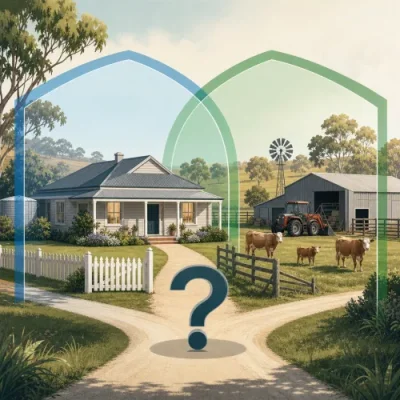
Hobby farm insurance in Australia can be confusing because many small acreage properties are part home, part lifestyle asset and part farming activity. You may live on the property, run a few animals, grow produce for personal use, sell occasional surplus, keep machinery in sheds, or allow contractors and visitors onto the land.
The key question is not simply whether your property is large or rural. It is whether your activities, assets and liability risks extend beyond what a standard home insurance policy is designed to cover. This article explains when a hobby farm or small acreage property may need farm-style insurance, how it differs from commercial farm cover, and what to check before comparing policies.
What is a hobby farm for insurance purposes?
There is no single definition of a hobby farm that applies across every Australian insurer. Providers may use different terms, such as hobby farm, small farm, lifestyle property, acreage property, rural residential property or smallholding. The way your property is classified can affect eligibility, cover options, exclusions and pricing.
In general, a hobby farm is often a rural or semi-rural property where farming activities are secondary to residential or lifestyle use. It may include activities such as:
- keeping a small number of livestock, such as sheep, cattle, goats, alpacas, horses or poultry;
- growing fruit, vegetables, hay, olives, grapes or other produce on a limited scale;
- using tractors, slashers, ride-on mowers, pumps or other farm equipment;
- maintaining sheds, fencing, dams, irrigation or small-scale farm infrastructure;
- selling occasional produce, eggs, livestock, firewood or farm gate goods;
- agisting animals or allowing another person to keep livestock on the property;
- running related activities such as short-stay accommodation, workshops, farm tours or market sales.
Some of these activities may still be treated as low-scale or incidental. Others may push the property towards commercial farm insurance or business insurance. The outcome depends on the insurer's underwriting criteria, the nature of the activities, the income involved, the size and use of the land, and the risks present on the property.
When might standard home insurance be insufficient?
Standard home and contents insurance is usually designed for residential properties. It may cover the house, domestic contents and some personal liability, but it may not cover farming assets, business use, rural infrastructure or agricultural liability risks. The policy wording matters, because exclusions can vary significantly.
A home insurance policy may be insufficient if your property includes:
- Farm buildings and infrastructure: sheds, stables, yards, fencing, silos, tanks, pumps, irrigation systems, animal shelters or rural outbuildings may be treated differently from ordinary residential structures.
- Farm machinery and equipment: tractors, quad bikes, slashers, trailers, generators, pumps and tools may fall outside standard contents cover, especially if used for farm or income-producing purposes.
- Livestock or working animals: animals kept for breeding, sale, agistment, production or commercial use may not be covered by home insurance.
- Produce, feed and supplies: hay, grain, fertiliser, chemicals, stored produce and other agricultural inputs may require specific cover.
- Public liability risks: visitors, contractors, delivery drivers, agistment clients, farm gate customers or event attendees can create liability exposures that differ from normal residential visitors.
- Income-producing activity: even modest or occasional sales can affect how an insurer views the property if the activity is more than personal or domestic use.
- Rural hazards: bushfire exposure, storm damage, water storage, chemical use, machinery operation, animal escapes and fencing failures may need to be considered separately.
If you are unsure whether your home policy responds to these risks, check the Product Disclosure Statement, exclusions and definitions, and ask the insurer to confirm in writing how your property use is treated. It is important not to assume that a rural home policy automatically covers farming activity.
Signs you may need hobby farm insurance
You may need hobby farm insurance, small farm insurance or acreage insurance if your property has moved beyond ordinary residential use. Common indicators include:
- you keep livestock, even if they are mainly for lifestyle or land management;
- you use farm machinery or equipment that would be costly to repair or replace;
- you have sheds, fencing, yards, pumps or water infrastructure that are important to the property;
- you sell produce, livestock, eggs, honey, hay, seedlings, firewood or other goods;
- you invite customers, visitors, contractors, tradespeople or agistment clients onto the property;
- you lease or agist part of the land to someone else;
- you employ workers or regularly use contractors;
- you run a business from the property, even if it is seasonal or part-time;
- you store fuel, chemicals, fertiliser or feed;
- you would face a significant financial loss if farm buildings, fencing, equipment or animals were damaged or lost.
These signs do not automatically mean a particular policy will be suitable or available. They do suggest that you should speak with insurers or brokers who understand rural property risks before relying on standard residential cover.
How hobby farm insurance differs from commercial farm insurance
Hobby farm cover and commercial farm cover can overlap, but they are not the same. Hobby farm insurance is generally aimed at small-scale, mixed-use or lifestyle properties. Commercial farm insurance is designed for farming operations where the agricultural activity is a business and often a primary source of income.
| Feature | Hobby farm or lifestyle property cover | Commercial farm cover |
|---|---|---|
| Typical property use | Mainly residential or lifestyle use with some rural or agricultural activity | Primary use is farming or agribusiness |
| Income from farming | May be incidental, seasonal or modest, depending on provider criteria | Often material to household or business income |
| Assets covered | May include dwelling, contents, sheds, fencing, small-scale equipment and limited livestock, depending on policy | May include extensive buildings, machinery, livestock, crops, stock, produce, vehicles and business assets |
| Liability focus | May focus on property owners' liability and small-scale rural activities | May include broader farm public liability, product liability, employer-related exposures and business operations |
| Business interruption | May be limited or unavailable for small lifestyle operations | More likely to be considered where farming income and continuity are central |
| Underwriting questions | May focus on acreage, animals, outbuildings, occasional sales, visitors and rural hazards | May involve turnover, production type, employees, contractors, machinery schedules, crop or livestock values and risk controls |
The distinction is not always neat. A small acreage property can still have significant risks, while a small commercial farm may have relatively simple operations. Insurers usually assess the whole risk profile rather than relying on the label alone.
Activities that can change your insurance needs
Some activities can change whether you need lifestyle property insurance, hobby farm insurance, commercial farm insurance or an additional business policy. Before comparing quotes, consider whether any of the following apply.
Selling produce or livestock
Occasional sales may still affect your policy if they create product liability, visitor, transport or business-use risks. Selling eggs, honey, meat, fruit, vegetables, seedlings or livestock can be treated differently from growing produce only for personal use.
Agistment and animal care
Taking payment to keep someone else's animals on your land can create liability and care, custody or control issues. If an animal is injured, escapes, damages property or causes injury, you will want to understand whether your policy responds.
Farm stays, events and tourism
Short-stay accommodation, farm tours, workshops, open days, school visits, weddings or paid events can introduce risks that are not usually part of a standard home insurance policy. These activities may require specific disclosure and separate cover.
Contractors and workers
Fencing contractors, shearers, machinery operators, harvest workers, casual helpers and tradespeople can change your liability profile. If you employ staff, additional legal and insurance obligations may apply. You should seek professional guidance on the obligations relevant to your circumstances.
Machinery use
Rural properties often use machinery that is more powerful, hazardous or expensive than ordinary domestic equipment. Tractors, quad bikes, slashers and pumps may need specific listing or cover, particularly where they are used away from the insured location or for income-producing activity.
What hobby farm insurance may cover
Policy options vary, but hobby farm insurance may combine elements of home, farm property and liability insurance. Depending on the insurer and policy, cover may be available for:
- the main residence and domestic contents;
- farm sheds, stables, yards, fences, tanks and other rural structures;
- farm machinery, tools and equipment;
- livestock, subject to policy limits and listed events;
- hay, feed, seed, produce or supplies;
- public liability connected with property ownership or approved rural activities;
- damage caused by events such as fire, storm, theft or accidental damage, depending on policy wording;
- optional extensions for specific assets or activities.
Cover is always subject to terms, limits, exclusions and acceptance criteria. For a broader explanation of farm cover components, see our guide to what farm insurance should include.
What may be excluded or limited?
Exclusions are especially important for hobby farms because mixed personal and farming use can create grey areas. A policy may exclude or limit cover for:
- commercial activities that were not disclosed or accepted by the insurer;
- certain animal diseases, deaths or injuries;
- wear and tear, gradual deterioration, vermin, rust or poor maintenance;
- unregistered or improperly used vehicles and machinery;
- flood, bushfire, storm surge or other natural events unless covered under the policy terms;
- high-risk activities such as events, tourism, horse riding businesses or farm stays unless specifically included;
- pollution, chemical drift, contamination or environmental liabilities;
- working animals, breeding stock, crops or produce beyond stated limits;
- business interruption or loss of income where not selected or not available.
Because exclusions can differ between providers, comparing only premiums can be risky. Two policies that appear similar may respond very differently after a loss.
How insurers may assess a hobby farm or acreage property
When you request farm insurance quotes, the insurer or broker may ask about:
- property size, location, zoning and access;
- the age, construction and condition of the dwelling and outbuildings;
- distance from fire services, water sources and bushfire-prone areas;
- the number and type of livestock;
- types of crops, orchards, vineyards, gardens or plantations;
- machinery, vehicles, tools and equipment values;
- fencing, dams, tanks, pumps and irrigation infrastructure;
- income earned from farming or related activities;
- whether you have an ABN, employees, contractors, agistment or visitors;
- security, maintenance, animal management and safety controls;
- previous claims history.
Accurate disclosure is important. If an insurer is not told about a relevant activity or asset, a later claim may be affected. If your property use changes during the policy period, contact the insurer or broker rather than waiting until renewal.
Questions to ask before choosing cover
Before selecting a policy, it can help to ask practical questions that match how you actually use the land:
- Is my property treated as residential, rural residential, hobby farm, small farm or commercial farm?
- Are my sheds, fences, tanks, pumps, yards and other improvements covered?
- Are my animals covered, and if so, for which events?
- Is my tractor, quad bike, ride-on mower, slasher or other equipment covered on and off the property?
- Does the policy cover occasional sales of produce or livestock?
- What happens if a visitor, contractor or agistment client is injured?
- Are farm gate sales, markets, workshops, short-stay accommodation or events excluded?
- Are bushfire, flood, storm and accidental damage treated differently?
- What excesses, limits and sub-limits apply?
- What records would I need to support a claim?
If your property includes several activities or a mix of personal and income-producing use, speaking with farm insurance brokers may help you understand how different insurers might classify the risk. Any final policy decision should be based on your own circumstances and the relevant policy documents.
Preparing to compare hobby farm insurance quotes
Before comparing policies, prepare a clear summary of your property and activities. This can make quote discussions more accurate and reduce the chance of missing important details.
Useful information may include:
- a list of buildings, sheds, fencing, tanks and infrastructure you want insured;
- estimated replacement values for machinery, tools, pumps and equipment;
- the number and type of animals on the property;
- details of any produce, livestock or services you sell;
- information about agistment, farm stays, events or visitors;
- photos, receipts, serial numbers and maintenance records where available;
- details of safety measures, fire preparedness, fencing condition and property access.
You can start by comparing farm insurance quotes for your property type, but treat the process as more than a price comparison. The right questions, disclosures and policy wording are central to whether the cover fits the risk.
Hobby farm insurance is about the risk, not just the acreage
A small rural property may still need more than standard home insurance if it includes livestock, machinery, visitors, produce sales or rural infrastructure. Equally, not every acreage property needs full commercial farm cover. The appropriate category depends on how the property is used, what assets are at risk, and how each insurer assesses the situation.
The safest approach is to describe your property honestly and in detail, read the relevant policy documents, and ask direct questions about activities that sit between domestic and commercial use. Hobby farm insurance can be a practical middle ground for many small acreage owners, but eligibility, pricing and cover depend on individual circumstances and provider criteria.