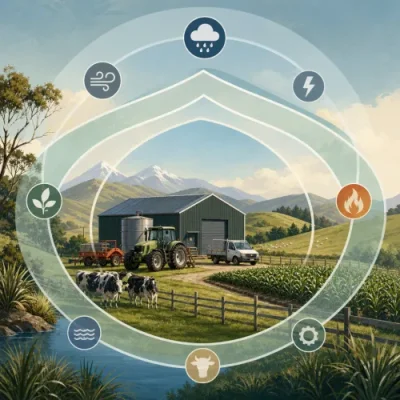
Farm insurance cover in New Zealand: the short answer
Farm insurance in New Zealand can cover a wide range of rural assets and risks, but it is not one single standard product. Most farm insurance policies are built as a package, with different sections for property, machinery, livestock, vehicles, liability, income disruption and other farm-specific exposures.
The right mix of cover depends on the type of farm, its location, the assets used, the people who visit or work on the property, and the insurer's policy wording. A dairy farm, sheep and beef operation, horticultural block, arable farm or lifestyle property with commercial activity may all need different protection.
This guide explains the main types of risks and farm assets that may be covered by rural insurance in NZ, along with common limitations to check before choosing or renewing a farm insurance policy.
Common types of farm insurance cover
Farm insurance is usually arranged in sections. Some sections may be included in a package, while others may need to be added, increased or arranged separately. The table below gives a high-level overview.
| Cover area | What it may relate to | Key point to check |
|---|---|---|
| Farm buildings and infrastructure | Sheds, barns, workshops, yards, fencing, water systems and other farm structures | Whether each asset is listed, what events are covered, and whether replacement or indemnity terms apply |
| Machinery and equipment | Tractors, harvesters, milking plant, irrigation equipment, tools and specialised machinery | Whether cover includes accidental damage, theft, fire, transit or breakdown |
| Farm vehicles | Utes, trucks, trailers, motorbikes, quad bikes and other farm vehicles | Whether the vehicle is covered on-farm, on-road, off-road or while used by employees or contractors |
| Livestock | Cattle, sheep, deer, goats, horses, poultry or other farm animals | Which causes of loss are covered and whether disease, theft, transit or breeding stock are treated differently |
| Crops, feed and produce | Standing crops, harvested crops, hay, silage, grain, fruit, vegetables or stored produce | Whether weather, fire, contamination, storage loss or transit risks are included or excluded |
| Liability | Injury, property damage or legal claims connected with farming activities | Who is covered, what activities are included, and what exclusions apply |
| Business interruption | Lost income or extra operating costs after an insured event | Whether the policy responds only after insured physical damage and what waiting periods or limits apply |
Farm buildings, structures and infrastructure
Physical property cover is often the starting point for farm assets insurance. It may cover damage to farm buildings and structures caused by insured events such as fire, storm, theft, vandalism or accidental damage, depending on the policy.
Assets that may need to be listed or considered include:
- woolsheds, implement sheds, hay barns and storage buildings;
- dairy sheds, milking platforms and associated plant rooms;
- workshops, yards, races, stock handling facilities and loading areas;
- irrigation infrastructure, pumps, tanks and water systems;
- fencing, gates, culverts and bridges;
- glasshouses, tunnel houses, packing sheds or cool stores for horticultural operations.
Cover for farm dwellings may be handled differently from commercial farm structures. A farmhouse, worker accommodation or short-stay accommodation on the farm may need separate domestic, landlord, commercial or mixed-use consideration. If accommodation is used for farm stays, seasonal workers or agritourism, the insurer will generally need to know.
Machinery, plant and equipment
Machinery is central to many New Zealand farming operations, and a single breakdown or loss can interrupt planting, harvesting, milking, feeding or transport. A farm insurance policy may cover machinery for risks such as fire, theft, accidental damage or transit loss. Machinery breakdown cover may be a separate section or optional extension.
Items to consider include tractors, loaders, harvesters, balers, seed drills, spreaders, irrigation systems, milking plant, refrigeration equipment, generators, workshop tools and portable equipment.
The detail matters. Some policies may cover sudden accidental damage but not wear and tear, corrosion, poor maintenance or gradual deterioration. Breakdown cover may have its own limits, excesses and exclusions. For more detail on this specific risk, see our guide to machinery breakdown coverage.
Farm vehicles and mobile plant
Farm vehicle insurance can apply to a mix of registered and unregistered vehicles, depending on how they are used. This may include utes, trucks, trailers, tractors used on roads, quad bikes, side-by-sides, motorbikes and other mobile plant.
Important questions include whether the vehicle is covered only on the farm or also on public roads, who is allowed to operate it, whether employees or contractors are included, and whether the vehicle is used for personal, commercial or mixed purposes.
Accessories, mounted equipment, spray units, GPS equipment and toolboxes may also need to be declared or insured separately. If a vehicle is financed, the lender may also have insurance requirements, although the insurer will still assess cover according to its own policy terms.
Livestock insurance
Livestock insurance NZ cover can vary widely. It may apply to individual high-value animals, herds or flocks, breeding stock, stud animals, dairy cows, sheep, beef cattle, deer or other farm animals. Depending on the insurer and policy, cover may relate to death, theft, straying, accidental injury, transit risks or specific events.
Some livestock risks are complex. Disease, biosecurity events, infertility, loss of production, animal welfare issues and unexplained losses may be excluded, restricted or require specialist cover. If your operation relies on high-value genetics, breeding animals, contract grazing or animals in transit, it is important to clarify how those situations are treated.
Good records can support both policy setup and claims. Animal identification records, purchase invoices, breeding records, herd or flock records and veterinary documentation may all be useful when discussing livestock cover.
Crop, horticulture and farm produce cover
Crop insurance New Zealand options may include cover for certain crops, harvested produce, stored goods, hay, silage, grain, fruit, vegetables or other agricultural products. Policies may distinguish between standing crops, harvested crops, produce in storage and produce in transit.
Risks to discuss may include fire, storm, hail, frost, flooding, contamination, spoilage, theft, storage failure or machinery-related loss. However, crop and weather-related insurance can be highly specific. Some weather events may be excluded, limited, subject to strict conditions or unavailable for certain crops or regions.
For horticulture, viticulture and arable operations, the timing of cover is particularly important. A loss just before harvest may have a different financial impact from a loss early in the season, and the way the policy values crops or produce can affect the claim outcome.
Farm liability insurance
Farm liability insurance helps protect against certain legal liabilities arising from farm activities. This may include accidental property damage, injury claims not otherwise covered, damage caused by animals, visitor incidents, contractor interactions, or claims connected with products or services supplied by the farm.
Liability risks can arise in everyday situations, such as stock escaping onto a road, spray drift affecting a neighbouring property, a contractor damaging infrastructure, or visitors entering a working farm environment. Farms that sell produce directly, host events, offer farm stays, run tours, lease land or allow public access may have additional liability exposures.
In New Zealand, ACC may respond to many personal injury situations, but that does not remove every liability risk. Property damage, certain legal defence costs, contractual exposures and claims outside ACC may still need consideration. Some policies also offer statutory liability or employers' liability sections, but fines, penalties and legal costs may be restricted or uninsurable in some circumstances.
Business interruption and extra cost cover
A property loss can create financial pressure beyond the cost of repairing a building or replacing a machine. Business interruption cover may help with lost income, reduced gross profit or additional costs after an insured event, subject to policy terms.
For example, a fire in a dairy shed, damage to a cool store, loss of power to essential systems, or machinery damage during peak season may interrupt normal production. Cover may help fund temporary arrangements, extra labour, equipment hire, alternative premises or other reasonable costs needed to keep operating.
Business interruption insurance is usually tied to an insured event. If the underlying damage is not covered, the income loss may not be covered either. Waiting periods, indemnity periods, sub-limits and evidence requirements can significantly affect how useful this section is.
Natural disasters and severe weather
New Zealand farms can face storms, flooding, slips, fire, snow, drought, earthquakes and other natural hazards. Insurance can be one part of a broader risk management plan, but the scope of cover depends heavily on the event, location, asset type and policy wording.
Some natural hazard risks may be included, while others may have higher excesses, sub-limits, exclusions or separate underwriting requirements. Flood-prone land, coastal exposure, steep terrain, remote access, older buildings and prior claims history may affect availability or pricing.
Insurance should also be supported by practical preparedness: maintaining access routes, clearing drains, securing fuel and chemicals, documenting assets, having backup power plans and keeping emergency contacts current. For a deeper look at this topic, read our guide to natural disaster preparedness for farmers.
What may need separate or additional cover?
Some farm-related risks may not be automatically included in a standard rural insurance NZ package. They may need to be added, increased or insured under a separate policy.
- Domestic homes and contents: farmhouses and personal contents may need separate domestic cover, especially where there is mixed personal and commercial use.
- Contracting work: agricultural contracting for other farms can change the risk profile and may need specific cover.
- Agritourism and public access: farm stays, events, tours, hunting access, school visits or direct-to-consumer operations may create extra liability and property risks.
- Cyber and data risks: farms using digital herd systems, automated plant, online sales or cloud-based operations may need to consider cyber-related exposures.
- Marine, aviation or specialist equipment: boats, drones, aircraft or unusual machinery may require specialist terms.
- Environmental or pollution risks: fuel, effluent, agrichemicals and waste systems can create clean-up or liability exposures that may be limited or excluded.
If your farm has diversified or changed how it earns income, tell your insurer or broker. New activities can affect whether an existing farm insurance policy responds to a claim.
Common exclusions, limits and conditions to check
Farm insurance cover is subject to policy limits, exclusions and conditions. These details are as important as the list of insured assets.
Common areas to check include:
- Wear and tear: gradual deterioration, corrosion, fatigue, poor maintenance and mechanical wear are commonly excluded.
- Underinsurance: if sums insured are too low, the claim payment may not be enough to rebuild, repair or replace assets.
- Replacement versus indemnity: replacement cover and market value or indemnity cover can produce different claim outcomes.
- Excesses: each claim may have an excess, and some risks may have higher excesses than others.
- Sub-limits: certain items, such as tools, fencing, produce, portable equipment or temporary removal, may have capped amounts.
- Unlisted assets: some assets may need to be specifically declared to be covered.
- Security and maintenance conditions: insurers may require reasonable care, secure storage, servicing or compliance with safety requirements.
- Use restrictions: cover may change if equipment is used off-farm, hired out, used for contracting or operated by unapproved users.
Policy wording can vary between insurers. Do not assume that a risk is covered simply because it is common on farms.
How to work out what farm insurance you may need
A practical way to start is to build an asset and risk inventory. This can also make quote discussions clearer and reduce the chance of leaving important assets out.
- List physical assets: buildings, structures, fencing, plant, machinery, vehicles, tools, water systems, storage, livestock and crops.
- Record values: estimate replacement costs, market values or other values requested by the insurer. Professional valuations may be useful for major assets.
- Map critical operations: identify the assets that would stop production if they failed, such as milking plant, irrigation, refrigeration or key vehicles.
- Review income risks: consider how long the farm could operate after a major loss and what temporary costs might arise.
- Identify people and access risks: note employees, contractors, visitors, public access, road frontage and neighbouring properties.
- Check seasonal changes: update cover before peak livestock, cropping, harvesting or storage periods.
If you are preparing information for a quote or policy review, the available tools on this site, including Calculator #8 and Calculator #9, may help you organise figures and compare cover-related inputs. These tools should be treated as general aids rather than a substitute for reading policy terms or getting professional advice.
Questions to ask before choosing or renewing a policy
Before buying or renewing agricultural insurance NZ cover, consider asking:
- Which assets are specifically listed, and which are covered automatically?
- Are buildings insured for replacement, indemnity or another basis?
- How are livestock, crops and stored produce valued after a loss?
- Does machinery cover include breakdown, or only insured events such as fire and theft?
- Are farm vehicles covered on public roads, off-road and while used by staff?
- What liability risks are included for visitors, contractors, stock movement, spray drift or product sales?
- Does business interruption cover apply, and for how long?
- What natural disaster risks have separate limits, exclusions or excesses?
- What activities must be disclosed, such as contracting, farm stays, events or direct sales?
- What records would be needed to support a claim?
When a broker or adviser may be useful
Farm insurance can become complicated when a property has multiple income streams, high-value machinery, seasonal stock changes, specialist crops, employees, contractors or public-facing activities. A rural insurance broker can help identify risks, explain policy differences and assist with the information insurers typically request.
You can explore the site's brokers page if you want to understand when professional guidance may be useful. Any recommendations or policy decisions should be based on your own circumstances, the insurer's criteria and the policy wording.
How this guide fits with tailoring your cover
This article explains the main types of cover that may sit within a farm insurance policy. The next step is working out which sections are relevant to your farm, which limits are appropriate, and which exclusions or optional extensions matter most.
For deeper reading on adapting a policy to a specific operation, see our article on tailoring farm insurance to unique agricultural needs. Reviewing cover regularly is important because farm assets, values, income sources and risk exposures can change over time.
Key takeaway
Farm insurance in New Zealand can cover much more than buildings. Depending on the policy, it may include farm structures, machinery, vehicles, livestock, crops, liability, income disruption and natural hazard risks. However, cover is never automatic for every asset or every event. The most important step is to match the policy to the farm's real assets and activities, then read the wording carefully for limits, exclusions, excesses and conditions.