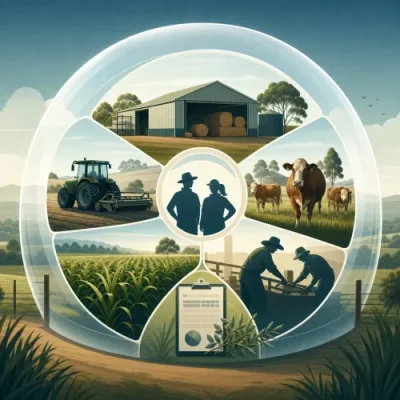
Commercial farm insurance in Australia is designed for farms operated as income-producing businesses. Unlike a hobby farm, a commercial farm may rely on seasonal revenue, employ workers, engage contractors, run multiple enterprises and hold significant assets such as sheds, machinery, livestock, irrigation systems, harvested produce and stored inputs.
This article provides general information only. It does not consider your objectives, financial situation or needs. The cover a farm business may need depends on its activities, location, ownership structure, assets, turnover, employees, contractors and insurer criteria.
What is commercial farm insurance?
Commercial farm insurance is not usually a single, standard policy that suits every property. It is often a package of covers selected to match the way a farm business operates. A broadacre cropping business, dairy, mixed livestock operation, vineyard, horticultural enterprise or intensive farming business may each have different risk exposures.
In practice, commercial farming insurance cover may combine several categories of protection, including farm property insurance, farm liability insurance, machinery cover, livestock or crop-related cover, motor cover, business interruption and other specialist sections. Some farms may also need separate policies for risks that are not included in a general farm package.
The purpose is not to remove all risk. Insurance generally responds only to insured events, within policy limits and subject to exclusions, excesses and conditions. Good farm business insurance should be considered alongside risk management, maintenance, safety systems, contract management and emergency planning.
How commercial farm insurance differs from hobby farm cover
The line between a hobby farm and a commercial farm is not always obvious, especially for mixed-use properties. However, insurers usually look at how the property is used, whether income is generated, the scale of operations and the type of activities taking place.
| Factor | Hobby farm cover | Commercial farm cover |
|---|---|---|
| Main purpose | Often lifestyle, small-scale production or personal use | Income-producing farming or agribusiness activity |
| Assets insured | May include home, small sheds, tools, limited livestock or equipment | May include business buildings, plant, machinery, stock, crops, produce, inputs and infrastructure |
| Liability exposure | Usually lower, but still important if visitors, livestock or property risks exist | Often broader due to customers, suppliers, contractors, transport, employees and public interaction |
| Revenue exposure | May not depend on farm income | Business cash flow may be affected by insured damage, machinery breakdown or interruption |
| Underwriting detail | May focus on property use and small-scale activities | Often requires more detail about turnover, enterprises, safety controls, assets and operating history |
A hobby farm policy may not be adequate if the farm has become a business. For example, selling produce at scale, agisting livestock, running farm stays, employing workers, contracting machinery services or operating a commercial shed may change the risk profile. If your activities have changed, it is important to tell your insurer or broker, as non-disclosure or inaccurate descriptions can affect claims outcomes.
For readers comparing lifestyle and business operations, the separate guide to insurance for hobby farms explains common hobby farm considerations in more detail.
Key covers a commercial farm business may need
The right mix of cover depends on the farm. The following sections explain common areas that commercial farm owners and managers may need to consider.
Farm property insurance
Farm property insurance can help cover insured damage to physical assets used in the business. Depending on the policy, this may include sheds, workshops, shearing sheds, dairy buildings, silos, tanks, fencing, irrigation infrastructure, pumps, tools, fixed plant, business contents and stored materials.
Important questions include:
- Are buildings insured for an appropriate rebuild value rather than an outdated estimate?
- Are hay, grain, chemicals, fertiliser, fuel and other stored inputs included or excluded?
- Are fences, yards, tanks, pumps and irrigation systems covered automatically or only if listed?
- Does the policy cover accidental damage, fire, storm, theft, impact or other specified events?
- Are there limits for any one item, location or type of property?
Valuation is a common challenge. Underinsurance can leave a farm business carrying part of the loss, while overestimating values may increase premiums unnecessarily. Insurers may also treat older buildings, unoccupied structures or poorly maintained assets differently.
Machinery, plant and mobile equipment
Commercial farms often depend on machinery to meet narrow seasonal windows. Tractors, headers, sprayers, seeders, forklifts, utes, trailers, quad bikes, side-by-sides and irrigation equipment may need specific cover depending on how they are used and where they operate.
Some equipment may need road registration or separate motor insurance. Some may be covered only while on the farm, while other policies may extend to use on public roads, at contractors' yards, at sale yards or while being transported. Attachments, GPS equipment, precision agriculture systems and leased or financed equipment should also be checked carefully.
Livestock, crops and produce
Livestock and crops can represent major working capital for a commercial farm. Cover may vary widely depending on the type of enterprise and the insured events selected. Livestock insurance may relate to specified risks such as fire, accident, disease or transit, while crop insurance may focus on named perils or other defined events.
Stored hay, grain, wool, fruit, vegetables, wine grapes or other produce may be treated differently from growing crops or live animals. Commercial farms should check when cover starts and ends, whether harvest or storage is included, and what records are needed to support a claim.
Farm liability insurance
Farm liability insurance is a core consideration for many commercial operations. It may help protect against certain legal liability claims involving personal injury or property damage connected with farm activities, subject to policy terms.
Commercial farms can face liability exposure from many sources, including visitors, suppliers, contractors, neighbouring properties, livestock escaping, machinery movement, chemical use, roadside activities, farm gate sales, agritourism, field days or leased areas. Some policies may include public liability and products liability, but the scope and exclusions should be checked.
Liability insurance does not mean every claim or incident is covered. Policies may exclude certain activities, contractual liabilities, pollution events, professional services, motor vehicle liabilities or intentional acts. If the farm sells food, breeding stock, seed, hay, compost or other products, product liability wording deserves close attention.
Business interruption cover
Business interruption insurance may help a farm business manage lost income or increased operating costs after an insured event disrupts normal operations. For example, a fire damaging a dairy shed, packing facility, machinery shed or irrigation system could affect income even after the physical damage is assessed.
This cover can be complex for farms because revenue is often seasonal and affected by weather, commodity prices, biological cycles and market conditions. Important policy details include the indemnity period, how gross profit or farm income is calculated, whether additional costs are covered, and whether the interruption must result from insured property damage.
Workers, contractors and farm safety
If a commercial farm employs staff, workers compensation obligations may apply. Workers compensation schemes differ by state and territory, and requirements can depend on the nature of the work arrangement. This is usually separate from public liability insurance.
Contractors can also create insurance issues. A farm business should understand whether contractors carry their own insurance, whether their work is covered under the farm's policy, and what contract terms apply. Examples include fencing contractors, shearers, harvest contractors, spraying operators, transport providers and machinery repairers.
Insurance should not be treated as a substitute for safe systems of work. Insurers may ask about training, maintenance, chemical handling, fire prevention, machinery guards, livestock handling, child safety, worker accommodation and emergency procedures.
Motor, transport and goods in transit
Commercial farms may use registered and unregistered vehicles across private land, public roads and third-party locations. Utes, trucks, trailers, road trains, tankers and specialist vehicles may need motor insurance that reflects their actual use.
Goods in transit cover may also be relevant where livestock, hay, grain, produce, machinery or inputs are moved between properties, sale yards, processors, depots or customers. Some transport risks may sit with the carrier, while others may remain with the farm business depending on the contract and insurance arrangements.
Environmental, pollution and chemical risks
Farm operations can involve fuel, fertiliser, pesticides, effluent, waste, erosion controls, water storage and other environmental exposures. Standard liability policies may limit or exclude gradual pollution or contamination events. Farms with higher environmental exposure may need to discuss specialist cover with an insurer or broker.
Management, cyber and business administration risks
Larger or more complex farm businesses may need to consider risks beyond physical assets. These could include management liability, employment practices claims, cyber incidents, data loss, fraudulent payment instructions, or interruption to digital systems used for irrigation, livestock monitoring, payroll, accounting or logistics.
Not every farm will need every cover. However, as farms become more data-driven and commercially complex, insurance reviews should include administrative and technology risks as well as traditional property and livestock exposures.
How insurers assess a commercial farm business
Commercial farm insurance in Australia is generally underwritten according to the risk presented by the individual business. Insurers may ask for information such as:
- the farm's location, acreage and property layout;
- the type of farming activities and scale of each enterprise;
- annual turnover, seasonal income patterns and major customers or contracts;
- building construction, age, condition and fire protection;
- machinery values, maintenance practices and storage arrangements;
- livestock numbers, crop types, storage volumes and peak exposure periods;
- employee numbers, contractor use and safety systems;
- claims history and prior insurance arrangements;
- bushfire, flood, storm, cyclone or other natural hazard exposure;
- security, fencing, water access and emergency response planning.
More detailed information can help an insurer or broker understand the risk, but it may also reveal exclusions, higher excesses or limits that need to be discussed. Pricing, availability and policy terms depend on the provider's underwriting criteria and the farm's circumstances.
Mixed-enterprise farms need careful policy design
Many Australian farms are not one simple business. A single operation may combine cropping, sheep, cattle, agistment, contract harvesting, farm gate sales, accommodation, renewable energy assets or leased land. Each activity can introduce different insurance issues.
For example, an insurer may treat a farm stay, commercial workshop, roadside stall or contract spraying service differently from ordinary farming operations. Leasing land to or from another party may also affect who is responsible for fences, buildings, liability and improvements.
When arranging farm business insurance, it is useful to map the whole operation rather than only the main enterprise. Include side businesses, seasonal activities, family partnerships, trusts, companies, share farming arrangements and any assets owned by one entity but used by another.
Questions to ask before choosing commercial farm insurance
Before requesting quotes or renewing cover, commercial farm owners and managers may find it useful to work through these questions:
- What are the main income-producing activities on the farm?
- Which assets would be costly or slow to replace after an insured event?
- What parts of the business could stop or slow down if a key building, machine or system was damaged?
- Are all legal entities, owners, financiers and interested parties correctly noted?
- Are employees, contractors, visitors and customers properly considered?
- Are peak seasonal values covered, such as harvest storage or increased livestock numbers?
- Are there exclusions for flood, bushfire, machinery breakdown, disease, pollution, theft or unattended property?
- What records would be needed to support a claim?
- How often should sums insured and asset schedules be updated?
- Does the policy reflect any recent expansion, diversification or change in farm use?
If you are comparing options, you can start with general information on farm insurance in Australia and then discuss the details of your commercial operation with a licensed insurer or broker.
The role of specialist farm insurance brokers
Commercial farms can be difficult to insure because the risks are practical, seasonal and often unique to the property. A broker with agricultural experience may help identify the information insurers need, explain policy differences and assist with quote comparisons.
A broker does not guarantee that cover will be available or that a claim will be accepted. Their role depends on the services they provide and the authorisations they hold. However, for complex farms, a specialist intermediary may help translate farm operations into insurance requirements and highlight exclusions that deserve attention. You can explore available farm insurance broker pathways if you want help comparing commercial farm cover.
Common mistakes commercial farms should avoid
Commercial farm insurance can become less effective when the policy no longer reflects the business. Common issues include:
- Using hobby farm cover for commercial activity: A lifestyle or small-property policy may not respond properly to business operations.
- Not updating asset values: Machinery, buildings, sheds and infrastructure can change in value over time.
- Leaving seasonal peaks uninsured: Stored grain, hay, produce or livestock numbers may vary significantly throughout the year.
- Assuming contractors are automatically covered: Contractor insurance and liability arrangements should be checked before work starts.
- Overlooking business interruption: Physical damage is only one part of the financial impact after a major incident.
- Not disclosing diversified activities: Farm stays, processing, direct sales, agistment or contracting may need specific approval or cover.
- Focusing only on premium: A cheaper policy may have lower limits, narrower cover or exclusions that matter during a claim.
When to review commercial farm insurance
A farm business should review insurance whenever its risk profile changes. Useful trigger points include buying or selling land, constructing buildings, upgrading machinery, changing crops or livestock, taking on staff, adding contractors, storing higher-value produce, entering new supply contracts, diversifying income or changing ownership structures.
Annual renewal is also a good time to check whether the policy still matches current operations. Keep asset registers, maintenance records, photos, invoices, livestock numbers, crop records and financial documents organised. Good records can make underwriting clearer and may help if a claim occurs.
Final thoughts
Commercial farm insurance in Australia is about protecting a working business, not just a rural property. Compared with hobby farm cover, it usually involves greater attention to revenue, liability, employees, contractors, business interruption, asset values and multiple enterprises.
The most suitable cover depends on the farm's individual circumstances and insurer criteria. A practical starting point is to document how the business operates, identify the assets and activities that create the greatest financial exposure, and compare policy wording carefully before choosing cover.