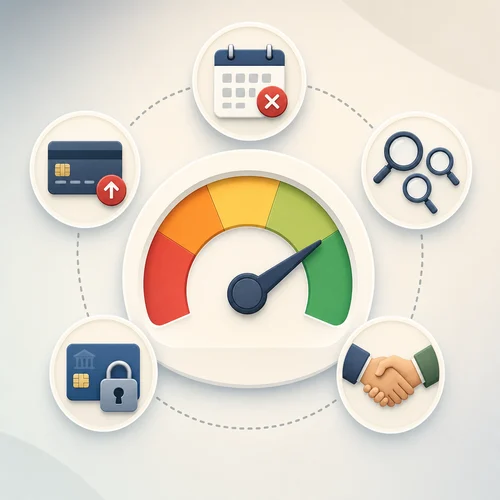
Business loan interest rates in Australia can look simple at first glance, but the rate shown in an offer is only one part of how a lender prices business finance. Different lenders may assess the same business differently, and the rate offered can depend on the loan type, the business's financial position, the security provided, the loan term and the broader interest rate environment.
This guide explains how business loan rates work, why they vary between products and borrowers, and what Australian SMEs should consider before applying. It is general information only and does not take into account your business's objectives, financial situation or needs.
If you are still exploring the types of finance available, you can start with the Business Loans Australia overview and then use this article to better understand the cost side of comparing options.
What is a business loan interest rate?
A business loan interest rate is the cost a lender charges for allowing a business to borrow money. It is usually expressed as an annual percentage of the outstanding loan balance, although the way interest is calculated and charged can vary between products.
For many term loans, interest is charged on the remaining loan balance over time. As repayments are made, part of each repayment may cover interest and part may reduce the principal. For other products, such as lines of credit or overdraft-style facilities, interest may only be charged on the amount drawn rather than the full approved limit.
The advertised rate is not always the same as the total cost of borrowing. Fees, repayment frequency, compounding, loan term, security requirements and early repayment conditions can all affect how much the loan costs overall.
How business loan rates work in Australia
In Australia, business loan interest rates are influenced by both market-wide funding costs and the lender's assessment of the borrower. A lender may consider the cost of obtaining funds, expected credit losses, operating costs, competition, the loan structure and the return it needs to earn for the risk it is taking.
Some rates are closely linked to external market benchmarks or a lender's internal reference rate. Others are set more directly through risk-based pricing, where the lender adjusts the offered rate according to the perceived likelihood of repayment and the quality of the application.
Because commercial lending is often assessed case by case, two businesses applying for a similar loan amount may receive different rates. The difference may reflect their financial history, cash flow stability, industry, security, trading period, existing debts, directors' credit profiles and the purpose of the loan.
Fixed and variable business loan rates
One of the first distinctions to understand is whether the loan has a fixed or variable interest rate.
Fixed business loan rates
A fixed rate is set for an agreed period. This can provide more certainty because repayments are usually easier to forecast during the fixed period. Fixed rates may suit businesses that value predictable repayment obligations and want to plan cash flow with fewer rate-related changes.
However, fixed rate loans may have restrictions. Some lenders may limit extra repayments, charge break costs if the loan is repaid early, or offer less flexibility than a variable rate product. The terms depend on the lender and the specific loan contract.
Variable business loan rates
A variable rate can move up or down over the life of the loan. Changes may reflect shifts in market rates, the lender's funding costs, internal pricing decisions or other factors set out in the loan terms.
Variable rates may provide more flexibility, such as the ability to make extra repayments or redraw funds, depending on the product. The trade-off is that repayments can increase if the rate rises. Businesses considering variable rates should test whether their cash flow could handle higher repayments if conditions change.
Key business loan pricing factors lenders may consider
Lenders do not usually base business loan interest rates on one factor alone. The rate offered is typically the result of several risk and product considerations.
| Pricing factor | How it may affect the rate |
|---|---|
| Business financial performance | Consistent revenue, profitability and healthy cash flow may support a stronger application, while volatile or limited trading history may increase perceived risk. |
| Credit history | Lenders may review business and director credit histories, repayment conduct, defaults, enquiries and existing commitments. |
| Security or collateral | Loans supported by acceptable assets may be priced differently from unsecured loans because the lender has additional protection if the borrower defaults. |
| Loan amount and term | The size and duration of the facility can affect pricing, repayment risk and the lender's exposure over time. |
| Loan purpose | Borrowing for a clearly defined business purpose, such as equipment or working capital, may be assessed differently from more general or higher-risk uses. |
| Industry and business model | Some industries have more seasonal, cyclical or uncertain cash flow, which may influence lender appetite and pricing. |
| Documentation quality | Up-to-date financial statements, tax information and bank statements can help lenders assess the application more confidently. |
Secured versus unsecured loan rates
Security is one of the major reasons business loan rates can vary. A secured business loan is backed by an asset, such as property, vehicles, equipment or other acceptable collateral. An unsecured business loan does not rely on the same type of asset security, although lenders may still require personal guarantees or other protections.
Because secured loans may reduce the lender's loss if the borrower defaults, they may be priced differently from unsecured loans. That does not automatically mean a secured loan is always the right option. Providing security can place assets at risk if the business cannot meet its repayment obligations.
Unsecured loans may offer faster or more flexible access to funds in some cases, but they can carry different pricing, loan limits and eligibility requirements. The right comparison depends on the business's circumstances, asset position and tolerance for risk.
Reference rates, margins and risk-based pricing
Some business loan rates are built from a reference rate plus a margin. The reference rate may reflect broader market funding conditions, while the margin reflects the lender's costs, risk assessment and desired return.
For example, a lender might set a variable rate by starting with an internal base rate or market-linked benchmark, then adding a margin for the individual borrower or facility. The final customer rate may change if the reference rate changes, if the lender adjusts its base rate, or if the loan contract allows pricing changes in certain circumstances.
Risk-based pricing means the lender adjusts the rate according to how risky it considers the loan to be. Businesses with stronger repayment capacity, clearer records and lower-risk structures may be assessed differently from businesses with weaker cash flow, limited trading history or higher existing debt. Outcomes are not guaranteed and depend on lender criteria.
Interest rate versus total cost of borrowing
A lower interest rate does not always mean a lower-cost loan. Fees and loan structure can make a major difference to the total amount paid over the life of the facility.
Common cost items may include establishment fees, monthly or annual fees, line fees, valuation fees, legal fees, late payment fees, early repayment costs or discharge fees. The fees that apply depend on the lender and product.
For a fuller explanation of these charges, see Business Loan Fees Explained. When comparing offers, ask for a repayment schedule and a clear breakdown of all fees so you can compare total cost rather than headline rate alone.
How loan term and repayment structure affect interest costs
The loan term affects how long interest is charged. A longer term may reduce regular repayments by spreading them over more time, but it may also increase the total interest paid if the loan remains outstanding for longer. A shorter term may reduce total interest, but repayments may be higher and place more pressure on cash flow.
Repayment frequency can also matter. Weekly, fortnightly or monthly repayments may produce different cash flow effects, and interest calculations can vary by lender. Some facilities require principal and interest repayments, while others may have interest-only periods or flexible drawdown arrangements.
Before choosing a structure, consider whether repayments align with your business's revenue cycle. A business with seasonal income may need different repayment flexibility from a business with steady monthly receipts.
Online tools can help you model scenarios before applying. You can use the site's business loan calculators to estimate repayments and explore how loan amount, term and rate assumptions may change the numbers. Calculator results are estimates only and should not be treated as a loan offer or approval.
Why advertised rates may differ from the rate you are offered
Advertised rates are often indicative. They may apply only to certain borrower profiles, loan amounts, security types, terms or credit conditions. Some lenders advertise a rate range, while others provide pricing only after assessing an application.
The rate a business is offered may differ because of:
- the business's trading history and financial results;
- the directors' personal credit profiles and guarantees;
- the loan amount, term and repayment structure requested;
- whether the loan is secured or unsecured;
- the type and value of any security offered;
- bank statement conduct and existing debt commitments;
- industry risk and market conditions;
- the lender's current appetite for that type of loan.
This is why comparing business loan interest rates in Australia usually requires more than checking an advertised percentage. The most useful comparison is based on a written quote or indicative offer that reflects your business's actual details.
Questions to ask before accepting a business loan rate
Before accepting a loan offer, it can help to ask practical questions about how the rate and cost structure work:
- Is the rate fixed or variable? If variable, what can cause it to change?
- How is interest calculated? Ask whether it is calculated daily, monthly or another way.
- What fees apply? Request a full list of upfront, ongoing and exit fees.
- What is the repayment schedule? Confirm the amount, frequency and first payment date.
- Can the loan be repaid early? Check whether early repayment fees or break costs may apply.
- Is security or a personal guarantee required? Understand what assets or obligations may be at risk.
- What happens if repayments are missed? Ask about default interest, fees and enforcement steps.
- Can the facility be reviewed or refinanced later? This may matter if your business grows or your circumstances change.
If you want help discussing rate factors with a finance professional, the site's brokers page can be a useful next step. A broker's ability to assist, and the options available, will depend on your circumstances and lender criteria.
How to prepare before comparing SME loan rates
Preparation can make the comparison process more meaningful. Lenders and brokers are generally better able to discuss pricing when they have a clear picture of the business and the proposed loan.
Useful preparation may include:
- checking business and personal credit reports where appropriate;
- organising current financial statements, tax returns and bank statements;
- clarifying the loan purpose and amount required;
- estimating repayment capacity using conservative cash flow assumptions;
- identifying whether security is available and whether you are comfortable offering it;
- listing existing debts, leases and credit facilities;
- considering whether fixed, variable or flexible repayments suit your cash flow.
Being prepared does not guarantee approval or a particular rate. It can, however, help you understand the information lenders are likely to assess and make it easier to compare offers on a like-for-like basis.
Bringing it together
Business loan interest rates work by combining product design, market conditions and lender assessment of risk. The rate you see in an advertisement may not be the rate your business is offered, and the rate alone does not show the full cost of borrowing.
When comparing business loans, look at the rate type, fees, repayment structure, term, security requirements and total cost. Consider whether the repayments are manageable under different trading conditions, especially if the rate is variable. If in doubt, seek guidance from a suitably qualified professional before committing to a loan.