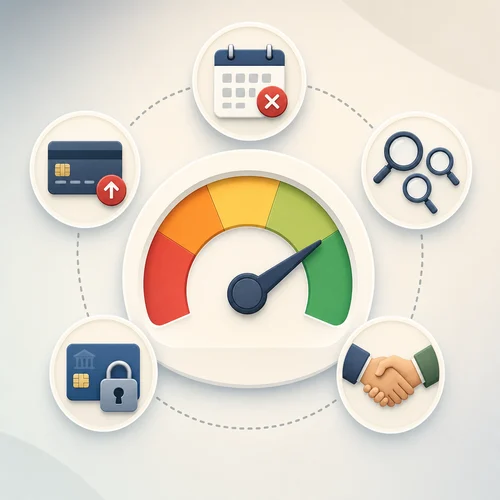
If you have a fair, poor or limited credit history, you may still be able to apply for a personal loan in Australia. However, a low credit score can affect how lenders assess your application, the interest rate you may be offered, the loan amount available and whether extra conditions apply.
This guide explains what low-credit-score borrowers should understand before applying, including eligibility factors, possible costs, secured and unsecured options, credit enquiry risks and warning signs to watch for. It is general information only and does not take your personal objectives, financial situation or needs into account.
Can you apply for a personal loan with a low credit score?
Yes, you can generally submit a personal loan application with a low credit score, but approval is never automatic. Each lender or broker uses its own assessment criteria, and your credit score is only one part of the decision.
A lender may also consider:
- your income and how regular it is;
- your employment type and stability;
- your existing debts and repayment history;
- your living expenses and other financial commitments;
- the amount you want to borrow and the loan purpose;
- whether the loan is secured or unsecured;
- recent credit applications or defaults on your credit file; and
- whether the proposed repayments appear affordable based on the information provided.
Australian credit providers are expected to assess whether credit is suitable for the borrower. That means a lender should not simply look at whether you want the loan; it must consider whether you are likely to be able to meet the repayments without substantial hardship, subject to the applicable credit laws and the lender's obligations.
What a low credit score can change
A low credit score does not always mean the same thing to every lender. Some providers may be more open to applicants with imperfect credit histories, while others may have stricter requirements. Even when a lender is willing to consider the application, the offer may differ from what a borrower with a stronger credit profile might receive.
| Possible effect | What it may mean for you |
|---|---|
| Fewer lender options | Some lenders may decline applications below their internal credit criteria. |
| Higher borrowing cost | You may be offered a higher interest rate or more fees if the lender considers the application higher risk. |
| Lower loan amount | The lender may approve a smaller amount than requested if affordability is a concern. |
| Shorter or stricter terms | Some offers may have tighter repayment conditions or fewer flexible features. |
| Security or guarantor requested | A lender may ask for an asset as security or may consider a guarantor arrangement, depending on the product and provider. |
Before accepting any offer, look beyond whether you can access funds. The more important question is whether the loan is affordable, suitable for your purpose and manageable over the full term.
Unsecured, secured and guarantor options
Personal loans with a low credit score may be offered in different forms. Understanding the differences can help you assess the risks.
Unsecured personal loans
An unsecured personal loan does not require you to provide an asset, such as a car, as security. Because the lender has no specific asset to rely on if repayments are missed, unsecured personal loans may be harder to obtain with a low credit score or may come with higher pricing.
Secured personal loans
A secured personal loan is backed by an asset. This may improve the lender's willingness to consider the application in some cases, but it also creates a serious risk: if you cannot meet the repayments, the lender may have rights in relation to the secured asset. The exact consequences depend on the contract and circumstances.
Guarantor arrangements
Some borrowers consider asking a family member or another person to act as guarantor. This can be risky for the guarantor because they may become responsible for the debt if you do not repay it. A guarantor should understand the legal and financial implications and consider independent advice before agreeing.
Be careful with "no credit check" loan claims
Some advertising may suggest that a loan is available without a credit check or that poor credit history will not matter. Treat these claims carefully. A legitimate credit provider may still need to assess your capacity to repay, and a product marketed to borrowers with poor credit can carry high costs, short repayment windows or strict conditions.
Before proceeding, ask:
- What is the total amount I will repay, including interest and all fees?
- What happens if I miss a payment?
- Is the loan regulated under Australian credit laws?
- Will the application create a credit enquiry on my credit report?
- Is this a short-term fix that could make my financial position worse?
If the lender, broker or website is unclear about costs, repayment obligations or who is providing the credit, pause before applying.
What to consider before applying for a personal loan with a low credit score
Applying for a personal loan when your credit score is low can have consequences, especially if you submit multiple applications in a short period. Before applying, consider the following steps.
Check your credit report first
Your credit report may show missed payments, defaults, credit enquiries and other information that lenders use in their assessment. It may also contain errors. If something is inaccurate, you can ask for it to be corrected through the relevant credit reporting process.
If your main goal is to strengthen your credit position before borrowing, you may find it useful to read more about how to improve your credit score for personal loan approval.
Work out what you can realistically repay
Do not base your decision only on the amount a lender might offer. Look at your income, essential expenses, existing debts and emergency savings. Consider whether the repayment would still be manageable if your hours changed, costs increased or an unexpected bill arrived.
Borrow only what you need
A larger loan may mean higher repayments, more interest over time and a greater chance of financial stress. If you are borrowing for debt consolidation, compare the total cost and term of the new loan against your current debts. A lower repayment may not always mean a cheaper loan if the term is much longer.
Understand the effect of credit enquiries
When you apply for credit, the lender may make an enquiry on your credit report. Multiple applications over a short period can be viewed negatively by some lenders. If possible, check eligibility requirements before applying and avoid submitting applications you are unlikely to qualify for.
Compare more than the interest rate
Personal loan rates matter, but they are not the whole picture. Review the comparison rate where available, upfront fees, ongoing fees, early repayment fees, late payment fees, repayment frequency, redraw options and whether the rate is fixed or variable.
You can also compare personal loan options from participating lenders and brokers to understand how different providers may structure their offers. Any outcome will depend on your circumstances and the provider's criteria.
Questions to ask before accepting an offer
If you receive a personal loan offer despite having a low credit score, take time to read the contract and ask questions. Useful questions include:
- What is the interest rate and is it fixed or variable?
- What is the comparison rate and what fees does it include?
- What fees apply at the start, during the loan and if I repay early?
- How much will I repay in total over the full loan term?
- Can I make extra repayments without penalty?
- What happens if I miss or delay a repayment?
- Will the lender report my repayment history to credit reporting bodies?
- Is any asset being used as security?
- Is anyone else responsible for the loan, such as a co-borrower or guarantor?
Do not sign a loan contract unless you understand the repayment obligations and consequences of default.
When it may be better to wait
Sometimes the safest borrowing decision is to delay the application. Waiting may be worth considering if:
- you are already behind on bills, rent, mortgage repayments or other debts;
- you are using credit to pay for essential living costs;
- your income is uncertain or recently reduced;
- you do not know how you would cover the repayments;
- the loan is mainly to fund non-essential spending; or
- the only available offers have very high costs or unclear terms.
If you are experiencing financial hardship, consider speaking with your existing lenders early. You may also wish to contact a free financial counselling service in Australia before taking on more debt.
Ways to improve your position before applying
There is no single action that ensures a lender will approve a personal loan, but there are steps that may help you present a clearer and more stable application.
- Correct credit report errors: inaccurate information can unfairly affect how lenders assess you.
- Pay bills and debts on time: consistent repayments can support your credit history over time.
- Reduce existing debts where possible: lower commitments may improve affordability.
- Avoid unnecessary credit applications: limit enquiries that may weaken your credit profile.
- Prepare accurate documents: payslips, bank statements, identification and details of existing debts may be requested.
- Choose a realistic loan amount: applying for more than you can afford may increase the chance of being declined.
- Explain unusual circumstances honestly: if a lender asks about past hardship or missed payments, provide accurate information.
Key takeaway
You can apply for a personal loan in Australia with a low credit score, but your options may be more limited and the cost may be higher. Before applying, check your credit report, assess affordability, compare total costs and be cautious about loans promoted as easy options for poor credit.
A personal loan should solve a genuine financing need without creating repayment stress. If the repayments are uncertain or the offer is unclear, it may be better to pause, improve your financial position or seek guidance before taking on new debt.