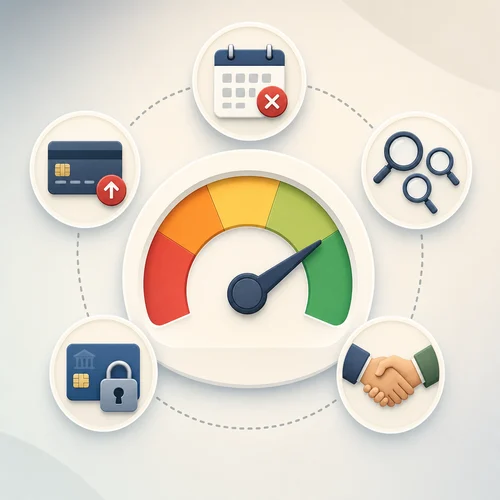
A finance eligibility assessment in Australia is an early review of whether you may meet the broad criteria for a personal or business finance product. It can help you understand what information lenders commonly consider before you submit a full loan application, but it is not the same as formal approval.
For individuals and small business owners, an assessment may look at income, expenses, existing debts, credit history, loan purpose, assets, liabilities and overall loan serviceability. The outcome depends on your circumstances, the type of finance being considered and the criteria used by the lender or provider.
If you are exploring assessment pathways, Finance Australia provides general information about personal and business finance options. This article explains what usually happens during a finance eligibility assessment Australia-wide, what details may be requested, and how to use the results without assuming approval is guaranteed.
What is a finance eligibility assessment?
A finance eligibility assessment is a preliminary review of your borrowing position. It is designed to help identify whether a finance option may be worth exploring before you lodge a complete application with a lender.
Depending on the provider or broker involved, the assessment may be informal or more structured. It may involve a conversation, an online form, document review, or an indicative comparison of possible loan types. The aim is usually to narrow down options and flag potential issues early.
An assessment may consider:
- the type and amount of finance you are seeking;
- your income, cash flow or business revenue;
- your regular expenses and existing debt commitments;
- your credit profile and repayment history;
- your employment, business trading history or income stability;
- available security, deposit, assets or equity where relevant;
- your capacity to meet repayments under the proposed loan terms.
Because lenders use their own policies and risk settings, one assessment should not be treated as a universal answer across the whole market.
Eligibility assessment, pre-approval and formal approval are not the same
Borrowers often use terms such as eligibility check, pre-qualification, pre-approval and approval interchangeably, but they can mean different things.
| Stage | What it usually means | Important limitation |
|---|---|---|
| Eligibility assessment | A preliminary review of whether you may meet broad lending criteria. | It is generally not a loan offer and does not guarantee approval. |
| Pre-approval or conditional approval | A lender may indicate willingness to lend up to a certain amount, subject to conditions. | Conditions may still need to be satisfied, such as valuation, verification or updated financial information. |
| Formal approval | The lender has assessed the full application and confirmed approval, usually with final terms. | The borrower still needs to review and accept the loan contract and meet any settlement requirements. |
The exact meaning of each term can vary between lenders and finance providers. Before relying on any result, ask whether the assessment involved a credit enquiry, what assumptions were used and whether any conditions apply.
What usually happens during a loan eligibility assessment?
While every process is different, a loan eligibility assessment often follows a series of practical steps.
- Clarifying the finance purpose: You explain why you are seeking finance, such as consolidating debts, purchasing equipment, buying a vehicle, managing cash flow or funding a personal expense.
- Estimating the amount and preferred structure: The assessment may consider how much you want to borrow, your preferred term, whether the loan may be secured or unsecured, and whether fixed or variable repayments are being considered.
- Reviewing income or revenue: Individuals may provide employment income or other income details. Businesses may provide turnover, profit, cash flow and trading history information.
- Reviewing expenses and debts: Existing repayments, credit cards, leases, living costs, business expenses and other commitments may be considered.
- Considering credit history: The assessment may ask about your credit rating, repayment conduct, previous defaults, hardship arrangements or recent credit applications.
- Testing serviceability: The assessor may estimate whether proposed repayments appear manageable alongside your current commitments.
- Identifying possible lender fit: If the assessment is conducted through a broker or referral service, it may help identify providers whose criteria appear more relevant to your situation.
- Outlining next steps: You may be told what documents to prepare, what issues to address, or whether a full application may be worth considering.
This process is intended to reduce uncertainty, not remove it entirely. A lender can still decline an application after a more detailed review.
Key factors usually considered in a finance eligibility assessment
The specific criteria depend on the finance product, loan amount and lender policy. However, most borrowing assessments are built around a few core questions.
Income, revenue and cash flow
For personal finance, lenders generally want to understand your income sources and whether they are stable enough to support repayments. This may include wages, salary, regular contract income or other acceptable income types.
For business finance, the focus often shifts to business revenue, cash flow, profitability, seasonality and the ability of the business to service debt from ongoing operations. Newer businesses may face different documentation requirements from established businesses.
Expenses and existing commitments
An eligibility review may consider regular living expenses, rent or mortgage payments, utilities, insurance, childcare, vehicle costs and other household commitments. For businesses, it may consider wages, rent, supplier payments, tax obligations, equipment leases and other operating costs.
Existing debts are also important. Credit card limits, personal loans, car loans, business loans, overdrafts and buy now pay later commitments can all affect perceived borrowing capacity.
Credit history and repayment conduct
Your credit profile may influence whether a lender is willing to consider an application and what terms may be available. A finance eligibility assessment may ask about credit enquiries, defaults, missed payments, bankruptcy history or current hardship arrangements.
Credit rating is only one part of a broader assessment. A strong credit history does not guarantee approval, and a weaker history does not necessarily mean every option is unavailable. Lender policies vary.
Loan serviceability
Loan serviceability refers to whether you appear able to afford the proposed repayments after allowing for existing commitments and reasonable expenses. It is a central part of many borrowing assessments.
Serviceability is not just about whether you can meet repayments today. Lenders may also consider buffers, changes in interest rates, variable income, business cash flow fluctuations and the possibility of unexpected expenses. This is why a loan that looks affordable on a simple repayment estimate may still require detailed review.
Security, assets and liabilities
Some loans are secured against an asset, such as a vehicle, equipment, property or business asset. Others are unsecured. Where security is involved, the lender may consider the asset type, value, age, condition and whether it meets the lender's requirements.
Assets can help show your broader financial position, but liabilities are equally important. A borrower with significant assets may still face serviceability issues if debt commitments are high or income is inconsistent.
Loan purpose and product fit
The reason for borrowing matters. A lender may assess a debt consolidation loan differently from a business equipment loan, a vehicle loan or a working capital facility. The amount, term and repayment structure should make sense for the purpose of the finance.
For example, funding a long-term asset with a very short repayment term may place pressure on cash flow, while using short-term finance for an ongoing structural cash flow problem may increase risk. An eligibility assessment can help identify these mismatches before an application is submitted.
Personal loan eligibility in Australia: what may be reviewed?
For personal loan eligibility Australia-wide, lenders commonly look at whether you meet basic application requirements and whether the proposed loan appears affordable. The details vary between lenders, but the assessment may include:
- your age and residency status, where relevant to the lender's criteria;
- employment type and income stability;
- regular living expenses and household commitments;
- existing debts and credit limits;
- credit history and repayment behaviour;
- the purpose of the loan;
- whether the loan is secured or unsecured;
- your ability to manage repayments over the proposed term.
Personal loan eligibility does not depend on one factor alone. A borrower with a solid income may still be assessed carefully if existing debts are high, and a borrower with a smaller loan request may still need to show that repayments are manageable.
Business loan eligibility: what may be reviewed?
Business loan eligibility often involves a wider view of the business and, in some cases, the people behind it. Lenders may look at both commercial and personal financial information, especially for small businesses where directors or owners provide guarantees.
A business finance assessment may review:
- how long the business has been operating;
- business structure, such as sole trader, partnership, company or trust;
- turnover, profit, margins and cash flow;
- bank statements or accounting records;
- tax obligations and ATO payment arrangements, if relevant;
- existing business debts, leases and supplier obligations;
- the purpose of the loan and how funds will be used;
- available security, invoices, equipment or other supporting assets;
- directors' or owners' credit history where required.
For more detailed support, you may choose to speak with a finance professional. Finance Australia provides information about its broker network, which may help borrowers understand options and documentation requirements. Any recommendation or outcome will still depend on your circumstances and provider criteria.
Documents and information you may be asked to prepare
An initial eligibility assessment may not require every document needed for a full application, but having accurate information can make the process more useful.
| Borrower type | Information commonly requested |
|---|---|
| Individual borrower | Identification details, income information, employment details, living expenses, existing debts, bank statements and loan purpose. |
| Self-employed borrower | Business income details, tax returns or financial statements where required, bank statements, business structure information and personal expenses. |
| Small business borrower | Business bank statements, financial accounts, BAS or tax information where required, debt schedule, cash flow details, asset information and loan purpose. |
Providing estimates that are too optimistic can lead to unrealistic results. If you are unsure about a figure, it is better to say so than to guess. Lenders usually verify key information during a full application.
Will an eligibility assessment affect your credit score?
It depends on how the assessment is conducted. Some early checks may rely on information you provide and may not involve a formal credit enquiry. Others may include a credit check, which could appear on your credit file.
Before proceeding, ask:
- whether a credit check will be performed;
- whether it is a soft check or a formal credit enquiry;
- which lender or provider will access your credit file;
- whether multiple lenders will be approached;
- how your personal information will be used and stored.
This is particularly important if you are comparing several options. Multiple formal applications or credit enquiries over a short period may affect how some lenders view your credit profile.
What an assessment can and cannot tell you
A good eligibility assessment can give you a clearer view of your likely borrowing position, but it has limits.
It may help you understand:
- whether your requested loan amount appears realistic;
- which factors may support or weaken an application;
- what documents you may need to prepare;
- whether your debt level or expenses may affect serviceability;
- whether a different loan type, term or amount may be worth considering.
It cannot reliably promise:
- that a lender will approve your application;
- that a specific interest rate or fee will be offered;
- that the final loan amount will match the estimate;
- that every provider will assess you in the same way;
- that the finance product will be suitable for your personal objectives.
Eligibility is only one part of a responsible borrowing decision. You should also consider total loan cost, repayment flexibility, fees, risks, contract terms and whether taking on the debt aligns with your broader financial situation.
How to use the results of a borrowing assessment
After receiving an assessment, take time to review the assumptions behind it. The result is most useful when you understand what was included, what was excluded and what still needs verification.
Useful next steps may include:
- Check the repayment estimate: Consider whether repayments would remain manageable if income changed or expenses increased.
- Review your credit file: Look for errors, outdated information or repayment issues you may need to address.
- Reduce avoidable debts where possible: Lower commitments may improve serviceability, depending on the lender's criteria.
- Prepare documents early: Missing information can delay a full application or make an assessment less reliable.
- Compare product structure, not just rates: Fees, repayment terms, security requirements and flexibility can all affect the true cost and practicality of a loan.
- Avoid applying repeatedly without a plan: Submitting multiple applications without understanding lender criteria may create unnecessary credit enquiries.
If the assessment suggests you may not be ready to apply, that can still be useful. It may help you identify steps to improve your position before taking on new debt.
Questions to ask before proceeding to an application
Before moving from an eligibility assessment to a formal loan application, consider asking the provider, broker or lender:
- What criteria have been assessed so far?
- What information still needs to be verified?
- Will a formal credit enquiry be made?
- Which lender or lenders may receive my information?
- What fees, charges or commissions may apply?
- Is the repayment estimate based on a fixed or variable rate?
- What happens if my income, expenses or business cash flow changes?
- What are the main reasons an application like mine could be declined?
- Am I being shown one product, a small panel, or a wider comparison?
Clear answers can help you make a more informed decision and reduce the risk of misunderstanding the status of your application.
Key takeaways
A finance eligibility assessment is a helpful starting point for Australians considering personal or business borrowing. It can show how income, expenses, debts, credit history, security and loan serviceability may affect the options available to you.
However, it should be treated as general guidance rather than a guarantee. Formal approval, pricing and loan terms depend on lender criteria, verification checks and your individual circumstances. The most useful assessment is one based on accurate information, realistic repayment assumptions and a clear understanding of the next steps.