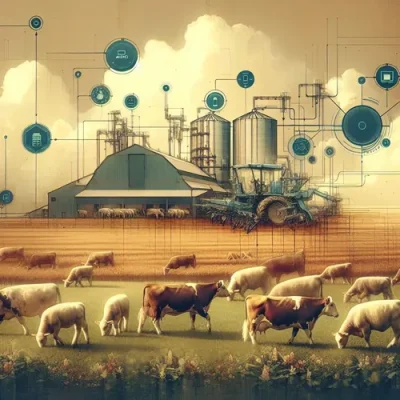
Essentially, it's the practice of using technology and data analytics to make farming more efficient and effective. By using tools like GPS and sensors, farmers can gather and analyze data to make informed decisions that improve productivity and sustainability.
Defining Precision Agriculture
Precision agriculture involves a set of technologies that allow farmers to monitor and manage their livestock with incredible accuracy. This can include tracking animal health, optimizing feeding, and monitoring environmental conditions. The goal is to enhance the efficiency of farm operations and ensure healthier livestock.
The Importance of Data in Modern Farming
Data is at the heart of precision agriculture. By collecting detailed information about each animal and the environment, farmers can tailor their practices to meet specific needs. This not only boosts productivity but also helps in reducing waste and improving animal welfare.
Why Australian Farmers are Leading the Charge
Australian farmers are particularly adept at adopting precision agriculture techniques. The country's unique climate and vast landscapes make it an ideal testing ground for innovative farming methods. As a result, Australian farmers are at the forefront of leveraging technology to improve their operations, setting a global standard for sustainability and efficiency in livestock farming.
The Role of Data in Livestock Management
Collecting Data: What, How, and Why
In the realm of livestock management, collecting data is pivotal. The data encompasses a wide array of information ranging from animal health and feed consumption to environmental conditions and more.
Farmers utilize various methods to gather this data, including employing sensors, GPS devices, and even drones. These technological tools provide precise and actionable information.
The primary purpose of collecting such comprehensive data is to enable farmers to make informed decisions, ensuring optimal livestock health and productivity.
Real-time Monitoring: A New Era for Farmers
Real-time monitoring has revolutionized livestock management. By leveraging technology, farmers can track various parameters like movement patterns, health statuses, and feeding behaviors.
This immediate feedback loop allows for timely interventions and adjustments, enhancing overall farm management. It also reduces risks associated with delayed responses to potential problems, ensuring livestock well-being.
Data-driven Decision Making: Boosting Efficiency
Data-driven decision-making is a cornerstone of modern livestock management. Through detailed analysis of the collected data, farmers can devise strategies that significantly improve efficiency.
This approach not only aids in optimizing resource allocation but also helps in predicting future trends. Farmers can foresee challenges and opportunities, allowing them to plan proactively.
Ultimately, this leads to enhanced productivity, sustainable practices, and, importantly, higher profitability in livestock farming.
Key Technologies Transforming Livestock Farming
Sensors and Wearables: Keeping an Eye on Livestock Health
The use of sensors and wearable technology in livestock farming is revolutionizing how farmers monitor animal health. These gadgets can track vital signs, activity levels, and even stress indicators in real time.
With such innovations, farmers can quickly identify any health issues, enabling prompt intervention and treatment. This proactive approach not only helps in maintaining livestock health but also can significantly improve production outcomes.
Drones and Aerial Imagery: Mapping and Monitoring Farms
Drones have become an invaluable asset in modern farming, providing aerial views and data that are otherwise hard to obtain. Farmers use drones to map large areas, monitor crop health, and survey livestock spread over extensive fields.
Aerial imagery helps in identifying discrepancies in grazing areas and assessing the overall farm environment. This comprehensive overview supports farmers in making informed decisions about pasture management and livestock distribution.
Automated Systems: Feeding, Milking, and More
Automation in livestock farming is not just about convenience; it’s a critical component in boosting efficiency. Automated systems for feeding and milking ensure consistency and precision that manual methods cannot match.
These systems are equipped to deliver exact feed rations tailored to each animal’s needs and schedule milking sessions at optimal times. As a result, they enhance productivity, reduce labor costs, and contribute to improving overall farm performance.
Benefits of Precision Agriculture for Australian Farmers
Improving Livestock Health and Welfare
Precision agriculture offers significant benefits in terms of livestock health and welfare. By implementing technology such as sensors and wearables, farmers gain insights into the health status of their animals, allowing for early detection of potential issues.
This proactive approach enables timely interventions, reducing the risk of disease spread and ensuring that livestock receive the necessary care. As a result, animals not only live healthier lives but also produce higher yields, benefiting the farmer economically.
Optimising Resource Usage: Water and Feed
Resource efficiency is another crucial advantage provided by precision agriculture. By leveraging data, farmers can optimize the use of vital resources like water and feed, which are essential in Australian agriculture due to regional climate challenges.
Tailored feeding plans and precise irrigation systems ensure that resources are used efficiently, reducing waste and minimising environmental impact. This optimisation not only helps in conserving valuable resources but also leads to cost savings for farmers.
Enhancing Productivity and Profitability
Ultimately, the goal of precision agriculture is to enhance productivity and profitability. Through data-driven insights and real-time monitoring, farmers can streamline operations, ensure healthier livestock, and optimize outputs.
By reducing losses and maximizing efficiency, precision agriculture leads to increased productivity. This boost in productivity directly translates to greater profitability, positioning Australian farmers to compete effectively on both national and international stages.
Overcoming Challenges in Implementing Precision Agriculture
Cost and Accessibility of Advanced Technologies
While precision agriculture promises significant benefits, the cost and accessibility of advanced technologies pose notable challenges for many farmers. High-end sensors, drones, and automated systems require substantial initial investment, which can be daunting, particularly for small-scale farmers.
Moreover, rural locations might lack the necessary infrastructure such as reliable internet access, essential for real-time data processing and monitoring. However, gradual advancements and incentives are making these technologies more accessible and affordable over time.
Data Management and Privacy Concerns
The massive influx of data presents another challenge: effective data management and privacy concerns. Farmers need robust systems to collect, store, and analyze data effectively. Ensuring data security and privacy is also paramount, as sensitive information could potentially be exposed to unauthorized access.
To address these issues, farmers increasingly rely on cloud-based solutions and work with technology providers to ensure secure and efficient data handling.
Training and Skill Development for Farmers
Adopting precision agriculture requires a certain level of technical expertise, which many farmers may initially lack. Recognizing this, the emphasis is now on training and skill development, equipping farmers with the knowledge needed to harness new technologies effectively.
Workshops, government initiatives, and partnerships with tech companies are playing a crucial role in providing the necessary training. These efforts ensure that farmers can seamlessly integrate precision agriculture into their operations, maximizing the benefits it offers.
Case Studies: Success Stories from Australian Farms
Innovative Practices and their Impact
Australian farmers have long been at the forefront of integrating precision agriculture techniques, yielding impressive results. One such case involves a cattle farm in Queensland, which incorporated real-time health monitoring systems for its herd.
By using wearable sensors, the farm tracked vital signs and detected health issues early on. This innovation not only reduced veterinary costs but also significantly boosted livestock productivity.
Another success story comes from a sheep farm in Victoria, where drones were employed to manage grazing patterns efficiently. The drones provided detailed aerial imagery, enabling the farmer to optimize pasture rotation and improve wool quality.
Lessons Learned from Pioneers in Precision Agriculture
The journey of these early adopters offers valuable lessons for other farmers. First, starting small with targeted investments in technology can lead to gradual improvements and broader acceptance of new methods.
Moreover, these pioneers emphasize the importance of continuous learning and adaptation. By collaborating with tech companies and participating in training workshops, they have managed to stay ahead in a competitive market.
Future Prospects for Australian Farmers
The success stories of these farms highlight a promising future for precision agriculture in Australia. As technology becomes more accessible and affordable, more farmers are expected to adopt these methods.
With ongoing advancements in data analytics and automation, the potential for increased productivity and sustainability is immense. Australian farmers are well-positioned to leverage these opportunities, ensuring their operations are both profitable and environmentally sound.
Conclusion: The Future of Livestock Farming with Precision Agriculture
Summarising the Benefits and Opportunities
Precision agriculture has proven to be a transformative force in livestock farming, offering numerous benefits to farmers across Australia. From improving animal health through real-time monitoring to optimizing resource use, the opportunities are vast.
With advancements in technology making these practices more accessible and affordable, farmers can now integrate sophisticated tools that enhance productivity and sustainability.
Encouraging Adoption among Australian Farmers
While the advantages are clear, widespread adoption of precision agriculture requires farmers to embrace new technologies and methodologies. This shift is essential for staying competitive in a rapidly evolving global market.
By adopting these innovations, Australian farmers not only boost their operational efficiency but also contribute to a more sustainable agricultural sector. Encouragement from industry bodies and government initiatives can further facilitate this transition.
The Path Forward: Embracing Change for Sustainable Farming
Looking ahead, the path forward for livestock farming in Australia lies in fully embracing the potential of precision agriculture. This means investing in technology, training, and continuous adaptation to new trends.
By doing so, farmers can achieve a balance between maximizing productivity and maintaining environmental stewardship. The future of farming is bright, as precision agriculture paves the way for a more efficient and sustainable agricultural landscape.