Why debt management matters for young adults
Young adults often begin their financial journey while they are still building income stability, savings habits and a credit history. At the same time, credit cards, personal loans, student-related debts, buy-now-pay-later accounts and other commitments can quickly become difficult to manage if repayments are not planned.
Effective debt management is not about avoiding every form of credit. It is about understanding how much you owe, how repayments fit into your budget, what each debt costs, and how your credit behaviour may affect future borrowing options. The aim is to make informed decisions and reduce the risk of falling into expensive or unmanageable debt.
Start by assessing your current financial position
Before choosing a repayment strategy, build a clear picture of your money coming in, money going out and debts outstanding. This helps you see whether your current repayments are realistic and where extra cash flow might be available.
List your income and expenses
Write down all regular income sources, then list your recurring expenses. Include essentials such as rent, utilities, groceries and transport, as well as variable expenses such as entertainment, subscriptions, eating out and small everyday purchases. Tracking spending for a few weeks can reveal patterns that are easy to miss.
Calculate your total debt
Gather your credit card statements, loan statements and other account details. For each debt, record the amount owing, the interest rate, the minimum repayment and the due date. A simple table can help you compare debts side by side.
| Debt type | Balance owing | Interest rate or fees | Minimum repayment | Due date |
|---|---|---|---|---|
| Credit card | Record current balance | Record purchase or cash advance rate | Record minimum due | Record monthly date |
| Personal loan | Record loan balance | Record interest rate and fees | Record scheduled repayment | Record repayment date |
| Other account | Record amount owing | Record costs or charges | Record required payment | Record due date |
Identify high-interest debts
Debts with higher interest rates or high fees usually cost more to carry over time. Identifying these debts early can help you decide whether to prioritise them, make additional repayments, or review whether another repayment approach may suit your circumstances.
Create a realistic budget you can follow
A budget is a plan for directing your income towards essentials, repayments, savings and discretionary spending. It works best when it reflects your real spending habits rather than an ideal version of them.
Set clear financial goals
Goals give your budget a purpose. They might include paying off a credit card, reducing total debt, building an emergency fund, saving for a major purchase or improving your credit history. Keeping goals specific and measurable can make progress easier to track.
Track spending before cutting costs
Use a spreadsheet, notebook, banking tools or budgeting app to record expenses. Once you know where money is going, look for areas where you can reduce spending without cutting essential costs. For a more detailed budgeting guide, see how to create a budget that keeps your debt in check.
Allocate money to essentials and repayments
Prioritise essential expenses first, then make sure minimum debt repayments are covered. If there is money left over, consider directing it towards the debt that matches your chosen repayment strategy. Even small extra repayments can help reduce a balance faster, provided your loan or account allows them without penalty.
Choose a debt repayment strategy
There is no single repayment method that suits everyone. Two common approaches are the snowball method and the avalanche method. Both require you to keep making at least the minimum repayment on every debt while directing extra funds to one priority debt at a time.
Snowball method
The snowball method focuses on paying off the smallest debt first, regardless of the interest rate. Once that debt is cleared, you roll the amount you were paying into the next smallest debt. This can create a sense of progress because individual debts disappear sooner.
Avalanche method
The avalanche method targets the debt with the highest interest rate first. This can reduce interest costs over time because the most expensive debt is addressed earlier. It may take longer to close the first account if the balance is large, but it is often the more cost-focused approach.
How to compare the two methods
| Method | How it works | Potential advantage | Potential drawback |
|---|---|---|---|
| Snowball | Pay extra towards the smallest balance first | May provide motivation through quick wins | May cost more interest if larger debts have higher rates |
| Avalanche | Pay extra towards the highest-interest debt first | May reduce interest costs over time | Progress can feel slower if the first balance is large |
Understand debt consolidation before using it
Debt consolidation involves combining multiple debts into one repayment. This may be done through a personal loan, a balance transfer or another consolidation facility. The appeal is usually simplicity: one repayment, one due date and one account to manage.
However, consolidation is not automatically cheaper or easier. A lower repayment may come from a longer loan term, which can increase the total amount paid over time. Fees, interest rates, balance transfer conditions and repayment terms all matter. If consolidation involves a personal loan, a tool such as the Personal Loan Repayment Calculator can help you estimate repayments under different terms.
Before entering any new loan or credit arrangement, read the fine print and check the full cost. For more detail on loan charges, see this guide to costs and fees to understand before taking a no-credit-check loan.
Build and maintain healthy credit habits
Credit history can influence how lenders assess future applications. For young adults, building credit carefully is important because a limited credit file can make it harder to demonstrate a repayment record.
Establish credit gradually
Some people begin with a small credit limit, a secured credit card, or a manageable loan. Another option mentioned in general credit-building discussions is becoming an authorised user on a family member's credit card, where appropriate. Any credit-building approach should be manageable and understood before use.
Use credit responsibly
- Pay bills and loan repayments on time wherever possible.
- Avoid maxing out credit cards.
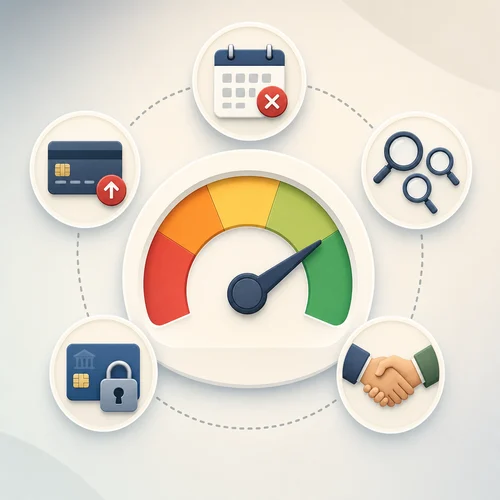
- Keep credit utilisation under control; the source article suggests aiming below 30% of the credit limit.
- Limit unnecessary credit applications, as applications can affect your credit file.
- Think carefully before taking on new debt while repaying existing debts.
Monitor your credit report
Checking your credit report can help you identify errors or accounts you do not recognise. If information appears incorrect, you can take steps to dispute it with the relevant provider or credit reporting body. Regular monitoring also helps you see whether your repayment habits are improving your overall credit profile.
Avoid common debt management mistakes
Relying only on minimum repayments
Minimum repayments can keep an account from becoming overdue, but they may do little to reduce the principal balance quickly. Where your budget allows and the product terms permit it, paying more than the minimum can reduce the balance faster and may reduce interest over time.
Adding new debt too soon
Taking on new loans or credit cards while trying to reduce existing debt can make repayment harder. It may also increase the proportion of your income committed to repayments. Before applying for new credit, consider whether your current budget can handle another obligation.
Ignoring high fees and unfavourable terms
Some credit products can carry high interest, hidden fees or terms that are difficult to manage. Payday loans, car title loans and some high-interest personal loans were identified in the source material as examples to treat carefully. Read all terms before signing and seek trusted guidance if you are unsure.
Use technology to stay organised
Digital tools can make debt management easier by helping you track spending, set reminders and estimate repayments. The most useful tool is the one you will actually use consistently.
Budgeting apps and spreadsheets
Budgeting apps, spreadsheets and banking tools can categorise spending and help you see where money is going. This can make it easier to identify non-essential spending and redirect more money towards repayments.
Payment reminders
Missed payments can lead to fees and may affect your credit history. Calendar alerts, app reminders and bank notifications can help you keep track of due dates. Automatic payments may also help, provided there is enough money in the account when the payment is due.
Online resources and calculators
Educational articles, calculators and financial management tools can help you understand repayment scenarios before making decisions. Use them as planning aids, not as guarantees of approval, savings or suitability.
Know when to seek professional help
If debt feels overwhelming, repayments are being missed, or you are unsure which debts to prioritise, professional support may help you understand your options. A financial adviser, credit counsellor or other qualified professional may assist with budgeting, debt management planning and broader financial decisions.
When choosing a professional, look at their credentials, experience, fees and the services they provide. You should feel comfortable asking questions and understanding the cost before sharing personal financial information. You can also learn more about the role of brokers and professional assistance when considering finance-related support.
Stay motivated while repaying debt
Debt repayment can take time, so motivation matters. Small steps can build momentum and help you keep going when progress feels slow.
Celebrate milestones
Recognise achievements such as making several repayments on time, paying off a small balance, reducing total debt by a set amount or avoiding new debt for a month. Rewards do not need to be expensive; the goal is to reinforce progress without undermining the budget.
Keep goals visible
Write down your financial goals and review them regularly. Some people use a chart, spreadsheet or visual tracker to show how much debt has been repaid. Seeing progress can make the process feel more manageable.
Build a support system
A trusted friend, family member or financial accountability group can provide encouragement and help you stay focused. If you prefer privacy, even a regular check-in with your own budget can create accountability.
Key takeaways
- Start by listing your income, expenses, debts, interest rates and due dates.
- Create a realistic budget that covers essentials and minimum repayments.
- Choose a repayment strategy, such as the snowball or avalanche method.
- Review consolidation carefully, including fees, interest and loan term.
- Use credit responsibly and avoid unnecessary new applications.
- Set reminders, monitor your credit report and seek professional help if debt becomes difficult to manage.
Managing debt is a long-term habit. By understanding your obligations, using a structured repayment plan and staying alert to costs, you can make more informed financial decisions as you build your adult financial life.