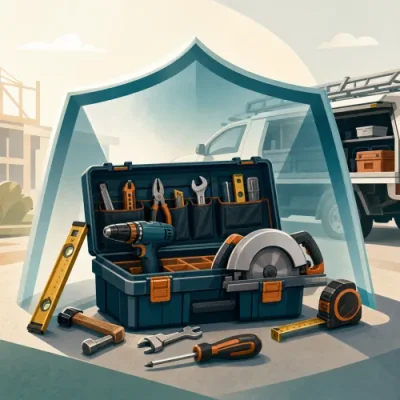
For many Australian tradies, tools and equipment are more than business assets. They are what make it possible to quote, travel to site, complete the job and get paid. Losing a toolkit, having a ute broken into or damaging a key item of equipment can create immediate costs and downtime.
Tool insurance for tradies, often called tools and equipment insurance or portable equipment cover, is designed to help with certain losses involving the tools and gear used in a trade business. The exact cover depends on the insurer, policy wording, insured items, limits, excesses and claim circumstances.
This guide explains what tools and equipment insurance may cover, what is commonly excluded, how stolen tools from vehicles are treated, and what tradies should check before relying on a policy.
What is tool and equipment insurance for tradies?
Tools and equipment insurance is a type of business insurance that can cover insured tools, equipment and sometimes stock or materials against specified events such as theft, accidental damage, fire or certain forms of loss. It is commonly considered by electricians, plumbers, carpenters, builders, landscapers, painters, mechanics and other tradespeople who carry equipment between jobs.
Depending on the policy, cover may apply to items such as:
- hand tools and power tools;
- toolboxes, ladders and trade equipment;
- specialised testing or measuring equipment;
- portable machinery used for trade work;
- mobile plant or larger equipment, if specifically listed or accepted by the insurer;
- materials or stock, where the policy includes them.
Some policies provide broad portable equipment cover, while others require specific high-value items to be listed. It is important to read the policy schedule and product disclosure statement rather than assuming every item used for work is automatically covered.
Why tradies consider tools and equipment insurance
The original reason many tradespeople look at tool cover is straightforward: replacing quality trade gear can be expensive, and downtime can affect income. While insurance cannot prevent theft or damage, it may reduce the financial impact of a covered incident.
Common reasons tradies consider this cover include:
- Financial protection: a covered claim may help pay for repair or replacement rather than requiring the business owner to fund the full cost upfront.
- Job continuity: faster replacement of essential gear may help reduce delays, missed jobs or rescheduling problems.
- Peace of mind: knowing there is a defined claims pathway can make it easier to plan for unexpected loss or damage.
- Professional expectations: some clients, head contractors or site managers may expect subcontractors to have suitable business insurance, although the exact requirements vary by contract and project.
- Business resilience: sole traders and small operators may have limited cash reserves, so a major tool loss can place pressure on both work and personal finances.
Tool cover is only one part of a broader insurance picture. Public liability, commercial vehicle, personal accident or income-related cover and contract works insurance may also be relevant depending on the trade and business structure. For a broader overview of available options, see insurance for tradespeople.
What tool and equipment insurance may cover
Policies vary, but tools and equipment insurance may provide cover for events such as theft, accidental damage, fire, storm or malicious damage. Some policies are written on a defined-events basis, meaning only listed events are covered. Others may provide broader accidental loss or damage cover, subject to exclusions and conditions.
Examples of situations that may be considered under a policy include:
- tools stolen from a locked storage area, where the policy conditions are met;
- equipment damaged in a covered fire or storm event;
- portable tools accidentally damaged while being used for business purposes;
- insured equipment stolen from a vehicle, if the policy includes theft from vehicles and security conditions are satisfied;
- specified high-value equipment damaged or stolen within the geographical area covered by the policy.
The important word is may. Whether a claim is accepted depends on the policy wording, the facts of the incident, whether conditions were met, and the insurer's assessment.
Tools in vehicles: do not assume motor insurance covers them
Many tradies store or transport tools in a ute, van, trailer or canopy. This creates a common misunderstanding: commercial vehicle insurance and tool insurance are not the same thing.
A motor policy may cover the vehicle itself and certain accessories, but it may not cover loose tools, portable equipment or stock carried inside the vehicle. If it does include limited contents cover, the limit may be lower than the actual value of the tools being carried.
Tool insurance may include stolen tools from a vehicle, but often only if specific conditions are met. These can include requirements around locked vehicles, locked toolboxes, alarms, secure canopies, evidence of forced entry, where the vehicle was parked, and whether the tools were left in the vehicle overnight.
If your ute, van or trailer is central to your work, it is worth understanding how vehicle and tool policies interact. You can read more in our guide to commercial vehicle insurance considerations for tradespeople.
Common exclusions and conditions to check
Exclusions are one of the most important parts of any tools and equipment policy. They explain when the insurer may not pay a claim. Conditions explain what you must do for cover to respond.
| Issue to check | Why it matters |
|---|---|
| Unattended vehicle conditions | Some policies restrict cover for tools left in vehicles, especially overnight or where there is no forced entry. |
| Security requirements | Insurers may require locked vehicles, locked storage, alarms, immobilisers, secure toolboxes or evidence that reasonable precautions were taken. |
| Unexplained disappearance | Items that cannot be accounted for may not be treated the same way as theft supported by evidence. |
| Wear and tear | Gradual deterioration, rust, corrosion, faulty workmanship or ordinary wear is commonly excluded. |
| Mechanical or electrical breakdown | Breakdown may be excluded unless the policy specifically provides this cover. |
| High-value items | Some items must be individually listed, or sub-limits may apply. |
| Hired, borrowed or leased equipment | Equipment you do not own may need to be declared or covered under a specific extension. |
| Location limits | Cover may only apply within Australia, at specified premises, in transit, on site, or within a nominated radius. |
| Business versus personal use | Policies may only cover tools used for the insured business activities disclosed to the insurer. |
| Policy excesses | An excess may apply to each claim, which can affect whether smaller losses are worth claiming. |
These are general examples only. The actual exclusions and conditions depend on the policy wording.
Replacement value, market value and policy limits
One of the most practical things to check is how the insurer values tools after a covered loss. Some policies may provide new-for-old replacement for eligible items. Others may pay market value, indemnity value or depreciated value. Some may apply different rules depending on the age, type or condition of the item.
Key policy settings to review include:
- Sum insured: the maximum amount selected for tools and equipment cover.
- Item limits: caps that apply to individual tools or categories of equipment.
- Unspecified item limits: limits for items that are not individually listed on the policy.
- Specified items: high-value tools or equipment that need to be named on the policy schedule.
- Excess: the amount you contribute if a claim is accepted.
- Basis of settlement: whether the policy pays replacement cost, repair cost, market value or another measure.
Underinsurance can occur if the sum insured is lower than the real cost of replacing the tools used in the business. A regular stocktake can help tradies keep cover closer to current needs, particularly after buying new gear or upgrading equipment.
Proof of ownership and evidence: what to keep
Claims are usually easier to assess when there is clear evidence of what was owned, what it was worth and what happened. Tradies do not need a perfect filing system, but practical record-keeping can make a difference.
Useful records may include:
- purchase receipts, tax invoices or online order confirmations;
- photos of tools, toolboxes, trailers, storage areas and serial numbers;
- a tool inventory showing make, model, age, value and identifying details;
- service records for larger equipment;
- bank or card statements that support purchases;
- police report numbers for theft incidents;
- photos of damage, forced entry or the incident location;
- quotes for replacement or repair.
For sole traders and small trade businesses, it can be useful to update the inventory at the same time as tax records, equipment purchases or insurance renewal.
How to make a tools and equipment claim
If tools are stolen, lost or damaged, the first step is to make the area safe and prevent further loss where possible. For theft, insurers commonly expect the incident to be reported to police promptly. You should then notify your insurer or broker as soon as practical and follow their instructions.
A typical claims process may involve:
- checking the policy schedule and wording to understand relevant limits and conditions;
- reporting theft to police and keeping the event or report number;
- taking photos of damage, forced entry, the vehicle, site or storage area;
- preparing a list of affected items, including serial numbers and estimated values;
- providing receipts, photos, bank records or other proof of ownership;
- obtaining repair or replacement quotes if requested;
- responding to insurer questions and keeping copies of communications.
Do not dispose of damaged tools or repair items before speaking with the insurer unless you need to act for safety or to prevent further loss. If you want a broader overview of claims steps, see our step-by-step insurance claim guide for tradespeople.
What tool insurance usually does not replace
Tools and equipment insurance should not be treated as a substitute for every business risk. In particular, it is different from public liability insurance. Tool cover may respond to insured loss or damage to your tools, while public liability generally deals with claims that your business caused injury to another person or damage to someone else's property.
For example, if your drill is stolen, that may be a tool insurance issue. If your work causes damage to a customer's property, that may be a public liability issue. If you cannot work because you are injured or ill, tool insurance will generally not replace your income. Other cover types may need to be considered for those risks.
Tool insurance also may not cover:
- lost income from downtime unless a specific business interruption or additional benefit applies;
- poor maintenance or ordinary deterioration;
- tools used for activities outside the business description disclosed to the insurer;
- contractual penalties for delayed work;
- every theft from an unlocked or unsecured location;
- items above limits if they were not listed or adequately insured.
Questions to ask before relying on tradie tool cover
Before choosing or renewing a tools and equipment policy, consider asking the insurer or broker practical questions such as:
- Are my tools covered at home, on site, in transit and in my vehicle?
- Is theft from a vehicle covered overnight?
- What security conditions apply to utes, vans, trailers, canopies and toolboxes?
- Do I need to list high-value tools separately?
- Are hired, leased or borrowed items covered?
- Is settlement based on new replacement cost, repair cost or depreciated value?
- What excess applies to each claim?
- Are there sub-limits for categories such as electronic equipment, testing gear or stock?
- What proof of ownership will be required if I claim?
- Does the policy cover the specific trade activities I perform?
If your tools are high value, frequently left in a vehicle, used across multiple sites or stored in more than one location, policy wording can be especially important. Where you need help comparing policy details, you can contact a participating broker through our brokers page.
Risk management can support insurance
Insurance is only one part of protecting tools. Practical steps can reduce the chance of a loss and may also help show that reasonable precautions were taken.
Useful measures can include:
- engraving or marking tools with identifying details;
- recording serial numbers and keeping photos;
- using lockable toolboxes, cabinets, cages or site storage;
- removing tools from vehicles overnight where practical;
- parking in secure or well-lit areas where possible;
- using alarms, immobilisers or tracking devices where appropriate;
- checking that employees or subcontractors understand storage rules;
- reviewing tool values after major purchases.
These steps do not guarantee a claim will be accepted, but they can reduce exposure and support better record-keeping.
Key takeaways for Australian tradies
Tools and equipment insurance may be valuable for tradies who depend on their gear to keep working, but it should be understood carefully before a loss occurs. Cover can vary widely between policies, especially for tools kept in vehicles, high-value items, storage conditions, proof of ownership and the way claims are settled.
The main points to remember are:
- do not assume commercial vehicle insurance automatically covers tools inside a ute or van;
- check limits, excesses, exclusions and security conditions before relying on cover;
- keep an up-to-date inventory with receipts, photos and serial numbers where possible;
- review cover after buying new equipment or changing how and where tools are stored;
- understand how tool insurance fits with public liability, vehicle cover and other trade business insurance.
The right level and type of cover depends on your trade, equipment value, work locations, storage arrangements and insurer criteria. Reading the policy wording and asking specific questions before you need to claim can help avoid costly surprises later.
Published: Monday 16th September, 2024
Last updated: Monday 16th November, 2026