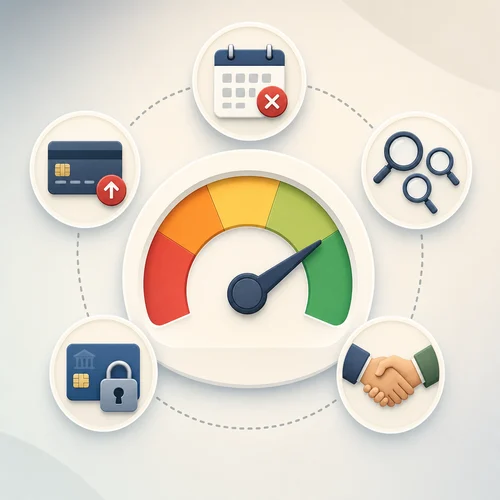
No-credit-check loans in Australia are often marketed to people who have poor, limited or uncertain credit history. The phrase can sound simple, but it does not usually mean that a lender ignores your financial situation altogether. In many cases, it means the lender may not rely on a traditional credit-file check in the same way a bank might, or may use alternative information to assess whether the loan appears affordable.
This article explains how no credit check loan assessments work, what information lenders may still review, and how to think about the risks before applying. It is general information only and does not take your personal objectives, financial situation or needs into account.
What does "no credit check" usually mean?
A no-credit-check loan is generally a loan where the lender does not make a traditional credit enquiry, or does not make your credit score the main basis for the decision. Some providers may instead focus on your recent income, bank account conduct, employment status, business cash flow or other evidence of your ability to repay.
However, "no credit check" should not be confused with "no assessment". Australian lenders and credit providers still need to make lending decisions carefully. For consumer loans, responsible lending expectations generally require lenders to consider whether the credit is unsuitable for the borrower. For business finance, the assessment may be different, but providers commonly still want evidence that the business can service the debt.
The key point is this: a no-credit-check loan may reduce reliance on your credit file, but it does not remove the need to assess risk, affordability and eligibility.
No credit check does not mean automatic approval
It is important to be cautious with any wording that suggests approval is certain. Loan outcomes depend on the lender's criteria, your financial circumstances, the loan amount, the purpose of the loan, and the documents or data you provide.
A lender may still decline an application if your income is not sufficient, your expenses are too high, your bank statements show repeated dishonours, your employment is too unstable, or the requested repayment schedule appears unaffordable. If the loan is for a business, the provider may also consider trading history, cash flow patterns and whether the business can support the repayments.
At No Credit Check, the broader focus is helping Australians understand funding options where traditional credit history may not be the only factor. That does not remove the need to compare terms carefully and consider whether borrowing is manageable.
Information lenders may still assess before approval
Even where a lender says there is no traditional credit check, you may still be asked for information that helps the lender understand your capacity to repay. The exact requirements vary by provider and loan type, but common assessment inputs can include the following.
Income and employment
Lenders may ask about your employment type, income amount, pay frequency and how long you have been in your role. Casual workers, contractors and self-employed applicants may need to provide different evidence from salaried employees.
Income evidence might include recent payslips, bank deposits, tax documents or other records. The lender is usually trying to understand whether your income is regular enough to support the proposed repayments.
Bank statements and account conduct
Bank statements are commonly used in alternative lending assessments. They can show income deposits, regular bills, existing loan repayments, direct debits, overdrafts, dishonours, gambling transactions or other spending patterns.
This does not mean one transaction automatically determines the outcome. Lenders may look at the overall pattern to decide whether the loan appears affordable and whether the repayment amount fits your cash flow.
Existing debts and expenses
A lender may ask about rent or mortgage payments, credit cards, buy now pay later commitments, car loans, personal loans, child support, utilities, insurance and other recurring expenses. These details help estimate how much money is available after essential costs.
If your existing commitments already absorb most of your income, a lender may consider a new loan too risky or may offer different terms from those you hoped for.
Identity and residency details
Applicants usually need to verify their identity. This may involve providing a driver licence, Medicare card, passport or other accepted identification. You may also need to provide your address, contact details and Australian bank account information.
Loan purpose and requested amount
The reason for borrowing can affect the assessment. A lender may ask whether the funds are for an emergency expense, vehicle repair, bill smoothing, debt consolidation, business stock, equipment, working capital or another purpose.
Borrowing only what you reasonably need can reduce repayment pressure. A smaller loan is not necessarily easier in every case, but the requested amount should be proportionate to your income and repayment capacity.
Business information for business loans
For business loans no credit check processes may focus more heavily on business performance. A provider may request details such as ABN information, trading history, business bank statements, sales patterns, invoices, BAS records, merchant turnover, current debts, tax obligations or business assets.
Business lenders may also consider the director's profile, industry risk, seasonality and whether the loan purpose is connected to business activity. Requirements vary widely, so it is worth asking what information will be assessed before applying.
Traditional credit checks, soft checks and alternative assessments
There are several ways a lender or broker may review your borrowing profile. Understanding the difference helps you ask better questions before you submit an application.
| Assessment type | What it generally involves | Why it matters |
|---|---|---|
| Traditional credit check | A review of information on your credit file, which may include repayment history, defaults, enquiries and credit accounts. | It can influence eligibility, pricing and terms. Some formal applications may leave an enquiry on your credit file. |
| Soft credit check or enquiry | A limited or preliminary check that generally does not affect your credit score. | It may help you explore options before a formal application, depending on the provider's process. |
| Alternative assessment | A review of income, bank statements, expenses, employment, cash flow or other non-traditional information. | It may help applicants with weak or limited credit history, but it still requires affordability assessment. |
| No meaningful assessment | A lender appears to ignore affordability, documentation or repayment capacity. | This is a warning sign. Borrowers should be cautious if a provider does not appear to check whether repayments are manageable. |
If your main concern is protecting your credit score while comparing options, it may also help to understand how soft inquiries work before you proceed with any formal application.
How a no-credit-check loan assessment may work step by step
Processes differ between lenders, brokers and loan products, but a typical assessment may follow these broad steps.
- Initial enquiry: You provide basic information about the loan amount, purpose, income type and contact details.
- Eligibility screening: The lender or broker checks whether your situation broadly fits the available loan criteria.
- Document or data collection: You may be asked for identity documents, bank statements, income evidence or business records.
- Affordability review: The provider considers income, expenses, account conduct and existing commitments.
- Offer assessment: If the application progresses, the provider may propose a loan amount, term, repayment schedule, fees and interest rate.
- Contract review: You review the credit contract or loan agreement before deciding whether to accept.
- Funding and repayments: If accepted and funded, repayments begin according to the agreement.
You should not feel pressured to accept an offer before you understand the total cost, repayment timing and consequences of missed payments.
Costs and risks to consider
No-credit-check personal loans and short-term loans can sometimes be more expensive than mainstream credit because the lender may view the application as higher risk. Costs can include interest, establishment fees, monthly fees, late payment fees or other charges, depending on the loan type and provider.
Before applying, ask yourself:
- What is the total amount repayable over the full loan term?
- Are the repayments weekly, fortnightly or monthly?
- Will the repayment date align with my pay cycle?
- What fees apply if I miss a payment or repay early?
- Is the loan secured against an asset?
- Could this loan make my financial position worse if my income drops?
Using a repayment estimate can help you test affordability before you commit. You can review available loan calculators to model different repayment amounts, terms and borrowing scenarios, while remembering that calculator results are estimates only.
Warning signs when comparing lenders
Because people searching for bad credit loan assessment options may be under financial pressure, it is especially important to watch for red flags. Be cautious if a provider:
- suggests approval is certain before reviewing your situation;
- does not explain fees, interest and total repayment obligations clearly;
- pressures you to sign quickly;
- asks for upfront payments that are not clearly explained;
- encourages you to borrow more than you need;
- does not provide clear contact details or loan documents;
- seems unconcerned about whether you can afford repayments.
A careful lender should be willing to explain the assessment process, the documents required, the likely timing and the main reasons an application may not proceed.
Questions to ask before applying
Before submitting a formal application, consider asking the lender or broker these questions:
- Will you check my credit file? If so, is it a soft enquiry or a formal credit enquiry?
- What information will you assess instead of, or in addition to, my credit score?
- What documents do I need to provide?
- What is the total cost of the loan, including fees?
- What happens if I miss a repayment?
- Can I repay early, and are there any costs for doing so?
- Is the loan secured or unsecured?
- If you are a broker, which types of lenders may review my application?
If you prefer help understanding the pathway, the site's broker information may be a useful starting point for learning how broker-style assessments can differ from applying directly to one lender.
How to improve your position before a no-credit-check assessment
You cannot control every lender criterion, but you can improve the quality of your application information and reduce avoidable concerns.
- Check your budget first: Know what repayment amount you can realistically manage after essential expenses.
- Gather documents early: Have identification, income evidence and recent bank statement information ready.
- Be accurate: Inconsistent or incomplete information may slow the process or reduce confidence in the application.
- Reduce avoidable account issues: If possible, avoid dishonours, missed direct debits and unnecessary overdrawing before applying.
- Borrow only what is needed: A larger loan can increase repayment pressure and total cost.
- Consider timing: If your income has recently changed, it may help to wait until you can show a clearer pattern, if your situation allows.
These steps do not ensure approval, but they may make the assessment clearer and help you avoid taking on repayments that do not fit your situation.
Alternatives to consider before borrowing
A no-credit-check loan may be one option, but it is not always the most suitable or affordable one. Depending on your circumstances, alternatives may include negotiating a payment plan with a biller, speaking with existing creditors, asking about hardship options, using savings, delaying non-urgent spending, considering a lower-cost loan option, or seeking support from a financial counsellor.
If the issue is ongoing financial stress rather than a one-off shortfall, taking another loan may not solve the underlying problem. A budget review, debt management plan or hardship discussion may be more useful than adding another repayment commitment.
The bottom line
No-credit-check loans in Australia are best understood as loans that may not rely on a traditional credit check in the usual way. They may still involve detailed assessment of income, bank statements, expenses, employment, business cash flow, identity and repayment capacity.
The safest approach is to treat "no credit check" as a description of one part of the process, not a promise of approval or affordability. Before applying, confirm what will be checked, compare the total cost, test the repayments against your budget and consider whether there are lower-risk alternatives.
If you decide to continue, read all documents carefully and only proceed if you understand the repayment obligations and the consequences if things do not go to plan.
Published: Thursday 19th September, 2024
Last updated: Saturday 1st August, 2026