
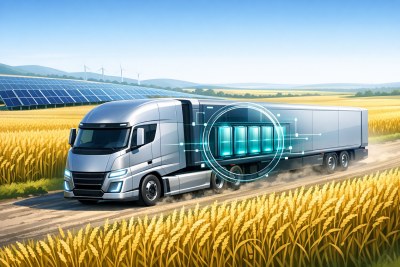

ABC Landline reported on 14 November 2026 that South Australian company VE Motion has developed an electric trailer designed to help propel a diesel truck, particularly under load. The company is targeting a substantial diesel reduction, while the first commercial customer discussed in the report indicated that even a smaller verified saving could be worthwhile. That distinction matters: a claimed saving, a trial result and a reliable commercial outcome are not the same thing.
The finance issue is sharpened by the expected price range reported for the technology, which sits in the hundreds of thousands of dollars. For a farm business or rural transport operator, that sort of outlay would need to be weighed against annual kilometres, fuel burn, route profile, trailer utilisation, maintenance, insurance, financing costs and the value of any emissions or customer-contract benefits. A truck doing frequent heavy runs over predictable routes may present a very different case from a seasonal unit that spends long periods parked.
There are also practical constraints. Powered trailers add batteries, drive components and control systems, so payload, axle loads and regulatory approval cannot be treated as afterthoughts. Industry guidance for powered-trailer trials has been developed, but the latest reporting indicates public-road approval and real-world testing remain important hurdles. For agriculture, where timing and reliability can be as important as fuel cost, downtime risk and access to service support may be just as relevant as the diesel saving percentage.
The development also fits into a broader period of fuel volatility, where many machinery and transport decisions are being reassessed through total operating cost rather than purchase price alone. Farmers considering any new transport technology may wish to compare scenarios using conservative assumptions, including lower-than-promised fuel savings and higher electricity or infrastructure costs.
A general planning tool such as the Farm Equipment Finance Calculator can help illustrate how price, deposit, trade-in value, term and residual assumptions may affect repayments, but it cannot decide whether a particular powered trailer is commercially suitable. The key lesson from this early stage is caution rather than dismissal: electric-assist freight equipment may become useful for some rural tasks, but the finance case will depend on verified performance, not headline targets.
Please Note: We do not endorse any specific products or companies. Some content is sourced from third parties, including press releases, and may not be independently verified for accuracy or completeness.