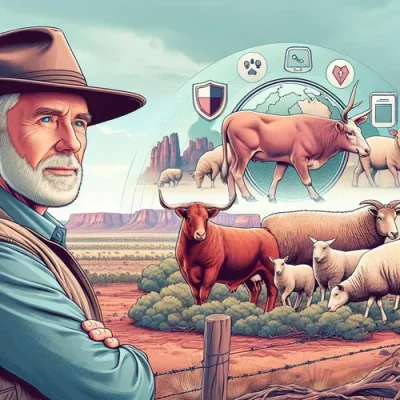
What is livestock insurance?
Livestock insurance is designed to help protect farmers from the financial impact of losing animals or having animals injured due to insured events. For Australian farmers, those events can include a wide range of risks, from severe weather and natural disasters to disease, theft and accidents.
The purpose of livestock insurance is not to remove risk from farming. Instead, it can provide a financial buffer when an insured event affects the animals that support the farm's income, breeding program or ongoing operations.
Livestock cover may be arranged as part of a broader farm insurance program or as a more specific policy for particular animals, herds or activities. The right structure depends on the type of livestock, how the animals are used, where they are located and the risks faced by the farm.
Common risks livestock insurance may address
Australian farms operate across very different environments, from arid inland regions to high-rainfall coastal areas. This means the risks facing one herd may differ from those affecting another. Policies vary, but livestock insurance may be considered for risks such as:
- accidental injury or death;
- disease affecting individual animals or a herd;
- theft of livestock;
- loss or injury while animals are in transit;
- storms, floods, bushfires or other severe weather events, where covered by the policy;
- specific breeding-related risks, where specialist cover is available and selected.
Weather-related risks deserve particular attention because floods, storms, bushfires and drought conditions can affect livestock, pasture, fencing, access roads and farm operations at the same time. For more detail on this area, see this guide to weather-related coverage in farm insurance.
Not every event is automatically covered. Exclusions, limits, waiting periods, excesses and conditions can all affect whether a claim is payable and how much may be paid.
Types of livestock cover to consider
Livestock insurance is not usually a one-size-fits-all product. Farmers may need different cover depending on the animals they keep, the scale of the operation and the commercial role of the livestock.
General livestock cover
General livestock cover may respond to insured losses involving animals on the farm. This may be relevant where livestock form part of the farm's trading, production or income-generating activities.
Transit cover
If animals are moved between properties, to saleyards, to processors or to events, transit cover may be relevant. It can be designed to address loss or injury while livestock are being transported, subject to the policy terms.
Breeding-related cover
Breeding animals may carry a value that reflects genetics, reproductive potential or future progeny. Some farmers may consider specialist cover for breeding stock or specific reproductive risks, where available.
Cover for higher-value or specialised animals
Animals used for stud, breeding or specialised production may need to be assessed differently from ordinary trading livestock. Valuation, documentation and policy limits are especially important for these animals.
How to assess your farm's livestock insurance needs
Before comparing policies, it helps to build a clear picture of your livestock, their value and the risks that could affect them. A structured assessment can also reduce the chance of being underinsured or paying for cover that does not match the farm's current operations.
1. Value your livestock carefully
Livestock value may be influenced by market prices, age, breed, breeding potential and the role each animal plays in the business. Purchase records, sales records, breeding records and veterinary information can help support a more accurate valuation.
2. Identify the main risks on your property
Walk through the farm and note practical vulnerabilities. These may include fencing condition, shelter, water access, bushfire exposure, flood-prone areas, stock handling facilities, theft risks and transport arrangements.
3. Consider your location and operating model
A farm in a bushfire-prone area may have different priorities from a property exposed to flooding or severe storms. Likewise, a breeding operation may need different cover from a farm that mainly buys and sells stock seasonally.
4. Match cover to the financial role of the animals
Some animals may be replaceable through ordinary trading channels, while others may be central to production, breeding or long-term farm planning. Insurance limits should be considered in light of the financial impact a loss could have on the operation.
5. Use tools and advice to estimate needs
Farmers reviewing broader cover levels can use the Farm Insurance Calculator as a starting point for thinking about farm insurance needs. A calculator cannot replace policy advice, but it can help organise the discussion around assets and cover levels.
What to compare in a livestock insurance policy
When comparing livestock insurance, the cheapest premium is not the only factor. A policy should be assessed against the risks it covers, the events it excludes and the way claims are handled.
| Policy feature | Why it matters |
|---|---|
| Covered events | Shows which causes of loss or injury may be insured, such as theft, disease, accidental injury, transit losses or severe weather events. |
| Exclusions | Identifies events, circumstances or animal types that the insurer will not cover. |
| Policy limits | Sets the maximum amount the insurer may pay for a claim or category of loss. |
| Excess or deductible | Determines the amount the farmer may need to contribute before a claim payment applies. |
| Valuation method | Affects how livestock value is assessed at claim time. |
| Claims process | Helps you understand what evidence is required and how quickly you must notify the insurer. |
Policy wording is important. Farmers should read the product disclosure statement, schedule and any endorsements carefully so they understand what is and is not covered. This overview of farm insurance policy documents and exclusions explains some of the terms and obligations that can affect cover.
Choosing a livestock insurance provider
Selecting an insurer is about more than finding a policy with a familiar name. A suitable provider should be able to explain the cover clearly and support farmers through the claims process.
When comparing providers, consider:
- the range of livestock and farm insurance options available;
- whether cover can be adjusted for the size, type and location of the farm;
- how claims are lodged and assessed;
- the insurer's experience with agricultural risks and natural disaster claims;
- the clarity of policy wording, exclusions and excesses;
- the level of customer support available before and after a claim.
Some farmers also choose to work with a broker or adviser to help interpret policy options and explain differences between insurers. You can learn more about the role of farm insurance brokers when considering professional assistance.
If you are comparing available options, it may also be useful to compare farm insurance options through a quote-start process so the discussion begins with the type of farm, assets and livestock involved.
Managing premiums without weakening essential cover
Cost is an important part of any insurance decision, but reducing a premium should be weighed against the cover the farm needs. A lower premium may not be helpful if key risks are excluded or limits are too low for the value of the livestock.
Review excess levels
A higher excess may reduce the premium, but it also increases the amount payable by the farmer if a claim is made. The excess should be set at a level the farm could realistically manage during a loss event.
Ask about multi-policy arrangements
Some insurers may offer pricing benefits or administrative convenience where multiple farm insurance policies are held together, such as livestock, property, crop or equipment cover. The details will depend on the provider and policy structure.
Demonstrate risk management
Sound livestock management can reduce the likelihood or severity of losses. Examples include regular veterinary care, biosecurity measures, secure fencing, appropriate shelter and practical measures to protect animals from theft or natural disaster exposure. Insurers may consider these factors when assessing risk, although discounts are not guaranteed.
What to do if you need to make a claim
A clear claims process can make a difficult situation easier to manage. The exact steps will depend on the insurer and policy, but the following approach is commonly relevant.
- Notify the insurer promptly. Contact the insurer, broker or agent as soon as practical after the incident.
- Record the details. Note the date, time, location, animals affected and the circumstances leading to the loss or injury.
- Gather evidence. Photos, videos, veterinary reports, weather information, purchase records and farm ledgers may all help support the claim.
- Keep receipts. Retain invoices for veterinary treatment, repairs or other immediate costs connected with the incident.
- Follow the insurer's instructions. The insurer may require a claim form, assessor visit or additional documentation.
- Keep communication records. Note who you spoke to, when conversations occurred and what was requested.
It is important to provide accurate information. Misstating the facts or withholding relevant details can affect how a claim is assessed.
Keeping livestock insurance up to date
Livestock insurance should be reviewed regularly because farm operations change over time. A policy that suited the farm last year may not reflect current livestock numbers, values, infrastructure or risks.
Consider reviewing cover when:
- the herd expands or reduces in size;
- new breeds or higher-value animals are introduced;
- the farm begins or stops breeding activities;
- animals are transported more frequently;
- new fencing, yards, shelters or other infrastructure are added;
- there are changes in local risks, such as disease, bushfire or flood exposure;
- market values change significantly.
Regular contact with the insurer or broker can help ensure policy information remains current and that cover continues to match the way the farm operates.
Key takeaways for Australian farmers
Livestock insurance can form an important part of a farm's broader risk management plan. The most useful policy is one that reflects the animals being insured, the financial role they play and the real risks faced by the property.
Before choosing cover, farmers should understand the policy wording, compare limits and exclusions, consider transit and breeding risks where relevant, and keep accurate records to support any future claim. Regular reviews are also important as livestock values, farm infrastructure and operating practices change.
Published: Wednesday 21st February, 2024
Last updated: Thursday 6th August, 2026