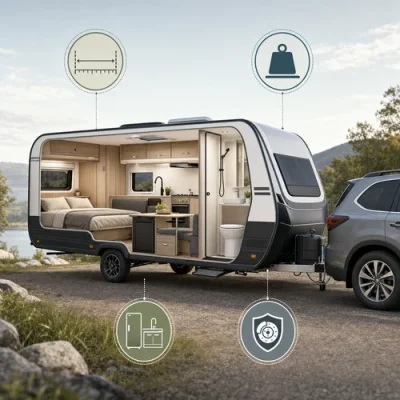
Why a caravan checklist matters
Buying a caravan is a major decision that can shape the comfort, safety and practicality of your trips for years. The right caravan should suit how you travel, who travels with you, the vehicle you use for towing and the type of features you expect on the road.
With many models, sizes and layouts available, it can be easy to focus on appearance or individual features before checking the fundamentals. A structured checklist helps you compare caravans consistently and avoid overlooking important details such as towing weight, storage, road worthiness, warranty support and internal layout.
1. Start with your travel plans and budget
Before comparing specific caravans, clarify how you expect to use the van. A caravan for short weekends away may not need the same layout, storage or amenities as one intended for longer journeys or year-round travel. Consider whether your trips are likely to be short or long, seasonal or regular, and whether you prefer basic necessities or a more feature-rich setup.
Your budget should cover more than the purchase price. It should also account for the features you need, the condition of the caravan, towing requirements, accessories, servicing and ongoing ownership considerations. If finance is part of your planning, a Caravan Loan Repayment Calculator can help you estimate repayments for different loan amounts and terms before you compare options.
For broader trip planning, you may also want to review budgeting for your Australian caravan adventure so the caravan purchase fits within the wider cost of travel.
2. Choose the right caravan type, size and layout
Caravans vary in size, style and configuration. Common options include travel trailers, pop-tops and other caravan layouts designed for different storage, towing and comfort needs. The best fit depends on the number of travellers, how much internal space you need and the type of trips you plan to take.
Size and sleeping arrangements
Check that the length and width of the caravan provide enough room for the number of people who will regularly use it. Sleeping arrangements should be practical, comfortable and easy to access. A layout that looks spacious during inspection may feel cramped once luggage, food, outdoor gear and personal items are added.
Interior layout
The internal layout affects daily comfort. Consider how the beds, kitchenette, seating, bathroom and storage areas are positioned. Think through typical routines such as cooking, changing clothes, packing gear, moving around at night and using the bathroom. A well-planned layout can make a smaller caravan more practical, while a poor layout can make a larger van feel inconvenient.
Storage space
Storage is easy to underestimate. Check whether there is enough space for clothing, bedding, cooking items, tools, outdoor equipment and travel supplies. Storage should be accessible and suitable for the type of gear you carry, especially if you plan longer trips.
3. Match the caravan to your towing vehicle
The towing vehicle is central to choosing a suitable caravan. The caravan's weight and towing requirements should match the towing vehicle's capabilities. A caravan that is too heavy for the vehicle can create safety issues and make towing more difficult.
Before buying, compare the caravan's towing and storage requirements with the vehicle you intend to use. Also consider ball weight and weight distribution, as these affect towing balance and comfort. Towing mirrors and braking arrangements should also be reviewed as part of your safety checks.
Licence requirements for towing should not be overlooked. Requirements can depend on the vehicle and caravan combination, so it is important to check what applies before committing to a purchase.
4. Inspect road worthiness and build condition
A caravan should be inspected carefully before purchase, particularly if it is used. Road worthiness is not only about how the caravan looks; it includes the chassis, tyres, wheels, brakes, body, roof and essential systems.
| Area to inspect | What to consider |
|---|---|
| Chassis | The chassis forms the foundation of the caravan, so inspect it carefully for signs of damage, weakness or poor condition. |
| Tyres and wheels | Check tyres and wheels for safety, durability and suitability for the caravan's expected use. |
| Brakes | Brakes are a key safety feature and should be checked before purchase. |
| Electrical systems | Confirm that electrical systems are in good working order. |
| Gas systems | Gas systems should also be checked for correct operation and condition. |
| Body and roof | Inspect the body and roof for weather-proofing and overall condition. |
If you are unsure how to assess any of these areas, consider arranging an appropriate inspection before finalising the purchase.
5. Compare comfort, convenience and safety features
Additional features can make a significant difference to how enjoyable and practical a caravan is. Focus on the features that match your travel style rather than paying for inclusions you are unlikely to use.
Kitchen features
A kitchenette can support more self-contained travel. Useful features may include a fridge, cooktop and sink. Check that the kitchen layout is practical and that storage is available for cooking equipment and food.
Bathroom features
A shower and toilet can add privacy and comfort, particularly on longer journeys. Consider whether the bathroom layout suits the people using the caravan and whether it fits your expectations for convenience.
Entertainment and living features
Features such as a TV, DVD player and speakers may add comfort during travel, especially for longer stays. Treat entertainment inclusions as part of the overall comparison rather than the main reason to buy a particular caravan.
Safety features
Safety should remain a priority. Brakes, stability-related features, towing mirrors, weight distribution and general road worthiness all affect how confidently and comfortably the caravan can be towed. Do not assess safety features in isolation; they should be considered together with the caravan's weight, condition and compatibility with the towing vehicle.
6. Review the manufacturer, dealer and after-sales support
The caravan itself is only part of the purchase decision. The reputation and support record of the manufacturer or dealer can affect your experience after buying. A reliable service provider may assist with after-sales service, warranty matters, accessories and parts availability.
Reputation and customer support
Research the manufacturer or dealer's reputation and customer support record. Look for signs that the business is known for quality manufacturing, helpful service and support after the sale.
Warranty and accessories
Review the warranty benefits offered and understand what is covered. If accessories are important to you, check what is available and whether warranty support applies to those items. The aim is to understand the support attached to the caravan, not just the inclusions listed at the time of purchase.
Community support and parts availability
Community support can be useful for caravan owners. User forums and enthusiast groups may provide practical maintenance tips and ownership advice. Parts exchange services or good parts availability can also be important if something needs to be replaced quickly.
7. Use a final comparison checklist
Before making a decision, compare each caravan against the same practical questions. This can help you separate essential requirements from optional extras.
- Does the caravan suit the number of people who will use it?
- Is the size practical for sleeping, moving around and storing gear?
- Does the layout support the way you cook, rest and travel?
- Is the caravan's weight suitable for your towing vehicle?
- Have you considered towing comfort, brakes, mirrors, ball weight and weight distribution?
- Have you checked any relevant licence requirements for towing?
- Are the chassis, tyres, wheels and brakes in suitable condition?
- Are the electrical and gas systems in good working order?
- Is the body and roof condition suitable for weather-proofing?
- Are the kitchen, bathroom, entertainment and storage features genuinely useful for your travel style?
- Does the dealer or manufacturer have a reasonable customer support and warranty record?
- Are parts, accessories, user forums or community support available for the caravan brand?
- Does the overall cost fit your budget without relying only on the headline purchase price?
If you are still considering finance alongside the purchase, it may be useful to read 10 questions to ask before financing a caravan as part of your pre-purchase research.
Final thoughts
Choosing the right caravan involves balancing size, weight, layout, features, towing suitability, safety, road worthiness and budget. The most suitable option is the one that aligns with your travel plans and can be used safely and comfortably with your towing vehicle.
Take time to inspect each caravan carefully, compare options consistently and review the support available from the manufacturer or dealer. A thorough checklist can help you make a more informed purchase decision and reduce the risk of overlooking important details before your next trip.