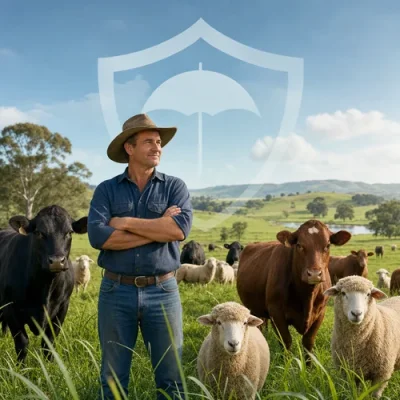
What is livestock insurance?
Livestock insurance is a form of farm insurance designed to respond when insured animals are lost, damaged or affected by events covered under the policy. For Australian farmers, livestock can represent a major business asset, so unexpected losses from disease, accidental death, theft, natural disasters or transport incidents may have a significant financial effect.
Livestock cover is usually considered alongside other parts of a farm risk management plan. Farmers reviewing cover may also find it useful to understand the key types of farm insurance policies that can apply across a rural business.
This guide explains the main forms of livestock insurance, what policies may cover, common exclusions, factors that can influence premiums and practical checks to make before selecting cover. It is general information only and does not take into account the needs of any particular farm business.
Why livestock insurance matters for Australian farms
Farming involves risks that are not always predictable or controllable. Illness outbreaks, extreme weather, accidents, fires, floods, theft and transport problems can all affect livestock operations. Insurance does not prevent these events, but it can provide a financial response where the circumstances are covered by the policy.
The purpose of livestock insurance is to help reduce the financial disruption caused by insured animal losses. This can be particularly important where livestock income, breeding programs, farm cash flow or the ability to continue trading may be affected after a major event.
Types of livestock insurance available
Policies vary between insurers, but livestock insurance in Australia may include several different types of cover. The exact wording, insured events, limits and exclusions should always be checked in the policy documents.
| Type of cover | How it may work | Points to check |
|---|---|---|
| Mortality insurance | May cover livestock death caused by specified events such as accident, illness or disease. | Check whether cover is for accidental death only, specified disease, broader mortality events or full mortality cover. |
| Theft insurance | May respond if insured stock are stolen. | Check evidence requirements, security expectations and any exclusions involving people connected to the farm. |
| Transit insurance | May cover loss or damage to livestock while animals are being transported. | Check when transit cover starts and ends, who may transport the animals and what transport conditions apply. |
| Business interruption insurance | May respond to financial loss after a significant insured event, such as a fire or flood, that affects the ability to farm or sell livestock. | Check the insured events, waiting periods, benefit periods and how lost income is calculated. |
| Additional benefits | Some policies may include or offer options for veterinary expenses or animal transport costs. | Check whether these are included automatically, optional extras or subject to separate limits. |
Animals that may be insured
Depending on the insurer and policy, livestock insurance may be available for different categories of animals, including cattle, sheep, pigs, goats and horses. Cover availability and terms may depend on the use, value, age, health and management of the animals.
Farmers should check that the policy specifically covers the animals they own and the way those animals are used. For example, a policy designed for one class of livestock may not automatically suit another type of farming operation.
How livestock may be valued under a policy
Valuation is one of the most important parts of livestock insurance. A policy may compensate based on the market value of the animal at the time of loss, or it may use another agreed method depending on the policy wording.
Some livestock policies may refer to market value cover, where the payout is linked to the value of the animals when the loss occurs. Other policies may provide a form of mortality cover that responds according to the insured value or policy terms. The difference matters because the amount paid after a claim may depend on how the animals were valued and the limits selected.
When estimating the level of cover needed across the farm, a general farm insurance calculator may help prompt consideration of assets and cover levels, although policy decisions should still be based on accurate farm records and insurer requirements.
Common exclusions and limitations
Livestock insurance policies contain exclusions. These are circumstances where the insurer will not pay a claim, even if a loss has occurred. Exclusions vary, but examples may include losses caused by war or invasion, theft by people related to the farm, or losses linked to inadequate animal care or neglect.
Limitations may also apply. A policy might restrict cover to certain causes of loss, impose maximum payout limits, apply an excess, or require particular standards for animal care, security, transport or disease management.
Because exclusions can create significant coverage gaps, they should be read before cover is arranged rather than only after a loss. If any wording is unclear, it is sensible to ask the insurer or broker to explain how the clause works.
Policy details to check before choosing livestock cover
Farmers comparing livestock insurance should look beyond the premium alone. A lower-cost policy may not provide the same scope of cover, limits or claims conditions as another policy. If comparing available farm insurance options, it is useful to assess the wording, limits and exclusions rather than relying only on price.
- Which animals are insured and whether all relevant classes of livestock are included.
- Which events are covered, such as disease, accidental death, theft, fire, flood, natural disasters or transit incidents.
- How animals are valued after a loss.
- The policy limits and whether they align with the value of the insured livestock.
- The excess payable if a claim is made.
- Any exclusions relating to animal care, neglect, security, disease, transport or people connected to the farm.
- Whether veterinary expenses, animal transport or business interruption are included or optional.
- How long the policy covers the animals and whether seasonal or short-term arrangements apply.
- What evidence is needed to support a claim.
For a broader comparison framework, see this guide on how to choose the right farm insurance policy.
Factors that can affect livestock insurance premiums
The cost of livestock insurance can vary between farms and policies. Insurers may consider a range of factors when pricing cover, including the type and value of livestock, location, selected limits, claims history and excess level.
- The type of livestock insured, because different animals may have different risk profiles.
- The farm location, including exposure to weather, theft or other local risks.
- The level and breadth of cover selected.
- The insured value of the animals.
- The claims history of the farm or policyholder.
- The excess chosen, noting that a higher excess may reduce the premium but increases the amount payable by the farmer if a claim is accepted.
- Risk management measures such as fencing, shelter, adequate feed and biosecurity practices.
Premium should be considered together with the policy benefits, limits and exclusions. A policy that appears cheaper may be narrower in scope, have lower limits or apply conditions that affect how a claim is assessed.
Risk management and livestock insurance
Insurance is only one part of protecting livestock assets. Practical risk management can reduce the likelihood or severity of losses and may also be relevant when insurers assess a farm's risk profile.
Examples of livestock risk management practices include maintaining appropriate fencing, providing shelter and adequate feed, keeping records, managing animal health and using biosecurity protocols. Planning for major events such as fires, floods or disease outbreaks can also help a farm respond more effectively when disruption occurs.
Risk planning should be reviewed alongside insurance arrangements so that the farm understands both the practical steps available before an incident and the policy requirements that may apply if a loss occurs.
Working with insurers or farm insurance brokers
Livestock insurance can involve detailed policy wording, valuation issues and different cover options. Some farmers deal directly with insurers, while others use a specialist farm insurance broker to help compare policies and explain available options.
A broker with experience in agricultural insurance may help identify relevant questions to ask, explain differences between policy options and assist with the purchase process. General information about the role of farm insurance brokers may be useful when deciding how to arrange or review cover.
Whether arranging cover directly or through a broker, farmers should keep accurate records of livestock numbers, values, health information, purchases, sales and any incidents that could be relevant to a future claim.
Before making a claim
If livestock are lost, stolen, injured or affected by disease, the policy will set out the notification and evidence requirements. These may include contacting the insurer promptly, protecting surviving livestock, keeping records, obtaining veterinary information or providing proof of ownership and value.
The claim outcome depends on the insured event, policy limits, exclusions, excess and evidence provided. Reading the claims section of the policy before an incident occurs can make the process easier to understand if a loss happens later.
Key takeaways
- Livestock insurance can cover specified losses involving animals such as cattle, sheep, pigs, goats and horses, depending on the policy.
- Common cover types include mortality, theft, transit and business interruption insurance.
- Policy wording matters because exclusions, limits, valuation methods and excesses can significantly affect claims.
- Premiums may be influenced by livestock type, location, level of cover, insured value, claims history, excess and risk management practices.
- Farmers should compare cover based on policy terms and farm risk exposure, not premium alone.