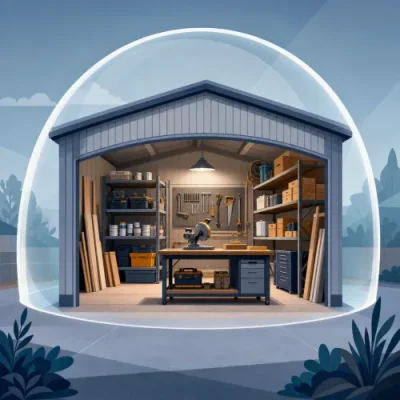
Workshop contents insurance is designed for business property kept at a fixed location, such as a workshop, shed, warehouse, yard, factory unit or small business premises. For many Australian tradies, that location holds more than just a workbench. It may contain machinery, stock, spare parts, customer materials, office equipment and other assets that would be costly to replace after theft, fire, storm or accidental damage.
This article explains what workshop contents insurance can protect, how it differs from portable tool cover and other types of tradie insurance, and when a tradesperson may want to consider it as part of their business insurance arrangements.
What is workshop contents insurance?
Workshop contents insurance is a type of business insurance that can cover physical business assets kept at an insured premises. The exact name and structure can vary between insurers. It may be offered as a standalone section, as part of a business pack, or alongside other covers such as public liability, tools, commercial vehicle, machinery breakdown, glass or business interruption.
For tradies, the key point is location. Workshop contents cover usually focuses on assets kept at a nominated business premises, rather than tools being carried from job to job. If your business depends on equipment or materials stored at a fixed site, this cover may help reduce the financial impact if those items are damaged, destroyed or stolen in an insured event.
What can workshop contents insurance protect?
Policy wording differs between insurers, so the items covered will depend on the insurer, the policy section selected, the sums insured, exclusions and any optional benefits. However, workshop contents insurance may be used to protect assets such as:
- Workshop machinery and equipment: items such as benches, compressors, welders, hoists, cutting equipment, fabrication gear or specialist machinery kept at the premises.
- Stock and materials: timber, metal, fittings, parts, components, plumbing supplies, electrical supplies, paint, tiles or other business stock held for jobs or resale.
- Fixtures and fittings: business-owned shelving, racking, counters, storage systems or fit-out items, particularly where these are not covered by a landlord or building owner.
- Office and administration equipment: computers, printers, phones, filing cabinets and other office items used to run the business from the premises.
- Customer goods or materials in your care: some policies may offer limited cover for property belonging to customers while it is at your premises, but this should be checked carefully.
- Business contents in outbuildings or yards: where disclosed and accepted by the insurer, cover may extend to specified areas such as locked sheds, containers or secure yards.
Common insured events may include fire, storm, theft following forced entry, malicious damage or accidental damage, depending on the policy. Some events, such as flood, machinery breakdown, power surge, deterioration of stock, goods in the open air, theft without forced entry or damage to property away from the premises, may be limited, optional or excluded. Always check the product disclosure statement, policy schedule and endorsements before assuming an event is covered.
How it differs from portable tools insurance
Workshop contents insurance and tool insurance for tradies can overlap in everyday language, but they are not always the same thing. The difference often comes down to where the items are kept and how they are used.
| Cover type | Typical focus | Example |
|---|---|---|
| Workshop contents insurance | Business assets kept at a fixed premises | Machinery, stock, racking and office equipment inside a workshop |
| Portable tools insurance | Tools and equipment taken between jobs, vehicles and sites | Power tools, hand tools and test equipment carried in a ute or van |
| Commercial vehicle insurance | Vehicles used for business purposes | Utes, vans, trailers or trucks used for trade work |
| Building insurance | The building structure itself | Walls, roof, floors and other structural parts of premises you own |
| Public liability insurance | Claims by third parties for injury or property damage connected to your business activities | A customer or member of the public alleges your work caused injury or damage |
For example, a carpenter who stores portable power tools in a locked ute overnight may need to look closely at portable tool cover and commercial vehicle conditions. A cabinet maker with saws, benches, timber stock and finished cabinetry stored in a workshop may also need workshop contents insurance. A business with both mobile job-site tools and fixed premises assets may need both types of cover.
When might a tradie need workshop contents insurance?
A tradesperson may want to consider workshop contents insurance if their business would face a significant cost or operational delay after damage or theft at a premises. It may be relevant where you:
- operate from a leased or owned workshop, shed, yard, warehouse or factory unit;
- store valuable tools, machinery, stock, parts or materials at a fixed location;
- hold customer goods, components or partly completed work at your premises;
- have a fit-out, shelving, benches, storage systems or office setup you would need to replace;
- buy materials in bulk or carry seasonal stock levels;
- employ staff who rely on the premises being operational;
- have contracts, leases or finance arrangements that require certain insurance to be maintained; or
- would struggle to continue trading if contents were destroyed, stolen or unusable.
This type of cover can be relevant to a wide range of trades, including electricians, plumbers, builders, carpenters, cabinet makers, metal fabricators, mechanics, landscapers, tilers, painters and other self-employed tradespeople or small trade businesses.
Examples of premises-related risks
Workshop contents insurance is generally about protecting the assets inside or at your business premises. Examples of risks that may lead a tradie to review this cover include:
- Fire damage: a fire damages machinery, stock and office equipment in the workshop.
- Theft after break-in: stock, specialist equipment or business computers are stolen after forced entry.
- Storm damage: a severe storm damages the premises and water affects stored materials or contents.
- Malicious damage: vandals damage equipment, racking or stored goods.
- Accidental damage: where included, a sudden accidental incident damages business contents at the premises.
Whether any of these situations is covered depends on the policy terms, security requirements, exclusions, limits and the details declared when arranging cover.
Why sums insured matter
The sum insured is the amount you nominate for a particular category of property, such as contents, stock or specified equipment. Choosing a sum insured that is too low may leave you underinsured if a major loss occurs. Choosing a sum insured that is unnecessarily high may affect your premium without adding practical value.
When estimating workshop contents and stock values, it may help to prepare a simple asset list that includes:
- major machinery and equipment;
- benches, shelving, racking and storage systems;
- office equipment and technology;
- average and peak stock or materials held on site;
- customer goods or materials, if relevant;
- leased, financed or hired equipment; and
- items stored in yards, containers, sheds or separate areas of the premises.
Insurers may treat these items differently, so it is important to be clear about what is owned by the business, what is leased, what belongs to customers and what is kept outside the main building. If you are unsure how to value items or separate categories of cover, you may wish to discuss the details with an insurance broker through the site's broker referral page.
Leased premises and landlord insurance
Many tradies operate from leased premises and assume the landlord's insurance will cover everything at the site. In most cases, landlord or building insurance is primarily concerned with the building or property owner's insurable interests. It may not cover your business contents, stock, equipment, fit-out or loss arising from your own operations.
Your lease may also require you to maintain certain insurance, such as public liability or cover for your own contents and fixtures. Lease obligations can vary, so it is sensible to read the insurance clauses and seek professional advice if you are unsure about your responsibilities.
Common limitations and exclusions to check
Workshop contents insurance can be useful, but it is not a blanket cover for every loss. Before choosing or renewing a policy, check how it handles:
- theft where there is no forced or violent entry;
- minimum security requirements, alarms, locks or monitored systems;
- goods stored in the open air, in shipping containers or in yards;
- flood, storm surge, bushfire-prone locations or other natural hazards;
- wear and tear, gradual deterioration, rust, corrosion or vermin damage;
- mechanical or electrical breakdown;
- damage caused by faulty workmanship or defective products;
- stock spoilage, temperature changes or power failure;
- property away from the premises;
- money, documents, electronic data or software;
- leased, hired or financed equipment; and
- policy excesses, waiting periods, sub-limits and claim evidence requirements.
Some of these risks may be insurable under optional sections or separate policies. Others may be excluded or only covered in limited circumstances. The important step is to identify the risk before a claim occurs, rather than discovering a gap after a loss.
How workshop contents cover fits into a broader tradie insurance package
Workshop contents insurance is often only one part of a tradie's insurance arrangements. A business may also need to consider public liability, portable tools, commercial vehicle, contract works, personal accident or income protection, depending on the work performed and how the business operates.
For example, a plumber with a ute, portable tools and a small storage shed may have different needs from a cabinet maker with expensive fixed machinery and large volumes of timber stock. An electrician operating from a home office and lock-up storage unit may have different risks again. The right mix of covers depends on the trade, assets, contracts, premises, employees and insurer criteria.
If you are looking at how different covers can be combined, the related article on tailored insurance solutions for tradies explains how customised insurance packages may be structured around different business risks.
Questions to ask before arranging cover
Before requesting a quote or reviewing an existing policy, it can help to ask:
- What business assets are kept at the premises, and what would they cost to replace?
- Are stock levels stable, or do they rise before major projects or busy periods?
- Are any goods stored outside, in containers, in shared spaces or in a yard?
- Do I own the equipment, or is any of it leased, hired or financed?
- Do I keep customer goods, partly completed work or client-supplied materials on site?
- What security measures are in place, and do they meet insurer requirements?
- Does the lease require specific insurance or note the landlord as an interested party?
- Would I need business interruption cover if the premises could not be used?
- Are portable tools, vehicles and job-site equipment covered elsewhere?
- When did I last update asset values, addresses and business activities with my insurer?
Keeping records can make claims easier
Good records can help when arranging cover and if you later need to make a claim. Consider keeping an up-to-date register of major equipment, serial numbers, purchase invoices, service records, photos, stock records and lease documents. Digital backups stored away from the premises may also be useful if physical records are damaged.
It is also worth reviewing your cover when the business changes. New machinery, a larger premises, higher stock levels, additional employees or a change in trade activities can all affect whether your current policy still reflects your risk profile.
Key takeaway
Workshop contents insurance can help protect the assets a tradie keeps at a fixed business premises, including equipment, stock, materials, fixtures and office items. It is different from portable tools cover, commercial vehicle insurance and building insurance, so the details matter.
If your workshop, shed, yard or warehouse is central to how your trade business operates, reviewing your premises-related assets and insurance limits can help you identify whether this cover should form part of your broader business insurance arrangements. Any decision should be based on your circumstances, policy wording and insurer criteria.