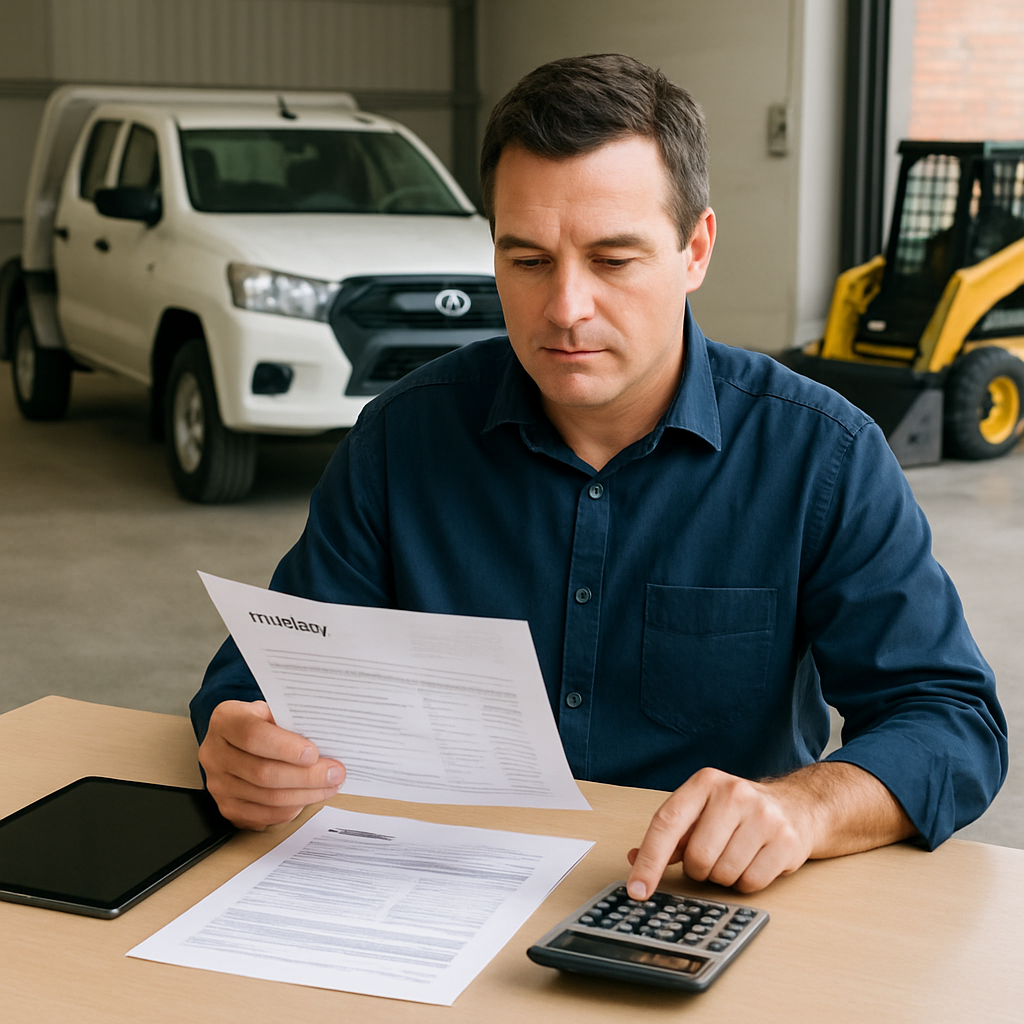
Vehicle finance and equipment finance can help Australian businesses acquire the assets they need to operate, grow or replace ageing tools of trade. Instead of paying the full purchase price upfront, a business may be able to spread the cost over time through a loan, lease or other asset finance arrangement.
The right structure can depend on the asset, cash flow, tax position, ownership goals and lender criteria. This article explains how vehicle finance for business, equipment finance Australia options and commercial leasing arrangements commonly work, without assuming any one product is suitable for every business.
What is vehicle and equipment finance?
Vehicle and equipment finance is a broad term for finance used to acquire business assets. The asset being financed is often used as security for the facility, which can make it different from an unsecured business loan.
Common assets financed by Australian businesses include:
- cars, utes, vans and delivery vehicles;
- trucks, trailers and commercial vehicles;
- earthmoving, construction or agricultural machinery;
- medical, dental or hospitality equipment;
- manufacturing equipment and workshop tools;
- IT hardware, office equipment and fit-out items.
Because the asset may have resale value, the lender may assess both the borrower and the asset. That means the age, condition, supplier, purchase price, intended use and expected useful life of the asset can all matter.
How asset finance Australia arrangements usually work
Although products vary between lenders, most asset finance arrangements follow a similar pattern:
- You choose the asset. The business identifies the vehicle, machinery or equipment it wants to acquire.
- The lender assesses the application. The lender reviews the business, the borrower, the asset and the proposed repayments against its own criteria.
- The asset is purchased or funded. Depending on the structure, the lender may pay the supplier directly, reimburse the borrower after settlement, or lease the asset to the business.
- The business makes regular repayments. Repayments are usually made weekly, fortnightly or monthly over an agreed term.
- Ownership or return is dealt with at the end. Depending on the contract, the business may own the asset, pay a residual or balloon amount, refinance, upgrade, or return the asset.
Asset finance can be useful where the asset is expected to generate revenue, improve productivity or replace manual work. However, it still creates a repayment obligation, so the decision should be based on affordability and business need rather than the availability of credit alone.
Common types of vehicle and equipment finance
Australian businesses may encounter several types of business equipment loan, vehicle finance and commercial leasing options. Product names can vary, so it is important to read the actual contract rather than relying on the label.
| Finance type | How it commonly works | Common considerations |
|---|---|---|
| Chattel mortgage | The business generally owns the asset from the start, while the lender takes security over it until the loan is repaid. | Often used for business vehicles and equipment. May include a balloon payment. Tax and GST treatment can depend on the business and should be checked with an accountant. |
| Finance lease | The lender or finance provider owns the asset and leases it to the business for an agreed term. | The business makes lease payments and may have options at the end of the term, depending on the agreement. |
| Operating lease or rental | The business pays to use the asset for a set period, often without intending to own it. | May suit assets that need regular upgrading, but conditions, usage limits and return obligations should be reviewed carefully. |
| Hire purchase-style arrangement | The business hires the asset and may obtain ownership after completing the required payments. | Availability and structure vary. Check when ownership transfers and what happens if repayments are missed. |
| Unsecured business loan | The business borrows funds and uses them to buy the asset, without that specific asset necessarily being taken as security. | May be flexible, but rates, limits and approval criteria can differ from secured asset finance. |
The practical differences between these options can be significant. Ownership, security, accounting treatment, GST, tax deductibility, early payout conditions and end-of-term obligations may all vary.
Chattel mortgage, finance lease or commercial lease: how to compare the differences
When comparing a chattel mortgage, finance lease or commercial leasing arrangement, focus on how the facility behaves in real business use.
Ownership and control
With a chattel mortgage, the business usually owns the asset while the lender holds a security interest. With a finance lease or operating lease, ownership may remain with the finance provider during the lease term. This can affect what you can do with the asset, including selling it, modifying it or replacing it.
Repayments and residual values
Some facilities include a residual value or balloon payment. This is an amount left to pay at the end of the term. A balloon can reduce regular repayments, but it does not remove the debt. The business still needs a plan to pay, refinance or otherwise manage that final amount.
End-of-term options
At the end of the agreement, possible outcomes may include paying out the balance, taking ownership, refinancing, returning the asset or entering a new arrangement. These options depend on the contract and provider policy.
Flexibility and early payout
If the business may sell the asset, upgrade early or change direction, review early termination costs, payout calculations and notice requirements. A facility that looks affordable month to month may become less attractive if it is expensive or difficult to exit.
What lenders may assess before approving equipment finance
Approval is not automatic. Lenders, brokers and finance providers apply their own criteria, and outcomes depend on individual business circumstances. Common assessment factors may include:
- Business trading history: how long the business has operated and whether it has consistent activity.
- Income and cash flow: whether the business can reasonably afford repayments alongside wages, rent, tax, suppliers and other commitments.
- Credit history: the credit profile of the business, directors or sole trader, depending on the structure.
- Existing debts: current loans, credit cards, overdrafts, leases and supplier finance.
- The asset itself: age, condition, resale value, supplier details and whether it is suitable security.
- Purpose of the finance: how the asset will be used in the business and whether it supports income-producing activity.
- Deposit or equity: whether the business is contributing funds upfront.
- Documentation quality: whether financial records, bank statements and identification are complete and consistent.
If you are preparing a broader small business finance application, it can also help to review common application pitfalls. See Common Mistakes to Avoid When Seeking a Small Business Loan for related preparation tips.
Documents Australian businesses may need
The documents requested can vary depending on the lender, loan size, asset type and whether the applicant is a company, trust, partnership or sole trader. Common examples include:
- ABN and business details;
- driver licence or other identity documents for relevant applicants or directors;
- recent business bank statements;
- financial statements, tax returns or BAS records where required;
- details of existing debts and regular commitments;
- supplier invoice, quote or asset description;
- business plan or cash flow forecast for some applications;
- trust deed, company details or partnership information, if applicable.
Some lenders offer simplified document processes for certain established businesses or lower-risk applications, but this is not guaranteed. The more complex the business or asset, the more information may be required.
Costs to look beyond the repayment amount
When comparing vehicle and equipment finance, the regular repayment is only one part of the overall cost. Businesses should also consider:
- interest rate type and whether it is fixed or variable;
- establishment, documentation or settlement fees;
- ongoing account or administration fees;
- broker or introducer fees, where applicable;
- early payout or break costs;
- late payment fees;
- balloon or residual amount;
- insurance, registration, servicing and maintenance;
- downtime risk if the asset fails or is not fit for purpose.
For vehicles and machinery, operating costs can be material. Fuel, tyres, maintenance, repairs, storage, insurance and compliance requirements may affect whether the asset is affordable in practice.
Tax and GST considerations
Vehicle and equipment finance can have tax and GST implications, but the treatment depends on the business structure, asset use, finance type and current rules. For example, ownership, depreciation, interest, lease payments and GST credits may be treated differently depending on the arrangement.
This article is general information only and is not tax advice. Before choosing a chattel mortgage, finance lease or commercial lease for tax reasons, consider speaking with a registered tax agent or accountant who understands your business.
Benefits and risks of financing vehicles or equipment
Asset finance may help a business access essential equipment while preserving cash for working capital. It may also allow the cost of an asset to be matched more closely to the period in which the asset is used.
Potential benefits can include:
- reduced need for a large upfront payment;
- access to vehicles or machinery needed for contracts or operations;
- structured repayments that can support budgeting;
- the ability to upgrade equipment at planned intervals, depending on the facility;
- the asset itself potentially being used as security.
However, there are also risks:
- repayments may become difficult if revenue falls;
- the asset may depreciate faster than expected;
- a balloon payment may create pressure at the end of the term;
- early exit costs may apply if business needs change;
- the lender may have rights over the secured asset if repayments are not maintained;
- the asset may not generate the expected productivity or income.
A useful test is to ask whether the asset can realistically support the business after allowing for repayments, running costs and a buffer for slower periods.
When a broker may help
Some business owners approach lenders directly. Others use a finance broker to compare facility types, lender criteria and documentation requirements. A broker may be useful where the business is self-employed, has irregular income, needs a specialised asset, or is unsure whether a chattel mortgage, lease or loan structure is more appropriate.
A broker is not a guarantee of approval or a particular rate. Any recommendation or option should still be assessed against your business needs, total cost and repayment capacity. If you want to understand how broker support may fit into the process, you can visit the Brokers page.
Questions to ask before applying
Before signing an asset finance contract, consider asking:
- Who owns the asset during and after the finance term?
- Is the facility secured against the asset, the business, directors or other property?
- Is there a balloon or residual amount?
- What fees apply upfront, during the loan and at payout?
- Can the facility be repaid early, and what would that cost?
- What happens if the asset is damaged, stolen or written off?
- What insurance is required?
- Are there restrictions on use, kilometres, modifications or location?
- What documents are needed before approval and settlement?
- How does the total cost compare with paying cash, leasing, renting or delaying the purchase?
How to prepare a stronger application
A well-prepared application does not guarantee approval, but it can make assessment easier. Practical preparation steps include:
- confirming the asset price, specifications and supplier details;
- checking whether the asset is new, used, imported or specialised;
- preparing recent bank statements and financial records;
- understanding existing debt commitments;
- forecasting how repayments fit into cash flow;
- checking credit reports for errors where relevant;
- being clear about how the asset will support business activity;
- comparing the total cost, not just the advertised repayment.
If the business is new, seasonal or self-employed, lenders may ask for additional evidence of income, contracts, invoices or trading history. Different lenders may take different approaches, so one provider's criteria should not be assumed to apply across the market.
Key takeaway
Vehicle and equipment finance can be a practical way for Australian businesses to acquire income-producing assets, but the details matter. A chattel mortgage, finance lease, operating lease and business equipment loan can each create different ownership, repayment, tax and end-of-term outcomes.
Before applying, understand the asset, the structure, the total cost and the impact on cash flow. If you are unsure, consider seeking independent financial, legal or tax advice before committing to a facility.