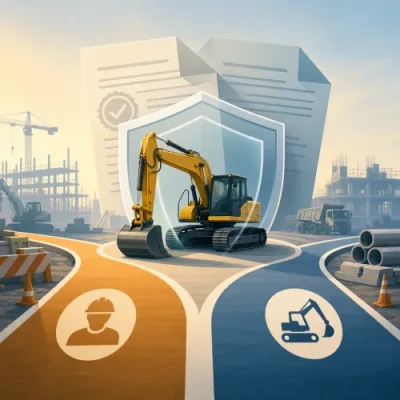
Why hired plant insurance needs careful attention
Many Australian contractors, subcontractors, builders and civil works businesses use a mix of owned equipment and hired plant. Hiring can make sense when a project needs specialised machinery, extra capacity or short-term access without the cost of ownership. However, the insurance position can be more complex than it first appears.
Hired plant insurance generally refers to cover for machinery, tools or equipment that your business uses but does not own. It may sit within a broader commercial plant and equipment insurance arrangement, or it may be arranged separately depending on the insurer, the type of plant and the hire agreement. For a broader overview of what plant and equipment policies may cover, see what plant and equipment insurance covers.
The key issue is responsibility. A hire company may own the machine, but the hirer may still be responsible for loss, damage, theft or certain liabilities while the equipment is in their care, custody or control. The answer depends on the hire contract, whether the arrangement is dry hire or wet hire, the policy wording, the cause of the loss and the circumstances of use.
Owned plant versus hired-in plant
Owned plant insurance is designed for equipment your business owns, such as excavators, skid steers, generators, forklifts, compressors, cranes, attachments and tools. The insured value, use, storage, security and claims history of those assets commonly influence the cover and premium.
Hired-in plant cover is intended for equipment hired, leased, borrowed or otherwise temporarily used by your business. It can be important where your business hires equipment for a day, a month or the duration of a project. The policy may respond to accidental damage or theft of hired equipment, subject to its terms, limits and exclusions.
The distinction matters because a standard policy for owned machinery may not automatically cover hired-in plant. Some policies include a hired-in plant section; others require it to be added, nominated or specifically agreed. The hire company may also require evidence of insurance before releasing equipment, particularly for high-value or specialist machinery.
Dry hire and wet hire: what is the insurance difference?
Dry hire and wet hire are common terms in plant hire insurance Australia discussions, but they do not have one universal insurance outcome. Always check the contract and policy wording. In general, the difference is whether the owner supplies an operator with the equipment.
| Hire type | Typical arrangement | Common insurance issue |
|---|---|---|
| Dry hire | The hirer receives the equipment without an operator and supplies their own operator or personnel. | The hirer is often expected to take responsibility for the equipment while it is in their possession, including damage, theft, misuse and sometimes transport or storage risks. |
| Wet hire | The owner supplies both the equipment and an operator. | Responsibility may be shared or depend on who controlled the work, gave directions, caused damage, operated the machine and accepted contractual risk. |
Dry hire insurance considerations
Dry hire can create a higher practical exposure for the hirer because the equipment is usually under the hirer's control. If your business hires an excavator, telehandler, compactor or access equipment without an operator, the hire agreement may require you to return it in the same condition, pay for repairs, pay replacement value if stolen, or cover continuing hire charges while it is being repaired.
For dry hire insurance, check whether your policy covers:
- accidental damage to hired-in plant while being used on site;
- theft from a site, depot, vehicle or storage location;
- damage during loading, unloading or transport;
- attachments, buckets, augers, blades, trailers or ancillary equipment;
- continuing hire charges after an insured loss;
- recovery, towing, expediting or clean-up costs where available under the policy;
- equipment used by subcontractors or labour hire personnel; and
- use outside normal business premises, including temporary project sites.
You should also check operator competency requirements. Some insurers or hire contracts may expect the equipment to be used only by appropriately trained, licensed or competent operators. If an incident involves unapproved or unsafe use, the outcome can depend on the facts and the policy terms.
Wet hire insurance considerations
Wet hire can appear simpler because the equipment owner supplies the operator. However, insurance responsibility can still be complicated. The owner may insure the machine, but your business may still face liability if your site conditions, instructions, employees, subcontractors or work methods contribute to an incident.
For example, if a wet-hired crane, excavator or grader is damaged because of site instability, incorrect directions or collision with another contractor's equipment, the question may become who controlled the work and who caused or contributed to the loss. A wet hire agreement may also include indemnities or risk transfer clauses that allocate responsibility differently from what a business owner might assume.
When using wet hire, review both property damage cover and liability cover. Plant and equipment insurance may address damage to the machine, but it is not the same as public liability or general liability cover. If you are unsure how these policies interact, our article on general liability insurance versus plant and equipment insurance explains the distinction in more detail.
Damage waivers are not always the same as insurance
Many hire agreements include, or offer, a damage waiver. A damage waiver plant hire arrangement may reduce the amount the hirer must pay if the hired item is accidentally damaged. However, a damage waiver should not be assumed to be the same as insurance.
A damage waiver is usually a contractual arrangement between the hire company and the hirer. Its scope depends on the hire company's terms. It may have caps, excesses, exclusions or strict conditions. It may not cover every cause of loss. It may also require the hirer to comply with security, reporting, operator, site and usage requirements.
Common matters to check include whether the waiver excludes or limits cover for:
- theft where security conditions were not met;
- loss of attachments or accessories;
- damage from misuse, overloading or unsafe operation;
- rollover, water damage, bogging or underground work;
- tyres, tracks, glass, blades or wear items;
- damage during transport by the hirer;
- negligence, breach of hire conditions or illegal use;
- continuing hire charges or loss of use; and
- third-party property damage or personal injury liability.
Before relying on a damage waiver, compare it with your hired-in plant cover. In some cases, both may be relevant. In others, there may be gaps, overlaps or conditions that need to be understood before equipment arrives on site.
Hire agreements can decide who pays
The hire agreement is often just as important as the insurance policy. It may state when responsibility starts and ends, where the plant can be used, who can operate it, what happens if it is damaged, and whether the hirer must insure it for replacement value.
Important clauses to review include:
- Risk transfer: when the hirer becomes responsible for the equipment, such as on delivery, collection or acceptance.
- Return condition: whether the equipment must be returned clean, serviced, undamaged and with all accessories.
- Insurance requirements: whether the hirer must hold hired-in plant cover, public liability cover or name the owner as an interested party.
- Indemnities: whether the hirer agrees to reimburse the owner for loss, damage, claims, costs or legal expenses.
- Excesses and deductibles: who pays the excess if the hire company's policy or waiver responds.
- Continuing hire charges: whether hire fees continue while the equipment is being repaired or replaced.
- Use restrictions: limits on operator qualifications, working locations, underground work, demolition, lifting, water exposure or transport.
- Notification obligations: how quickly incidents, theft, damage or near misses must be reported.
Do not assume the hire company's insurance protects your business from all costs. Even if the owner insures the machine, the contract may still allow the owner or insurer to recover costs from the hirer in some circumstances.
Transport, storage and unattended equipment risks
Hired plant often moves between depots, worksites and storage areas. These movements can create insurance issues that are easy to overlook.
For transport, check who is responsible during loading, unloading and transit. If the hire company delivers the plant, responsibility may start once the equipment is delivered or accepted. If your business collects it, you may be responsible from the time it leaves the hire yard. If a third-party carrier is used, the contract should make clear who bears the risk and what insurance applies.
For storage and unattended equipment, security conditions are important. A policy or waiver may require locked compounds, immobilisers, keys removed, GPS tracking, wheel clamps, site fencing, lighting or other practical measures, depending on the equipment and insurer. The exact requirements vary, so businesses should not assume theft cover applies regardless of how the equipment is left.
It is also worth considering whether the equipment is insured outside business hours, during weekends, over public holidays, at remote sites, or while parked on a roadside or unsecured project area.
Liability issues when using hired plant
Damage to the hired machine is only one part of the risk. Hired equipment can also be involved in injury, damage to other property, environmental incidents, underground service strikes, site access issues and disputes with other contractors.
Plant and equipment insurance generally focuses on loss or damage to the insured equipment. Liability insurance is different. Depending on the circumstances, a business may need public liability, products liability, professional indemnity, contract works, motor or other cover as well. The appropriate mix depends on the business, the project, contractual obligations and insurer criteria.
Particular care may be needed where hired plant is used:
- near the public, roads, footpaths or neighbouring property;
- around underground or overhead services;
- for lifting, demolition, excavation or high-risk works;
- by subcontractors, labour hire workers or multiple operators;
- on mine sites, farms, civil works projects or remote areas; or
- under contracts that include broad indemnities or insurance obligations.
If a principal contractor, council, developer or project owner requires certificates of currency, make sure the documents match the actual work and hired plant arrangements. A certificate is useful evidence of cover, but it does not override the policy wording.
How hired plant can affect premiums and policy terms
Insurers may consider a range of factors when assessing hired-in plant cover. These can include the type and value of plant, frequency of hire, maximum value hired at any one time, work activities, location, operator experience, theft controls, claims history and whether equipment is dry hired or wet hired.
Premiums, excesses and terms vary between insurers and depend on individual circumstances and provider criteria. Some policies may include a blanket limit for hired-in plant, while others may require specific high-value items to be declared. If your business regularly hires expensive machinery, a low hired-in plant limit may not be enough.
When estimating machinery values, hire costs and project budgets, the site's calculators may help with general planning. They are not a substitute for insurance advice or a quotation, but they can support more organised discussions about values, cash flow and risk exposure.
Documents to keep before and during a hire
Good documentation can make it easier to arrange cover, meet contract conditions and manage claims. It can also help avoid disputes about when damage occurred or who was responsible.
Useful records may include:
- the signed hire agreement and any special conditions;
- damage waiver terms, if a waiver applies;
- delivery and collection dockets;
- pre-start inspection records and condition photos;
- operator licences, tickets, training records or competency evidence;
- service, maintenance or defect reports provided during the hire;
- site induction and safe work method documentation where relevant;
- incident reports, witness details and photographs if damage occurs;
- police reports for theft or malicious damage where required; and
- certificates of currency for relevant insurance policies.
For more detail on insurance application and evidence requirements, see our guide to paperwork for plant and equipment insurance.
Questions to ask before hiring plant or equipment
Before signing a hire agreement or sending machinery to site, it can help to work through the following questions:
- Is the arrangement dry hire, wet hire or a mixed arrangement?
- Who is responsible for loss or damage from delivery until return?
- Does the hire company require proof of hired-in plant insurance?
- Is there a damage waiver, and what does it exclude?
- What is the replacement value of the hired item and all attachments?
- Does your policy cover the maximum value of hired plant at any one time?
- Are there restrictions on who may operate the equipment?
- Is transport, loading and unloading covered?
- What security conditions apply when the equipment is unattended?
- Are continuing hire charges covered after an insured incident?
- Does the contract require public liability, contract works or other insurance?
- What notifications are required if damage, theft or an incident occurs?
These questions do not replace professional advice, but they can help identify gaps before they become costly disputes.
When to review your hired plant insurance
A business should consider reviewing its cover whenever its hiring pattern changes. For example, review may be sensible if you start dry hiring equipment more often, take on larger civil projects, hire higher-value machinery, work in remote locations, use subcontractors more heavily, or accept contracts with stricter insurance clauses.
It may also be worth reviewing cover before peak periods, major tenders or new project types. A policy that was adequate for occasional small tool hire may not suit a business that now regularly hires excavators, rollers, cranes, graders or access equipment.
Because hire agreements and policy wordings can differ significantly, consider having them reviewed before relying on assumptions. You can speak with one of the listed insurance brokers about the type of cover that may be available for your circumstances. Any insurance outcome, pricing or policy terms will depend on the insurer's assessment, your business details and the relevant policy conditions.
Key takeaways for Australian businesses
Hired plant can support flexibility and project delivery, but it also creates contractual and insurance responsibilities. The most important step is to read the hire agreement and policy wording together. Dry hire commonly places more practical control and responsibility on the hirer, while wet hire may still create liability or contractual risk depending on the circumstances.
Damage waivers can be useful, but they should not be treated as automatic or complete insurance protection. Transport, unattended storage, operator competency, continuing hire charges and indemnity clauses can all affect who pays after an incident.
For Australian contractors and small businesses, the aim is not simply to have a policy in place. It is to make sure the cover, limits, contract obligations and day-to-day site practices align with how the hired plant is actually used.