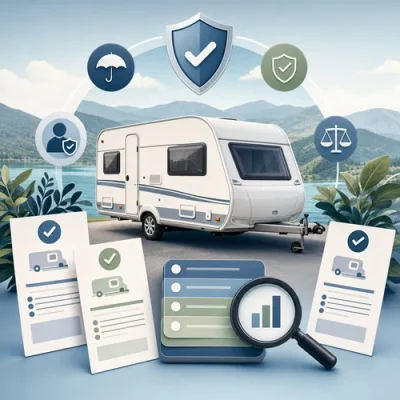
Why comparing caravan insurance matters
Caravan insurance is different from standard vehicle insurance because caravans can involve risks and features that ordinary car policies may not address. Depending on the policy, caravan insurance may include cover for contents, annexes, awnings and incidents that can occur while a caravan is being towed, stored or used for travel.
The Australian caravan insurance market includes a range of providers and policy structures. Comparing options can help you understand the difference between a cheaper premium and a policy that offers broader cover, lower excesses or useful additional benefits.
This article is general information only. It explains what to look for when comparing caravan insurance and does not recommend any particular insurer or policy.
Main types of caravan insurance in Australia
Caravan insurance policies vary by provider, but many options fall into three broad categories: comprehensive cover, third party property damage, and third party fire and theft.
| Policy type | What it generally covers | Key limitations to check |
|---|---|---|
| Comprehensive caravan insurance | May cover accidental damage, theft, vandalism, fire and natural disasters, depending on the policy. It may also include contents, annexes and emergency accommodation benefits. | Usually costs more than basic cover. Exclusions, policy limits and excesses can still apply. |
| Third party property damage | May cover damage your caravan causes to someone else's property, such as another vehicle, building or structure. | Does not usually cover damage to your own caravan or its contents. |
| Third party fire and theft | Combines third party property damage with cover if your caravan is stolen or damaged by fire, subject to policy terms. | Offers less protection for your own caravan than comprehensive cover and may not include accidental damage. |
Comprehensive caravan insurance
Comprehensive caravan insurance is typically the broadest form of cover. It may protect against accidental damage, theft, vandalism, fire and natural disasters such as storms or floods. Some policies also include cover for caravan contents, fixtures, annexes or awnings.
Comprehensive policies may also provide benefits such as emergency accommodation if the caravan becomes uninhabitable after an insured event. These benefits depend on the insurer and policy wording, so it is important to confirm the details rather than assuming they are included.
Third party property damage
Third party property damage insurance is usually a more limited option. It focuses on damage your caravan causes to someone else's property, rather than damage to your own caravan.
This type of policy may suit people who want a lower-cost form of cover, but it leaves important gaps if the caravan itself is damaged, stolen or affected by fire or weather events.
Third party fire and theft
Third party fire and theft sits between basic third party property damage and comprehensive insurance. It may cover third party property damage, plus theft of the caravan or fire damage to it.
It may not cover accidental damage to your own caravan, storm damage or other risks included under some comprehensive policies. Always check the product disclosure statement and policy schedule for the exact inclusions.
What to compare before choosing a policy
When you compare caravan insurance quotes, the premium is only one part of the decision. The policy wording, claims process, excesses and exclusions can have a major effect on the value of the cover.
Coverage and exclusions
Start by checking which insured events are covered. Common areas to compare include:
- accidental damage
- theft
- fire
- vandalism
- storms, floods and other natural disasters
- damage while towing
- contents inside the caravan
- annexes, awnings, appliances, personal belongings and fixtures
- emergency accommodation if the caravan becomes uninhabitable
Exclusions are just as important as inclusions. Some policies may exclude or limit claims for particular types of damage, certain locations, high-risk use, unattended contents or accessories that are not listed. If a condition is unclear, ask the insurer to explain it before you buy.
Premium costs
The premium is the amount you pay for the policy. A lower premium can be attractive, but it may come with reduced cover, higher excesses or fewer included benefits.
Compare what each policy offers for the premium charged. A policy with a higher premium may include broader protection or features that reduce out-of-pocket costs after a claim, while a cheaper policy may be more limited.
Excesses and deductibles
An excess is the amount you pay when making a claim. Some policies apply different excesses depending on the type of claim or circumstances.
Policies with lower premiums may have higher excesses. Before choosing this structure, consider whether you could comfortably pay the excess if you needed to claim. Include likely excess amounts when assessing your overall caravan insurance budget.
Customer service and claims process
The claims experience matters because insurance is most important when something has gone wrong. When comparing providers, consider whether the insurer explains its claims process clearly and how customers describe their service in reviews and ratings.
Reviews are not a guarantee of future service, but they can highlight recurring issues such as slow claims handling, poor communication or helpful support teams.
Additional benefits and optional extras
Some caravan insurance policies include additional benefits or allow you to add optional extras. These may include:
- contents cover
- annexe or awning cover
- emergency accommodation
- roadside assistance
- higher limits for selected items
Optional extras can increase the premium, so compare whether the extra cover is relevant to how you use and store your caravan.
How caravan insurance premiums may be calculated
Insurers use a range of factors to calculate caravan insurance premiums. These can vary by provider, but commonly include:
- the type, value and age of the caravan
- how often the caravan is used
- where the caravan is stored
- the level of cover selected
- any optional extras added to the policy
- your driving history
- your claims history
A clean driving record or no previous claims may be viewed favourably by some insurers, but each insurer applies its own assessment process. Higher levels of cover and extra benefits generally increase the premium.
Ways to look for better value
There is no single method that guarantees a lower premium, but there are practical steps that may help you compare value more effectively.
Ask about available discounts
Insurers may offer discounts or special offers such as multi-policy discounts, no-claim bonuses or early payment discounts. Some may also offer reduced premiums for members of caravan clubs or associations.
If you already hold another policy with an insurer, you can ask whether bundling caravan insurance with home or car insurance affects the premium. Always check whether a discount changes the cover, excess or conditions.
Consider the effect of security measures
Taking steps to improve the security of your caravan may be relevant when discussing premiums with an insurer. The source policy documents should confirm whether particular security measures affect cover or cost.
Compare more than one option
Relying on the first policy you find can make it harder to judge whether the cover is competitive. Comparing several insurers and reading the policy documents can help you see differences in limits, exclusions, excesses and benefits.
Use professional help if needed
If the policy wording is complex or your circumstances are unusual, you may choose to seek professional assistance. An insurance broker can help explain policy differences and options, although any recommendation should still be assessed against your needs and budget. You can also learn more about the role of brokers before deciding whether to use one.
Hidden costs and fees to check
Some costs are not obvious from the headline premium. Before choosing a policy, check the documents for fees and conditions that could affect the total cost over time.
Common costs to look for
- higher excesses for certain claims
- additional premiums or fees for optional extras
- fees for policy amendments
- cancellation fees
- costs linked to claims handling or specific claim circumstances
Ask the insurer for a breakdown if any fee is unclear. When budgeting, include the premium, likely excesses, optional extras and any fees for changes or cancellation.
How to reduce surprises
Read the fine print before you agree to the policy. Pay close attention to coverage limits, exclusions, excesses and the steps required to make a claim.
Customer reviews and forums may also identify issues other customers have experienced, although they should not replace reading the actual policy documents.
Common mistakes to avoid
Choosing on price alone
A low premium does not automatically mean good value. It may reflect narrower cover, higher excesses or fewer benefits. Compare the overall policy, not just the price.
Overlooking exclusions
Exclusions define when an insurer may not pay a claim. Check what is not covered, including limits on contents, high-risk areas, towing conditions, storage requirements or specific types of damage.
Not comparing enough providers
The caravan insurance market includes many providers and policy types. Comparing multiple options can help you understand what is available and avoid assuming that one policy represents the whole market.
Failing to read the fine print
Policy documents can include important conditions about claim limits, excesses, cancellation rules and responsibilities you must meet. If you do not understand a clause, ask the insurer to clarify it in writing where possible.
Not reviewing the policy regularly
Your insurance needs can change. You may upgrade the caravan, add accessories, change how often you travel or store the caravan in a different location. Reviewing the policy annually can help ensure the cover still reflects your circumstances.
Checklist for comparing caravan insurance
Use this checklist to structure your comparison:
- Identify the type of cover you want: comprehensive, third party property damage, or third party fire and theft.
- List the insured events you want covered, such as theft, fire, accidental damage, storms or floods.
- Check whether contents, annexes, awnings and fixtures are included or optional.
- Compare policy limits and sub-limits.
- Review all exclusions and special conditions.
- Compare the premium and how often it is paid.
- Check the excess for different claim types.
- Ask about fees for amendments, cancellations or optional extras.
- Review the claims process and customer service reputation.
- Reassess the policy when your caravan, storage location or travel habits change.
Frequently asked questions
What is usually covered under caravan insurance?
Caravan insurance may cover accidental damage, theft, fire, vandalism and natural disasters such as storms and floods, depending on the type of policy. Some policies also cover caravan contents, appliances, personal belongings, fixtures, annexes and awnings. Always check the policy wording because cover varies between insurers.
How is a caravan insurance premium calculated?
Insurers may consider the caravan's type, value and age, how often it is used, where it is stored, your driving and claims history, the level of cover selected and any optional extras. Each insurer uses its own pricing method.
Can I transfer caravan insurance to a new owner if I sell my caravan?
Caravan insurance is generally not straightforward to transfer. Many policies are non-transferable, which means the new owner usually needs to arrange their own cover. If you sell your caravan, contact your insurer to discuss cancellation, any unused premium and the steps required under your policy.
Is comprehensive caravan insurance always the best option?
Comprehensive insurance usually offers the broadest cover, but it may also have a higher premium. Whether it is suitable depends on the caravan's value, how it is used and stored, the cover you want and what excess you can afford. Compare the policy details rather than relying on the label alone.
How often should I review my caravan insurance?
Reviewing your policy annually is a useful habit. You should also review it after major changes, such as upgrading the caravan, adding accessories, changing storage arrangements or altering how often you travel.
Key takeaways
Comparing caravan insurance is about more than finding the lowest premium. The most useful comparison looks at the type of cover, insured events, exclusions, policy limits, excesses, optional extras, fees and the claims process.
Before choosing a policy, read the product documents carefully, ask questions about anything unclear and consider whether the cover reflects how you use and store your caravan. Keeping your policy up to date can also reduce the risk of gaps between your insurance and your actual needs.
Published: Wednesday 19th March, 2025
Last updated: Wednesday 19th August, 2026