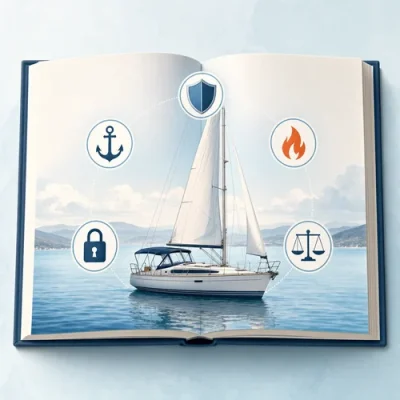
What is boat insurance?
Boat insurance is designed for the risks that come with owning, storing and using a vessel. Unlike standard car or home insurance, it is tailored to marine environments, different types of watercraft and the activities a boat may be used for, such as cruising, fishing, water sports or racing.
In Australia, boating conditions can vary from calm inland waterways to busy coastal areas and open water. The right policy structure depends on the boat, where and how it is used, how it is stored and the level of financial risk the owner is prepared to carry.
This guide is general information only. Policy wording, inclusions, exclusions, limits and claim requirements vary between insurers, so it is important to read the relevant product documents before deciding on cover.
What boat insurance typically covers
Boat insurance policies are not identical, but many are built around a few common cover areas. Understanding these terms can make it easier to compare policy options and identify where additional cover may be needed.
Common coverage areas
| Coverage area | What it generally means |
|---|---|
| Hull or property damage | Cover for damage to your own boat from insured events such as collisions, storms or other covered perils, depending on the policy. |
| Liability cover | Protection if you are responsible for injury to another person or damage to someone else's property while using your boat. |
| Theft and vandalism | Cover if the boat, or covered items on board, are stolen or damaged by criminal activity. |
| Personal effects | Cover for specified belongings taken on board, such as fishing gear, electronics or other valuable items, subject to policy limits. |
| Towing assistance | Help with towing costs if the boat becomes stranded on the water, where included or added as an optional benefit. |
| Uninsured boater protection | Cover that may apply if another uninsured boater causes damage or injury, depending on the policy terms. |
| Personal accident cover | Cover that may help with medical or injury-related costs for you or passengers after an insured accident, where available. |
| Salvage services | Cover for recovery or salvage costs after certain incidents, where included or selected as an optional feature. |
When working out the type and amount of cover to consider, tools such as the Boat Insurance Calculator may help you think through insurance needs, although it does not replace reading the policy wording or seeking professional guidance.
Main types of boat insurance policies
Boat insurance can be offered at different levels. The names and details vary between insurers, but beginner boat owners will often see three broad categories.
Comprehensive cover
Comprehensive cover usually provides the broadest level of protection. It may cover accidental damage to your own boat, theft, certain environmental or weather-related damage and liability to others. This type of policy is commonly considered by owners who want a wider range of insured events covered, particularly where the boat is newer, higher value or used in busier waterways.
Third-party only cover
Third-party only cover focuses on liability. It may protect you if you cause injury to another person or damage another person's property, but it generally does not cover damage to your own vessel. This may be considered where an owner is primarily concerned about liability rather than repair or replacement costs for their own boat.
Third-party, fire and theft cover
Third-party, fire and theft cover is a middle option. It typically includes liability cover and adds protection if the boat is stolen or damaged by fire. It generally provides more protection than third-party only cover but less than comprehensive cover.
For a broader discussion of provider selection, it may be useful to read more about how to compare boat insurance providers in Australia.
Agreed value vs market value
One of the most important policy choices is how the insured value of the boat is set. Two common approaches are agreed value and market value.
Agreed value
With agreed value cover, you and the insurer agree on a value for the boat when the policy is arranged. This amount is used as the basis for cover if the boat is written off, subject to the policy terms. Agreed value cover may provide more certainty about the insured amount, but it can come with a higher premium.
Market value
With market value cover, the insured value is based on the boat's current market value at the time of loss or damage. This approach takes depreciation into account. It may have a lower premium, but the claim settlement amount may be lower than the amount originally paid for the boat.
The better fit depends on the boat's age, condition, value, modifications and the owner's preference for premium cost versus certainty of insured value.
What can affect boat insurance premiums?
Boat insurance premiums are influenced by the risk profile of the boat, the owner and the way the vessel is used. Factors that may affect cost include:
- Boat size and type: Larger boats, high-performance boats, yachts, speedboats and fishing vessels can carry different repair costs and liability risks.
- Use of the boat: Leisure cruising, fishing, racing, commercial use or living aboard can affect the risk assessment.
- Boating location: Busy waterways, coastal areas, remote areas or locations exposed to adverse weather may influence premiums.
- Storage and mooring: Boats stored in secure marinas or storage facilities may be viewed differently from boats kept on trailers, private docks or less secure locations.
- Boating experience: A safer boating history, relevant qualifications or completed safety courses may be considered by some insurers.
- Claims history: Previous claims or incidents can affect how an insurer prices the risk.
- Safety and security equipment: Devices such as alarms, GPS tracking, bilge pumps and fire suppression systems may be relevant to the insurer's assessment.
- Deductible or excess: Choosing a higher excess may reduce the premium, but it increases the amount payable by the policyholder if a claim is made.
Applying for boat insurance
The application process usually begins with an enquiry or quote request. You may be asked for details about the boat, how it is used, where it is kept and your boating history. If you are requesting boat insurance quotes, having accurate information ready can make the process more efficient.
Information commonly requested
- Boat make, model, year and length.
- Hull material, propulsion type, top speed and any custom features.
- Registration and ownership records.
- Details of marine survey reports, if available.
- Information about any finance secured against the boat.
- Intended use, such as leisure, fishing, racing or other activities.
- Where the boat will be used, stored or moored.
- Boating licence details, safety course certificates or other relevant qualifications.
- Previous insurance history and prior claims.
Accuracy matters. Understating speed, usage, storage arrangements or modifications can create problems later if a claim needs to be assessed. If the boat is financed, insurance requirements may also be relevant to the finance arrangement. You can read more about choosing marine insurance while financing a boat.
Not every insurer asks for the same information. Some may also consider maintenance records, safety features, claims history or evidence of responsible ownership when assessing the risk.
How to make a boat insurance claim
If an incident occurs, the steps taken early can affect how smoothly the claim is handled. The exact process depends on the insurer, but the following practices are commonly useful.
First steps after an incident
- Notify the insurer as soon as reasonably possible.
- Take photographs or video of the damage, if it is safe to do so.
- Write down what happened, including time, location and conditions.
- Collect witness details and third-party information where relevant.
- Obtain police or maritime incident reports if the circumstances require them.
- Take reasonable steps to prevent further damage, but do not put yourself or others at risk.
Documents that may be needed
- A completed claim form.
- Photos, video or other evidence of the incident.
- Witness statements and contact details.
- Third-party details if another vessel or person was involved.
- Police or maritime reports, where applicable.
- Repair quotes, inspection reports or other documents requested by the insurer.
After documents are submitted, an assessor or adjuster may review the damage, inspect the boat, consider the circumstances and ask for more information. Claim timeframes vary depending on the complexity of the incident and the completeness of the documentation.
Ways to manage boat insurance costs
Premiums should not be reduced at the expense of essential cover, but there are practical ways to manage insurance costs while maintaining an appropriate level of protection.
- Install safety and anti-theft equipment: Alarms, GPS tracking, fire suppression systems and bilge pumps may reduce risk and can be relevant to insurers.
- Complete boating education courses: Some insurers may recognise training that demonstrates boating knowledge and safety awareness.
- Maintain a clean boating record: Fewer incidents or claims can support a lower-risk profile.
- Choose an excess carefully: A higher excess may reduce the premium, but it should remain affordable if a claim occurs.
- Review storage arrangements: Secure storage or marina facilities may be viewed more favourably than less secure options.
- Compare policy features, not just price: A cheaper premium may come with lower limits, more exclusions or fewer optional benefits.
If policy terms are difficult to compare, a licensed insurance professional or adviser may help explain the differences. You can also learn more about the role of brokers and professional assistance when navigating finance or insurance-related decisions.
When to review your boat insurance policy
Boat insurance should not be treated as a set-and-forget product. A policy that was suitable when the boat was purchased may become outdated as the vessel, usage or ownership circumstances change.
Review your cover when:
- Your policy is due for renewal.
- You buy a different boat.
- You add new equipment, make modifications or complete significant repairs.
- Your boating locations or frequency of use change.
- You begin racing, commercial use or other activities not previously disclosed.
- You change where the boat is stored or moored.
- A new regular operator is added.
- You store the boat for an extended period.
Keeping the insurer updated helps reduce the risk of being underinsured or having policy terms that no longer match how the boat is used.
Key takeaways for beginners
- Boat insurance can include cover for damage to your boat, liability, theft, personal effects, towing, salvage and personal accident risks, depending on the policy.
- Comprehensive, third-party only and third-party fire and theft policies provide different levels of protection.
- Agreed value and market value cover work differently and can affect both premiums and claim outcomes.
- Premiums may be influenced by boat type, usage, location, storage, safety equipment, boating experience and claims history.
- Accurate application details and good record keeping can make future claims easier to assess.
- Policies should be reviewed regularly, especially after changes to the boat, storage, use or ownership circumstances.
Understanding the structure of boat insurance makes it easier to ask informed questions and compare policy options. The aim is not just to buy a policy, but to understand what is covered, what is excluded and how the policy would respond if something goes wrong on the water.
Published: Wednesday 10th July, 2024
Last updated: Wednesday 26th August, 2026