This guide consolidates the key mistakes Australians commonly need to watch for when applying for caravan finance. It explains how caravan loans work, what lenders may look at, and how to compare loan costs, features and ownership expenses before signing a contract.
The information is general and educational. It is designed to help you understand the process and prepare questions for lenders, brokers or qualified advisers, rather than recommend a particular loan or financial strategy.
Understanding caravan loans in Australia
A caravan loan is a finance arrangement used to purchase a caravan and repay the borrowed amount over an agreed term. The application process typically involves assessing your financial position, submitting supporting documents, waiting for a lender decision and then making repayments under the loan contract if the loan proceeds.
Caravan finance can include secured and unsecured loan options. With a secured loan, the caravan is generally used as security for the borrowing. This can affect the rate and the lender's rights if repayments are not made. An unsecured loan does not use the caravan as security, but may have different pricing and eligibility requirements. Business borrowers may also come across finance products such as chattel mortgages or finance leases, depending on how the caravan will be used.
Because terms, fees, features and eligibility criteria vary between lenders, it is important to look beyond the headline repayment and understand the full commitment before applying.
Mistake 1: Not checking your credit report before applying
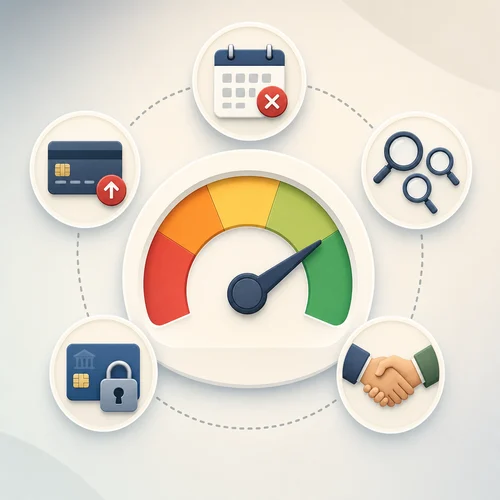
Your credit history is one of the factors lenders use to assess a caravan loan application. A stronger credit profile may support access to more competitive loan options, while a lower score or unresolved issues on your report may affect the interest rate, loan terms or the likelihood of approval.
Before applying, check your credit report and make sure the information is accurate. In Australia, you can request a free copy of your credit report from credit reporting agencies such as Equifax, Experian and illion. Reviewing it ahead of time gives you the chance to identify errors, unfamiliar enquiries or outdated details.
If you find an error, raise a dispute before submitting a finance application. It can also help to take practical steps such as paying bills on time, reducing existing debts where possible and avoiding unnecessary new credit enquiries. These actions do not guarantee a particular outcome, but they can help you present a clearer financial profile to lenders.
Mistake 2: Applying with incomplete or inaccurate information
An incomplete or inconsistent application can delay assessment and may result in further questions from the lender. In some cases, missing or inaccurate information can contribute to an application being declined.
Common documents and details requested for a caravan loan application may include:
- proof of identity, such as a driver licence or passport;
- proof of income, such as recent payslips or tax returns;
- bank statements or other evidence of your financial position;
- proof of residence, such as a utility bill or rental agreement;
- details of existing debts, credit cards and other liabilities;
- information about assets and savings; and
- details of the caravan you intend to purchase.
Prepare these documents before you apply and check that the information matches your application. Review numbers, names, addresses and debt figures carefully before submission. A simple typo or outdated document can create avoidable follow-up and slow the process.
Mistake 3: Not setting a realistic budget
It can be tempting to focus on the caravan you want first and think about the repayments later. A better starting point is to work out what you can comfortably afford after considering income, regular expenses, existing debts and future financial commitments.
A realistic budget should include the proposed loan repayment as well as your usual living costs, savings goals and irregular expenses. It should also allow for changes over the loan term, such as increased living costs, changes in income, health issues, job loss or family commitments.
Borrowing calculators can provide a useful estimate, but they should be treated as a guide only. They do not replace a detailed review of your own cash flow. If you are unsure how much debt is manageable, consider discussing your situation with a lender, broker or qualified financial adviser before committing.
Mistake 4: Ignoring the total cost of caravan ownership
The purchase price and loan repayment are only part of the cost of owning a caravan. Underestimating ongoing costs can make an affordable-looking loan harder to manage once the caravan is on the road.
Costs to factor into your budget may include:
- caravan insurance;
- registration fees, which can vary by state and caravan size;
- routine maintenance and servicing;
- tyre replacements and repairs;
- on-road costs such as fuel, tolls and parking;
- storage fees if you cannot keep the caravan at home;
- contents, annexe or other optional insurance cover; and
- an emergency repair buffer for unexpected breakdowns or damage.
Insurance can help protect against risks such as theft, loss, damage or damage caused to other people's property, depending on the policy type. Maintenance is also important for safety, functionality and potential resale value.
Caravans can depreciate over time, like other vehicles. If you take a long loan term, the outstanding loan balance may remain high while the caravan's value falls. This is particularly important if you may sell or trade in the caravan before the loan is fully repaid.
Mistake 5: Focusing only on the monthly repayment
A lower monthly repayment can be attractive, but it does not always mean the loan is cheaper. The total cost depends on the amount borrowed, interest rate, term, fees and repayment structure.
When comparing loans, look at the total amount repayable over the life of the loan. This includes the principal borrowed, interest and applicable fees. A longer term may reduce each repayment but increase the total interest paid. A shorter term may reduce total interest but create higher repayments that could strain your budget.
Loan calculators can help model different scenarios. For example, you can compare how changing the loan term affects the repayment and total interest. This can help you balance affordability now with the overall cost of the finance.
| Loan term choice | Possible advantage | Possible risk |
|---|---|---|
| Shorter loan term | May reduce total interest paid | Repayments may be higher and harder to manage |
| Longer loan term | May lower regular repayments | Total interest may be higher and equity may build more slowly |
| Balanced term | Can align repayments with budget and long-term cost goals | Still requires careful comparison of fees, rates and flexibility |
Mistake 6: Choosing the wrong loan term
The right loan term is not necessarily the longest available or the shortest possible. It should reflect your repayment capacity, the total interest cost and how long you expect to keep the caravan.
A term that is too short may create repayment pressure and leave little room for other expenses. A term that is too long may make the caravan more expensive overall because interest is paid for a longer period. It may also increase the risk that you owe more than the caravan is worth if depreciation outpaces your loan reduction.
Before choosing a term, compare several repayment scenarios and consider whether your budget would still work if your circumstances changed. The aim is to avoid a structure that looks manageable at the start but becomes difficult over time.
Mistake 7: Not comparing lenders and loan options
Accepting the first caravan loan offer can mean missing differences in interest rates, fees, terms and features. Banks, credit unions, online lenders and specialist finance providers may assess applications differently and offer different loan structures.
Comparison websites can help you review interest rates, fees, comparison rates, terms and features in one place. A comparison rate can be useful because it includes the interest rate and many standard fees and charges, although it may not capture every cost or reflect your exact loan scenario.
It can also be useful to speak with a finance broker where appropriate. A broker may help explain options and lender requirements, but it is still important to understand how the broker is paid, which lenders they compare and whether the loan suits your circumstances.
When comparing offers, do not rely on the lowest advertised rate alone. Consider the full package, including fees, repayment flexibility, early repayment conditions, lender requirements and whether the loan structure matches how you intend to use and repay the finance.
Mistake 8: Overlooking loan features and flexibility
Loan features can affect how easily you manage the loan over time. A loan with a slightly different rate or fee structure may be more or less suitable depending on the flexibility it provides.
Features to compare include:
- whether extra repayments are allowed;
- whether fees apply to extra repayments or early payout;
- repayment frequency options, such as weekly, fortnightly or monthly;
- whether repayment timing can align with your pay cycle;
- access to redraw facilities on additional repayments;
- repayment holidays, if offered by the lender; and
- loan portability or variation options, if relevant.
Extra repayments can reduce the loan balance faster and may reduce interest over time, depending on the loan terms. A redraw facility may allow access to additional repayments if unexpected expenses arise, although conditions and fees can apply. Early repayment penalties or termination fees can reduce the benefit of paying out a loan ahead of schedule, so review these terms before signing.
Mistake 9: Not understanding fixed and variable interest rates
Fixed and variable rates work differently. A fixed rate generally keeps repayments consistent for the fixed period, which can make budgeting simpler. The trade-off is that you may have fewer flexible features or may not benefit if market rates fall.
A variable rate can move with market conditions, which means repayments may rise or fall. This can create uncertainty, but variable loans may also offer more flexibility, depending on the lender and product.
Neither type is automatically better. The important step is to understand how the rate structure affects repayments, flexibility and total cost. Ask the lender to explain how rate changes, fees and repayment options work before you commit.
Mistake 10: Borrowing more than you need or can afford
Borrowing extra to buy a larger or more luxurious caravan can increase repayments, interest and financial risk. A loan should fit within your broader financial position, not rely on stretching your budget to its limit.
Assess your borrowing capacity by reviewing income, existing debts, living expenses and likely changes over the loan term. Lenders will also assess factors such as credit history, employment stability, debt levels and income. Each lender has its own eligibility criteria and borrowing limits, so a realistic self-assessment can help you avoid applying for loan amounts that are unlikely to suit your circumstances.
Overcommitting can lead to missed repayments, penalty fees, credit score damage and, for secured loans, potential repossession risk if the borrower defaults. Staying within a manageable borrowing amount helps preserve flexibility for unexpected costs and future plans.
Mistake 11: Underestimating the role of a deposit
A deposit or down payment reduces the amount you need to borrow. A larger deposit may also strengthen an application by showing savings discipline and reducing the lender's exposure, although it does not guarantee approval or particular loan terms.
Some buyers use a larger deposit target, such as around 20%, as a benchmark when planning a caravan purchase. The appropriate amount will depend on the caravan price, your savings, your wider financial commitments and lender requirements.
If you plan to build a deposit before applying, consider setting a separate savings account, reviewing discretionary spending and allowing enough time to save without compromising essential expenses. Waiting longer to buy may reduce the amount financed and the interest paid over the life of the loan.
Mistake 12: Not reading the fine print
Loan contracts set out your legal obligations. Skipping the fine print can lead to surprises about fees, repayment rules, default conditions or restrictions that were not obvious from the headline offer.
Terms to review carefully include:
- interest rate and annual percentage rate details;
- repayment amount, frequency and due dates;
- application, account-keeping or processing fees;
- late payment or missed payment charges;
- early repayment or prepayment penalties;
- conditions for extra repayments and redraws;
- variable-rate change provisions;
- default clauses and lender rights; and
- any insurance or usage requirements connected to the loan.
If a clause is unclear, ask the lender to explain it in writing or seek professional advice before signing. Once the contract is signed, you are bound by its terms, so it is better to clarify concerns before the loan proceeds.
Mistake 13: Forgetting future financial changes
A caravan loan can run for several years, and your circumstances may change during that time. Future commitments such as family expenses, renovations, education costs, health issues, job changes or periods of reduced income can affect repayment capacity.
Building an emergency fund or contingency plan can help protect your budget from unexpected costs. The source articles emphasise planning for events such as illness, job loss, sudden repairs and other life changes that could affect your ability to keep up with repayments.
It is also worth considering your future plans for the caravan. If you may sell, upgrade or trade it in, think about how the loan term, depreciation and resale value may affect your equity. A long loan term with slow balance reduction can make it harder to exit the loan cleanly if the caravan's value has fallen.
Tips for a smoother caravan loan application
Preparation can make the application process more straightforward and help you understand what lenders are likely to ask for.
- Check your credit report early. Review it for errors and dispute inaccuracies before applying.
- Build a complete budget. Include repayments, ownership costs, storage, maintenance, insurance and an emergency buffer.
- Confirm your documents. Prepare proof of identity, income, residence, assets, liabilities and caravan details.
- Compare several loan options. Review rates, comparison rates, fees, features, term length and lender requirements.
- Model different loan terms. Use calculators to compare monthly repayments and total interest.
- Review eligibility criteria. Consider income stability, credit history, existing debts and lender-specific requirements.
- Read the contract carefully. Clarify fees, repayment rules, prepayment conditions and default clauses before signing.
Conclusion
Applying for a caravan loan in Australia involves more than finding a repayment that appears affordable. The main risks come from skipping credit checks, underestimating ownership costs, choosing the wrong loan term, ignoring loan features, borrowing too much, submitting incomplete documents and signing without understanding the contract.
By checking your credit report, preparing accurate documentation, comparing lenders and planning for the full cost of ownership, you can approach the caravan finance process with a clearer understanding of the commitment involved. Careful preparation helps you assess whether a loan structure fits your budget and supports a more informed borrowing decision.