Understanding the full cost of jet ski ownership
A jet ski purchase can involve a substantial upfront cost, often reaching several thousands of dollars depending on the model, age, features and condition. Finance can spread that cost over time, but it also adds interest, fees and repayment obligations.
Before comparing loans, build a budget that includes both the purchase and ongoing ownership costs. These may include:
- Loan repayments, interest and any loan fees
- Insurance premiums
- Maintenance, servicing and repairs
- Fuel and consumables
- Storage, especially if you do not have suitable space at home
- Transport equipment, such as a trailer where required
- Licence and registration costs where relevant
- Seasonal upkeep and preparation
It is also worth considering depreciation and resale value. Like many vehicles and recreational assets, jet skis can lose value over time. Understanding how different brands, models and conditions may affect resale value can help you make a more informed purchase decision.
Assessing your financing needs
Start by reviewing your income, regular expenses, savings and existing debts. This can help you estimate how much you may be able to allocate to a jet ski purchase without creating pressure on other financial commitments.
Next, think about the type of jet ski you want. A model used for occasional leisure rides may have different cost implications from one intended for more frequent or performance-focused use. Features, brand, age and condition can all affect the purchase price and ongoing maintenance costs.
Setting clear financial goals can also help. For example, you may decide to save a larger deposit before applying, reduce other debts first, or wait until you have compared several lenders. These steps can make the finance process more structured and easier to manage.
Affordable jet ski financing options in Australia
Australian buyers may come across several finance options, including personal loans, specialised recreational vehicle finance, dealership finance and credit facilities. Each option works differently, so compare the total cost, repayment terms, fees and risk before choosing.
Personal loans from banks and credit unions
Personal loans are commonly used to finance jet ski purchases. Banks and credit unions may offer fixed loan amounts, set repayment terms and either fixed or variable interest rates depending on the product. Credit unions and banks may also offer competitive rates to some borrowers, particularly where the applicant has a strong credit history or an existing customer relationship.
When comparing personal loans, look at the interest rate, fees, repayment flexibility and whether the loan is secured or unsecured.
Secured jet ski loans
A secured loan uses an asset, often the jet ski itself, as collateral. Because the lender has security, secured loans may come with lower interest rates than unsecured loans. However, if repayments are not made, the lender may have rights over the secured asset.
Secured finance can suit buyers who want a structured loan and are comfortable with the asset being used as security, but the risks should be clearly understood before signing.
Unsecured personal loans
Unsecured loans do not use the jet ski as collateral. This can avoid the immediate risk of repossession of the jet ski under the loan security, but lenders generally treat unsecured lending as higher risk. As a result, interest rates may be higher than comparable secured options.
Unsecured loans may appeal where a borrower does not want to pledge the jet ski as security, but the higher potential cost should be weighed carefully.
Specialised jet ski and recreational vehicle finance
Some lenders specialise in recreational vehicle finance, including loans for jet skis. These products may be tailored to the way recreational assets are bought and used, and may offer terms designed specifically for this market.
As with any loan, compare specialised jet ski finance against general personal loans, dealership finance and online lenders. A product labelled as specialised is not automatically the lowest-cost option.
Online lenders and fintech finance
Online lenders and fintech providers can offer a convenient application process, and some may provide faster assessment than traditional channels. They may also compete on rates, fees or application experience.
Research the lender carefully, compare customer reviews where available, and review the loan contract, fees and repayment terms before proceeding.
Dealership and manufacturer finance
Dealerships may offer in-house finance or finance through lender partnerships. Manufacturers may also offer promotional finance packages on selected new models. These options can be convenient and may sometimes include promotions, discounts or bundled extras.
However, convenience should not replace comparison. Check the interest rate, fees, loan term, balloon payments if applicable, repayment flexibility and the total amount repayable. Compare dealership finance with banks, credit unions and online lenders before making a decision.
Home equity loans
If you own a home and have built up equity, a home equity loan may be available as a funding option. These loans may offer lower interest rates than some other forms of borrowing, but they involve significant risk because your home is used as security.
For that reason, home equity finance should be considered carefully and only after understanding the consequences if repayments become difficult.
Credit cards and other credit facilities
Credit cards and other credit facilities work differently from fixed loans. Instead of borrowing a set amount and repaying it over an agreed term, you access credit up to a limit and pay interest on the amount used.
Some buyers may consider low-interest or promotional credit card offers, particularly if they have a strong credit profile and a clear repayment plan. However, credit cards can become expensive if the balance is not repaid within any promotional period or if higher standard rates apply.
Comparing Australian lender types
Finding affordable jet ski finance usually depends on comparing more than one lender type. The table below summarises common options.
| Lender type | Potential advantages | Points to check |
|---|---|---|
| Banks | Established lending processes and a range of personal loan products | Interest rates, fees, eligibility rules and whether customer discounts apply |
| Credit unions | May offer competitive products, especially for existing members | Membership requirements, rates, fees and repayment flexibility |
| Online lenders and fintechs | Convenient online applications and potentially fast processing | Lender reputation, fees, customer support and full loan terms |
| Specialised recreational finance lenders | Products may be designed for jet skis and similar assets | Whether the specialised product is actually cheaper than alternatives |
| Dealership finance | Convenient at the point of purchase and may include promotions | Total cost, loan term, fees, promotional conditions and comparison with external lenders |
| Comparison websites | Can help compare multiple lenders side by side | Whether the comparison includes all relevant fees and a broad range of lenders |
Comparison websites can save time, but they may not show every available lender or every product. Use them as one research tool rather than the only basis for a decision.
What affects jet ski loan approval?
Lenders assess loan applications using their own criteria, but several factors commonly influence approval and loan terms.
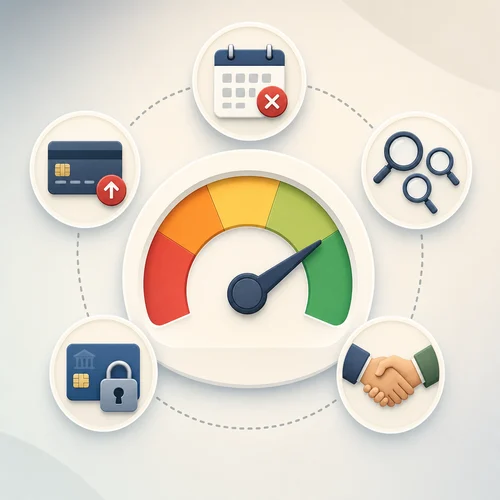
Credit score and credit history
Your credit score and credit history help lenders assess how you have managed credit in the past. A stronger history may support access to more favourable terms, while missed payments, defaults or high credit utilisation may make approval more difficult or increase the cost of finance.
Before applying, check your credit report for errors and address any discrepancies where possible.
Income and employment status
Lenders generally want evidence that you have enough income to meet repayments. You may be asked for recent payslips, tax returns or other proof of income. Stable employment and consistent income can support an application, although each lender will apply its own assessment criteria.
Existing debts and financial obligations
Current debts, credit card limits, living expenses and other repayment commitments can affect serviceability. A high level of existing debt may raise concerns about taking on another loan.
Reducing outstanding balances before applying may improve your overall financial position, but it should be done within a realistic budget.
Deposit size
A larger deposit reduces the amount you need to borrow. This can lower repayments, reduce total interest and reduce the lender's exposure. In some cases, a stronger deposit may also support more favourable loan terms.
How to lower the cost of jet ski finance
Affordable finance is not only about finding the lowest advertised rate. The total cost depends on the interest rate, fees, loan amount, loan term and repayment structure.
- Improve your credit position before applying: Paying bills on time, reducing credit card balances and correcting credit report errors may help strengthen your application.
- Compare several lenders: Review offers from banks, credit unions, online lenders, specialised finance providers and dealerships.
- Negotiate where possible: If you have quotes from multiple lenders, you may be able to ask whether a lender can improve its rate, fees or terms.
- Consider a shorter loan term: Shorter terms usually mean higher repayments, but they can reduce the total interest paid over the life of the loan.
- Save a larger deposit: Borrowing less can reduce repayment pressure and total interest costs.
- Read the fine print: Check establishment fees, monthly fees, early repayment fees, late payment fees and any conditions attached to promotional offers.
The most affordable option is not always the one with the lowest monthly repayment. A longer loan term may reduce monthly repayments but increase total interest over time.
The jet ski loan application process
Once you have compared finance options and chosen a lender, the application process usually follows a structured path.
- Choose a lender and product: Compare the loan type, rate, fees, term and repayment structure.
- Gather documents: Lenders commonly request identification such as a driver licence or passport, proof of income such as payslips or tax returns, proof of residence and details of existing debts and liabilities.
- Complete the application: Provide accurate personal, employment and financial information.
- Submit supporting documents: Make sure documents are current, clear and consistent with the application.
- Respond to lender requests: The lender may ask for extra information before making a decision.
- Review any loan offer carefully: Check the interest rate, fees, repayment schedule, loan term and any security requirements before accepting.
- Settlement: If accepted, the lender may pay funds to the dealer, seller or borrower depending on the loan structure.
Approval timeframes vary by lender. Some applications may be assessed quickly, while others may take several days or longer if more information is required.
What to do if your loan application is denied
A declined application does not mean every lender will reach the same decision. If your application is denied, ask the lender for the reason so you can understand what affected the outcome.
Common issues may include a low credit score, insufficient income, unstable employment, incomplete documentation or a high level of existing debt. Once you know the reason, you can take steps such as correcting credit report errors, reducing debts, improving savings, gathering stronger documentation or waiting until your financial position improves.
You may also consider another lender with different criteria. Avoid making multiple rushed applications, as repeated credit enquiries may affect your credit profile.
Managing jet ski loan repayments
After settlement, repayment management becomes part of ownership. A repayment plan can help keep the loan manageable alongside insurance, maintenance and other costs.
- Set a budget that includes loan repayments and ongoing jet ski expenses.
- Consider aligning repayments with your pay cycle if the lender allows it.
- Use automatic payments to reduce the risk of missing due dates.
- Review loan statements regularly so you can track progress.
- Make extra repayments or lump sum payments where permitted and affordable.
- Contact your lender early if you expect repayment difficulty.
Extra repayments can reduce interest and shorten the loan term if the loan allows them, but check whether fees or restrictions apply.
Refinancing a jet ski loan
Refinancing means taking out a new loan to pay off an existing jet ski loan. It may be considered if your credit profile has improved, market rates have changed, or your financial circumstances are different from when you first borrowed.
Potential benefits may include a lower interest rate, reduced monthly repayments, a shorter loan term or loan features that better suit your current situation. However, refinancing can also involve costs such as establishment fees, discharge fees or early repayment fees on the existing loan.
Extending the loan term may reduce monthly repayments but can increase the total interest paid. Compare the total cost of the new loan with the remaining cost of the current loan before deciding.
Insurance and protection
Insurance is an important ownership cost and may also affect finance approval. Lenders often require proof of insurance for a financed jet ski, particularly where the jet ski is used as security for the loan.
Jet ski insurance can include different types of cover, such as:
- Damage to the jet ski
- Theft
- Third-party liability for damage or injury caused to others
- Comprehensive cover for a wider range of events, depending on the policy
- Optional features such as towing and recovery, depending on the insurer
Compare insurance premiums, excesses, exclusions and coverage limits. You may also ask insurers about discounts, such as bundling policies or completing safety courses, where available.
Insurance premiums should be included in your affordability calculations before committing to a loan.
Deals, discounts and seasonal buying tips
The timing and place of purchase can affect the price you pay. Dealerships may run promotions at certain times of the year, and manufacturers may offer rebates or incentives on selected models.
Buying during cooler months or outside peak demand periods may provide more room to negotiate, although it may also mean fewer current-season models are available. Boat shows can also provide an opportunity to compare models, ask questions and review dealer incentives.
When assessing a discount, look beyond the headline saving. Check whether the offer applies only to selected models, whether finance conditions apply, and whether extras such as accessories or extended warranties are genuinely useful to you.
Key takeaways
Affordable jet ski financing starts with understanding the full cost of ownership, not just the loan repayment. Insurance, maintenance, storage, transport, licence and registration costs can all affect the long-term budget.
Compare banks, credit unions, online lenders, specialised finance providers and dealership finance before choosing. Review the loan amount, term, interest rate, fees, security requirements and total amount repayable.
Loan approval can be influenced by credit history, income, employment status, existing debts and deposit size. Improving your credit position, saving a larger deposit, negotiating terms and considering a shorter loan term may help reduce financing costs, depending on your circumstances and lender criteria.
With careful planning, comparison and repayment management, jet ski finance can be approached in a more informed and responsible way.